People who juice limes for drinks
If you usually juice one small fruit at a time, look for a suitably sized cone and a straightforward way to dispense the juice.


For single lime-based drinks, a juicer with a small cone specifically suited to limes and a direct spout is an obvious choice; WMF explicitly lists limes as suitable for the Stelio. In a shared kitchen, removable parts that come into contact with juice and the cleaning instructions for the exact model also matter. A collection jug can be useful for several servings, but wattage alone is no proof of better juice yield or quieter operation.
If you usually juice one small fruit at a time, look for a suitably sized cone and a straightforward way to dispense the juice.
If several people use the appliance, removable parts and cleaning that fits easily into your kitchen routine are particularly important.
If you want to be considerate of your colleagues, check for a drip-stop spout and a stable base. Manufacturer noise claims are not a reliable way to compare models unless they are based on comparable measurements.
First, check that the cone is suitable for your limes. Then look at the cleaning instructions, drip protection and whether you want to dispense juice straight into a glass or collect several servings in a jug.
| Buying criterion | What to check | Who is it important to? |
|---|---|---|
| Suitable for small limes | Look for an explicit mention of limes or a small juicing cone, and check the stated fruit size. | If I’m making individual drinks with small limes, the cone needs to fit the fruit. Around 34% of consumers say this fit matters most to them. |
| Cleaning after shared use | Check which parts that come into contact with juice are removable and genuinely dishwasher-safe on the exact model. | If several people use the appliance, I want to be able to clean the parts that come into contact with juice easily after use. Around 33% of consumers put easy cleaning first. |
| Noise and splashes | Check for a drip-stop spout and a stable base; assess noise levels only using comparable measurements. | In an open-plan office, I don’t want to disturb my colleagues with drips or operating noise. Around 20% of consumers say being considerate of others is their top priority. |
| Servings and counter space | Consider how much juice you usually need, the space available where you plan to keep it, and whether the glass will fit under the direct spout. | If I’m making individual drinks, I don’t want to choose a jug that I’ll then have to clean and put away unnecessarily. Around 13% of consumers give the greatest weight to serving size and counter space. |
The rated power alone doesn’t tell you how much juice a juicer will extract from limes or how noisy it will be in the office.
Compare the cone fit, cleaning requirements and spout first. Don’t treat wattage as the only proof of suitability or performance.
This claim may apply only to removable parts. According to the manufacturer, the individual parts of the Severin CP 3535 are not dishwasher-safe.
Check whether each removable part of the exact model can go in the dishwasher; don’t assume the motor unit can be treated like the removable parts.
A jug can be useful for several servings, but it takes up space and needs cleaning. For a single drink, dispensing straight into a glass may suit your routine better.
Choose according to the number of servings you usually make and the space available in your office kitchen, not just the jug’s capacity.
For its electric Stelio, WMF explicitly lists limes as suitable and provides two juicing cones. The direct spout is designed for individual drinks.
The electric CP 3535 combines two juicing cones with a collection jug holding up to 1.0 l. It’s better suited to several servings than a single glass.
The electric CitrusQuick 1 CJ3000WH features pressure-activated start/stop and an adjustable pulp setting.
The electric CP 200 combines a universal juicing cone and lever operation with a direct spout and juice-stop function.
The electric 201860 Master Juicer Pro is a lever-operated juicer with a direct spout and an adjustable pulp filter.
The Joybuy products featured here are electric citrus juicers. For small limes, check the stated fruit size; for shared use, check how to clean the parts that come into contact with juice. Also check that the specific appliance meets the applicable requirements for electrical safety and food-contact materials.
 No image available
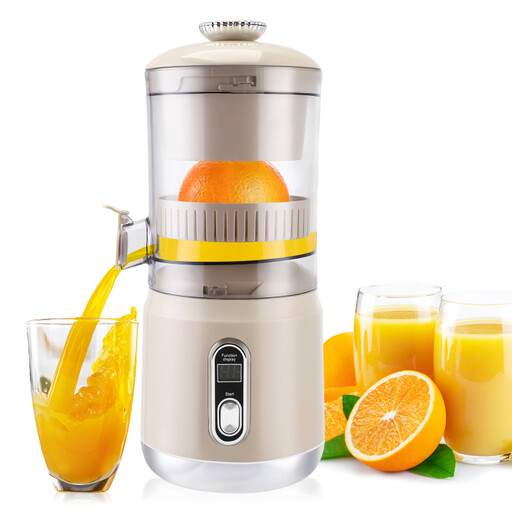
Described as suitable for limes up to 7.5 cm; check that this size is right for the fruit you want to juice in the office.
The removable parts are described as dishwasher-safe. The product name mentions a drip-stop.
 No image available
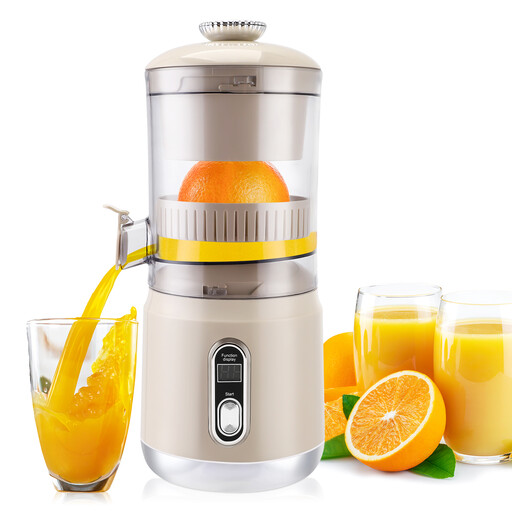
The product details list limes as a suitable citrus fruit; a jug may be a good fit if you want to collect several servings.
The lid, juicing cone and juice jug are removable and, according to the product description, can be rinsed under running water.
 No image available
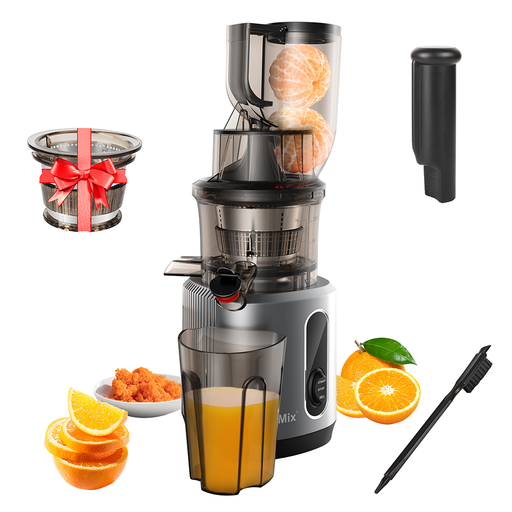
The details list oranges, grapefruit and lemons. Before using it with small limes, check that the cone is the right size for them.
The product name lists 200 W, a 700 ml capacity and a two-button control panel. The removable parts are described as dishwasher-safe.
 No image available
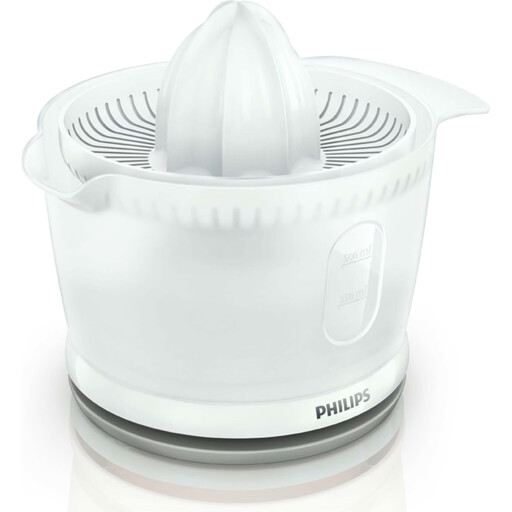
The product description lists oranges, lemons and grapefruit. Before buying, check whether the cone is also suitable for your limes.
Features listed include a 500 ml juice jug, a drip-stop spout and dishwasher-safe removable parts.
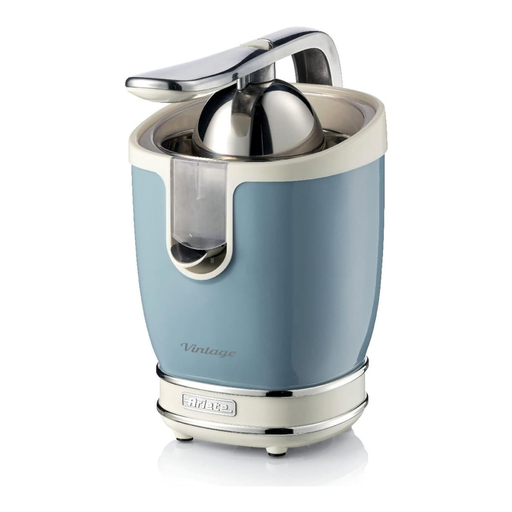 No image available
The product name lists two juicing cones for large and small fruit. Check whether the smaller cone is suitable for your limes.
Other details in the product name include a drip-free spout and 85 W; the product description lists removable parts.
Clean the parts that came into contact with juice and wipe down the worktop after use. Germany’s Federal Centre for Nutrition points out that shared kitchen equipment can spread contamination. Whether parts can go in the dishwasher depends on the model: WMF says the removable parts of the Stelio can, while Severin says the individual parts of the CP 3535 cannot.
No. By affixing the CE marking, the manufacturer declares that the product meets the relevant EU requirements; it is not an independent safety certificate, as Your Europe, an information service provided by the European Union, explains. The Low Voltage Directive applies to electrical equipment rated between 50 and 1,000 V AC or 75 and 1,500 V DC.
EU requirements apply to food-contact materials, including rules designed to prevent harmful amounts of substances from being released. The European Commission describes a harmonised legal framework for this; check the information for the specific appliance and its parts that come into contact with juice.
No. If a product is faulty, your statutory rights apply against the seller; a manufacturer’s guarantee is an additional voluntary commitment that comes with its own terms and conditions. The Verbraucherzentrale (German consumer advice centre) explains the difference.