
Lieferung heute & morgen

Qualitätsgarantie

Willkommens-Angebote freischalten: KOSTENLOSE Lieferung | Bis zu 80 % RABATT | Kostenlose 30-Tage-JoyPlus-Testphase
App herunterladen
A lined A5 notebook may seem straightforward at first glance: choose the format, look at the design and place your order. In practice, however, models vary considerably in terms of paper weight, page count, binding and suitability for everyday use. If you choose based on appearance alone, you may end up with a notebook where ink quickly shows through, which does not lie flat or contains fewer pages than expected.
This buying guide explains which details are relevant before purchasing a lined notebook and which model could suit school, university, the office, journaling or as a gift for writing enthusiasts.
Notebook descriptions often refer to both sheets and pages. For example, 96 Sheets corresponds to 192 pages if both the front and back can be written on. An offer described as “60 Sheets/120 Pages” therefore contains 60 sheets or 120 pages.
Before buying, you should check:
The figure in g/m² describes the paper’s grammage, but does not automatically indicate its overall quality. 100-g/m² paper is stronger than 70-g/m² paper and may be better suited to fountain pens, rollerball pens or markers. Even so, the writing experience and show-through also depend on the paper coating, type of ink and writing pressure.
If you regularly write with liquid ink, you should pay close attention to the specific product description. The Jubiluu models, for example, are described as using 100-g/m² offset or wood-free ivory-coloured paper. With a 70-g/m² spiral notebook, the focus is more on low weight and an affordable multipack.
A notebook with an elastic strap, ribbon marker or elaborately decorated hardcover may look appealing. For everyday use, however, it is also important to consider whether the binding is sturdy, whether the book lies flat and whether it fits in your bag or rucksack.
A hardcover provides better protection against creasing. A spiral binding, on the other hand, often allows the notebook to lie flat and makes turning the pages easy. Decorative fabric or foil covers should be protected from moisture and cleaned only with a soft, dry cloth.
The A5 format measures approximately 14.8 × 21 cm. It provides enough space for notes, to-do lists and journaling, while generally remaining easier to carry than an A4 notebook. A5 is therefore a versatile format for your daily journey to school, university or the office.
For a writing journal or diary, a sturdy cover and a sufficient number of pages are also useful. If you organise notes by subject, a pack of four allows you to use separate notebooks for university, work and personal projects.
A lined notebook is suitable for continuous text, minutes, vocabulary and daily notes. The lines should be printed evenly and provide enough space for your preferred writing size. A squared notebook, on the other hand, is better suited to tables, calculations or technical sketches.
You should also check whether the product is actually lined. According to its product description, the LAMY B7 Hardcover Notebook in A5 comes with blank pages and is therefore more suitable for sketches, mind maps and free writing.
Practical features may include:
Not every extra is necessary for every purpose. For an office or school notebook, a spiral binding may be more important than a decorative cover. For a gift or a personal A5 journal, however, the design may play a greater role.
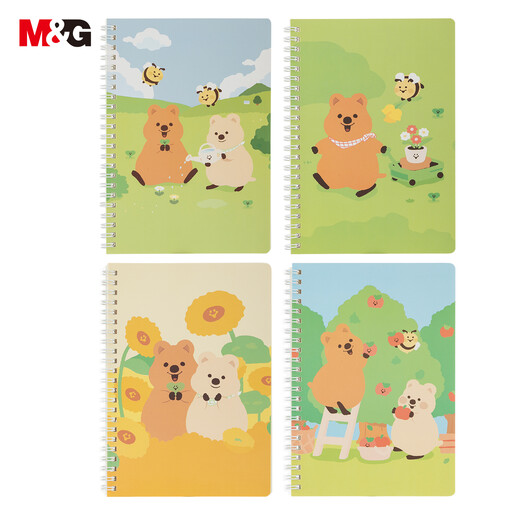
Why this product suits this profile: Four lined A5 spiral notebooks make it easy to separate subjects, projects or personal notes. The format remains compact, while the spiral binding makes turning the pages easier.
The description states both 60 sheets and 120 pages per notebook. This makes it easier to assess the actual capacity.
Lined paper, spiral binding, A5 format and a pack of four with different cover designs.
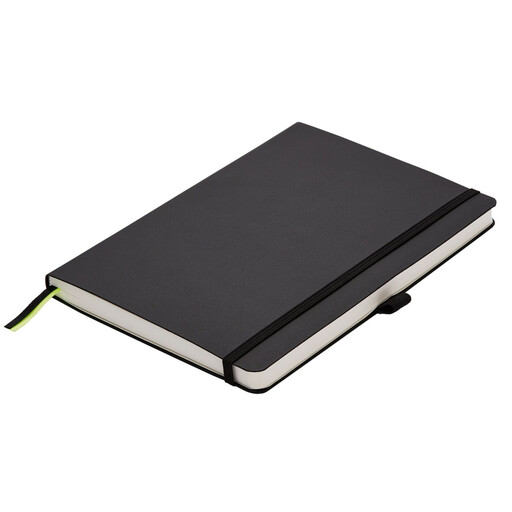
Why this product suits this profile: This A5 notebook combines 192 lined pages with thread stitching, two ribbon markers, a pen loop, a paper pocket and an elastic strap.
The product details clearly specify lined LAMY paper, 90 g/m², thread stitching and the included organisational features.
192 pages, two ribbon markers, pocket, pen loop and elastic closure.
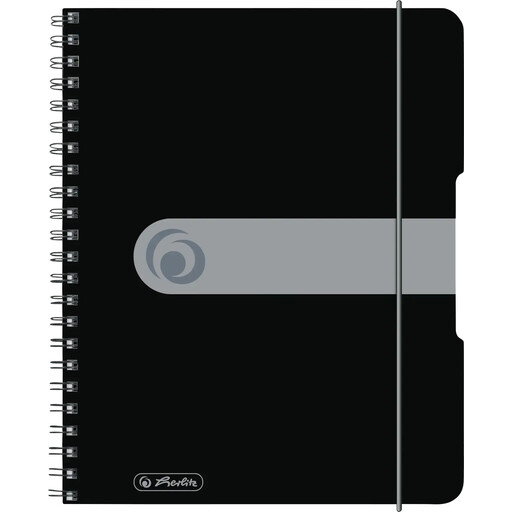
Why this product suits this profile: The squared ruling with a white border is practical for calculations, tables, lessons and sketches. The set contains two notepads.
The product description explicitly states 80 sheets or 160 pages per pad, as well as microperforation and six-hole punching.
Twin-wire binding, lies flat, removable pages and the option to file them in a folder.
We have put together a complete, regularly updated list of products that fully meet these strict selection criteria and the safety regulations applicable in the EU.
A notebook will last longer if it is stored in a dry place and not exposed to direct sunlight for extended periods. Hardcover models should not be folded completely back, as this can put strain on the spine and thread stitching. When using ink or markers, it is advisable to let the pages dry completely before closing the notebook.
For school and office use, clear labelling on the cover is helpful. When journaling, a ribbon marker can make daily use easier. A decorative hardcover with floral or botanical motifs also makes a thoughtful gift for writing enthusiasts, provided that the ruling and page count meet the recipient’s needs.
For occasional notes, 60 sheets are often sufficient. If you want to keep a diary, study record or ongoing work journal, around 80 to 96 sheets or 160 to 192 pages offers greater flexibility. It is important not to confuse the number of sheets with the number of pages.
An A5 hardcover notebook provides better protection for your notes and looks well-structured when closed, whether used in meetings or given as a gift. A spiral binding generally lies flatter and is suitable for taking notes, working through calculations and turning pages frequently. The right choice depends on how you plan to carry it and your writing style.
A higher paper weight, such as 90 to 100 g/m², can be beneficial when using liquid ink. However, there is no guarantee that it will work perfectly with every writing instrument. The type of ink, nib width and writing pressure also affect the result. If you write with a fountain pen, check the relevant product description for details of the paper type and how it handles ink.