
Lieferung heute & morgen

Qualitätsgarantie

Willkommens-Angebote freischalten: KOSTENLOSE Lieferung | Bis zu 80 % RABATT | Kostenlose 30-Tage-JoyPlus-Testphase
App herunterladen
A lined A5 notebook fits into many bags and offers enough space for notes, to-do lists, journalling or a personal diary. However, product images and terms such as ‘premium’ alone say little about how suitable a notebook is for everyday use. The key factors are paper weight, binding, features and your intended use.
The Joybuy Product Recommendation Officer buying guide explains what pupils, students, professionals, prolific writers and stationery enthusiasts should look for when buying.
Notebook specifications often distinguish between sheets and pages. A book with 96 sheets usually contains 192 writable pages, provided that both sides can be used. An offer stating ‘60 Sheets/120 Pages’, on the other hand, corresponds to 60 sheets or 120 pages.
If you only look at a high page count, you may therefore compare different products incorrectly. When choosing a journal or an A5 diary, always check this information carefully.
Paper thickness is often stated in grams per square metre (g/m²). 70 g/m² paper is lighter and suitable for ballpoint pens or short notes. 90 to 100 g/m² generally provides a firmer writing surface and can reduce show-through with suitable inks. However, this does not guarantee compatibility with every fountain pen ink, marker or gel refill.
If you write with a fountain pen, also check the specific paper description and test strong inks on an inconspicuous page first.
A fabric notebook or hardcover notebook looks smart, but is often heavier than a softcover or spiral-bound model. Foil details, ribbons and elastic bands can also be sensitive to moisture and heavy rubbing. In a notebook with a bookmark, the ribbon should be securely attached and should not protrude between the pages during transport.
The standard A5 size is approximately 14.8 × 21 cm. It offers a practical compromise between writing space and portability. For lectures, meetings and notes on the go, this format is easier to carry than A4. However, if you are planning extensive sketches, tables or large mind maps, make sure you assess the available space realistically.
The following points are relevant when choosing the ruling:
For frequent writing, specifications such as 70 g/m², 90 g/m² or 100 g/m² are more useful than vague marketing claims. 100 g/m² describes a more robust paper quality; however, drying time and show-through depend on the writing instrument used.
Cream or ivory paper may feel more comfortable for longer handwritten texts, while white paper offers greater contrast. For a stylish notebook as a gift for stationery enthusiasts, paper colour also makes a difference visually.
An A5 spiral notebook can usually be opened wide and laid flat on a desk. This is practical for taking notes and working through calculations. However, spiral binding can bend if it is repeatedly pressed inside a rucksack. Thread-sewn or firmly glued binding gives the notebook a more solid feel and protects the pages, but it cannot always be folded completely back on itself.
Useful features include:
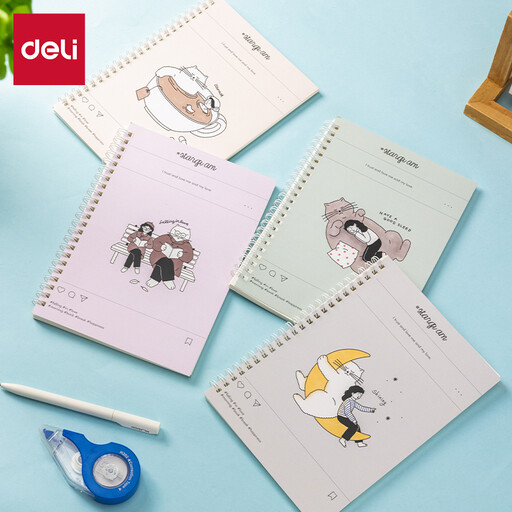
Why this product suits the profile: The 4-pack is ideal for pupils and students who want to organise subjects, projects or private notes separately.
The stated size of 148 × 210 mm and the ruling make direct comparison easier, while the spiral binding is designed for easy page-turning.
A5 format, lined pages and four separate notebooks.
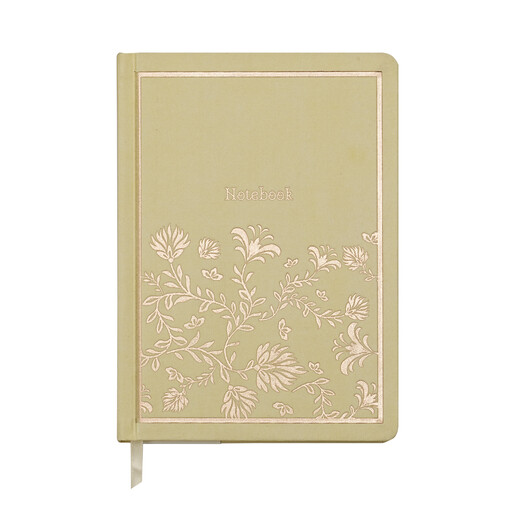
Why this product suits the profile: This fabric notebook combines a decorative hardcover with a classic lined interior, making it suitable for journalling, the office or gifting.
The product details specify 96 sheets or 192 pages, 100-g/m² paper, a bookmark and an elastic band.
100-g/m² ivory paper, fabric hardcover and decorative foil or embossed finishing.
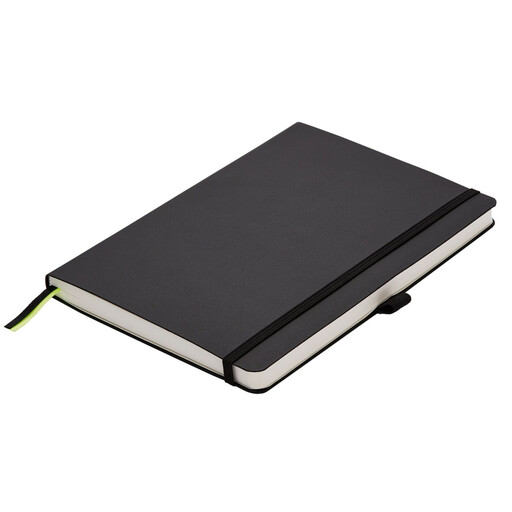
Why this product suits the profile: With 192 pages, two bookmark ribbons, a pen loop, paper pocket and elastic band, it is well suited to professionals and prolific writers.
The features are clearly specified: 90 g/m² paper, thread-sewn binding, two ribbons and a pocket for loose documents.
Practical organisation features, flexible cover and 90 g/m² paper.
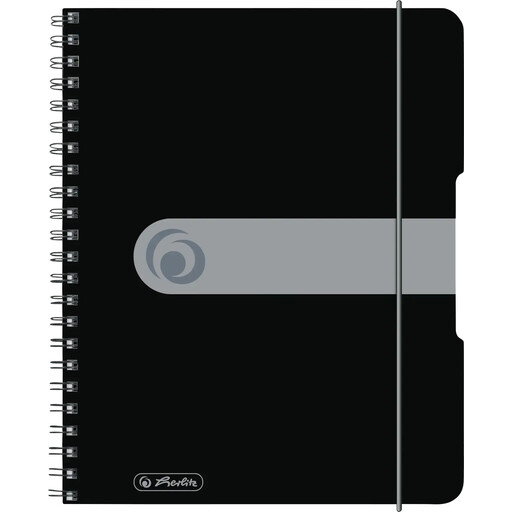
Why this product suits the profile: The twin pack is aimed at users who want to remove, file and continue using their notes in a structured way at school or in the office.
The specifications state 80 g/m², squared special ruling, micro-perforation, six-hole punching and Twin-Wire binding.
160 pages per notebook, lays flat and is easy to file thanks to the punched holes.
We have put together a complete, regularly updated list of products that fully meet these strict selection criteria and the safety regulations applicable in the EU.
A notebook will remain usable for longer if it is stored somewhere dry and protected from direct sunlight. Liquids can wrinkle the paper and deform the binding. With a hardcover, avoid folding the cover permanently backwards unless the manufacturer specifically allows this. Spiral notebooks should not be stored underneath heavy objects, as this can bend the spiral.
Lifespan also depends on daily use, the weight carried in your rucksack and the writing instruments used. A notebook for occasional meetings will experience different levels of wear from an A5 diary that is written in every day for many months.
For ballpoint pens and pencils, 70 to 90 g/m² is often sufficient. If you prefer a firmer writing feel or use gel pens, you can choose 90 to 100 g/m². With fountain pens and markers, check the paper’s specific suitability.
An A5 hardcover notebook protects the pages better and is suitable for journalling, meetings or gifting. A spiral notebook is easier to lay flat and is practical for lessons, calculations and quick notes. The right choice depends on how you transport it and the writing position you prefer.
For regular writing, 160 to 192 pages provide a larger supply. If you keep several topics separately, a 4-pack can give you greater flexibility. The key consideration is whether the notebook will be used over several weeks, throughout a project or only for individual appointments.