
Lieferung heute & morgen

Qualitätsgarantie

Willkommens-Angebote freischalten: KOSTENLOSE Lieferung | Bis zu 80 % RABATT | Kostenlose 30-Tage-JoyPlus-Testphase
App herunterladen
A lined A5 notebook is compact enough for a rucksack, work bag or desk, while still offering plenty of space for notes, journalling and daily planning. However, product images and descriptions such as “high quality” or “premium notebook” alone reveal little about how practical a notebook will be in everyday use.
Three common buying misconceptions frequently lead to the wrong choice:
For everyday use, paper weight is a useful point of comparison. The models featured here include 70 g/m², 90 g/m² and 100 g/m², for example. Heavier paper often feels more robust and may be more pleasant to write on with a ballpoint pen, gel pen or fountain pen. However, this alone cannot be taken as a blanket guarantee of ink compatibility.
Look out for the following details:
Those looking for an A5 journal or an A5 diary will generally benefit from evenly spaced lines and enough pages for longer entries.
An A5 hardcover notebook protects the pages from creasing during everyday transport better than a flexible cover. PU leather, coated card, fabric and plastic differ in feel, care requirements and durability. “Leather” should not automatically be taken to mean genuine leather – the Jubiluu model is explicitly described as PU leather.
The binding also affects how the notebook can be used:
A notebook with a ribbon marker makes it quick to find your place again. A writing book with an elastic strap stays closed during transport and protects loose sheets inside the book. A pen loop means less time spent searching for a suitable pen.
Before buying, check exactly which features are included. Depending on the model, the Jubiluu versions list a ribbon marker, elastic closure and, in some cases, a pen loop. On decorative versions, foil embossing or textile surfaces may be more sensitive to moisture and friction. A floral notebook can therefore be both a functional writing book and a gift for stationery lovers, but it should be stored in a dry place.
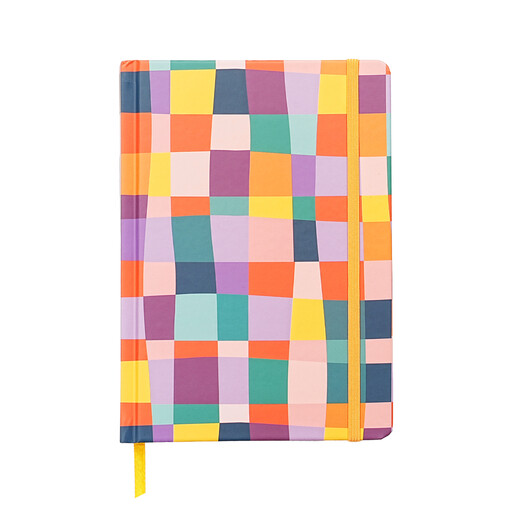
Why this product suits this profile: The A5 format is suitable for school, the office and use on the go. With 96 sheets of 100-g/m² offset paper, there is plenty of room for notes, lists and personal thoughts.
The product details clearly state the format, number of sheets, paper weight and included extras, rather than simply making a general quality claim.
Hardcover, ribbon marker, elastic closure and pen loop; ten listed colour options make it easier to choose.
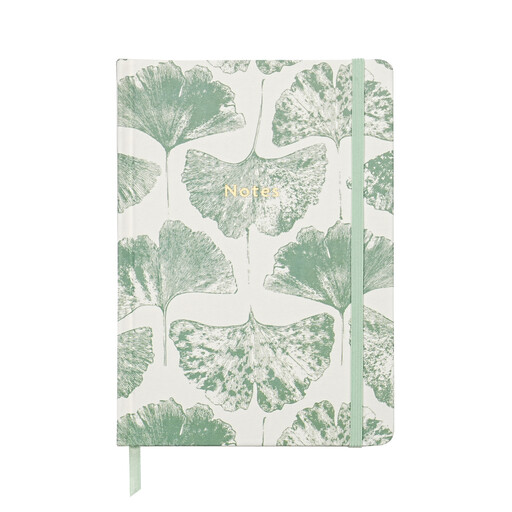
Why this product suits this profile: The fabric hardcover with foil embossing or embossed detailing is aimed at users who want to combine practical writing with decorative design.
The product description highlights the textile surface and the need for dry, gentle care. This makes the choice of material transparent.
100-g/m² ivory paper, 96 sheets or 192 pages, plus ribbon marker and elastic band.
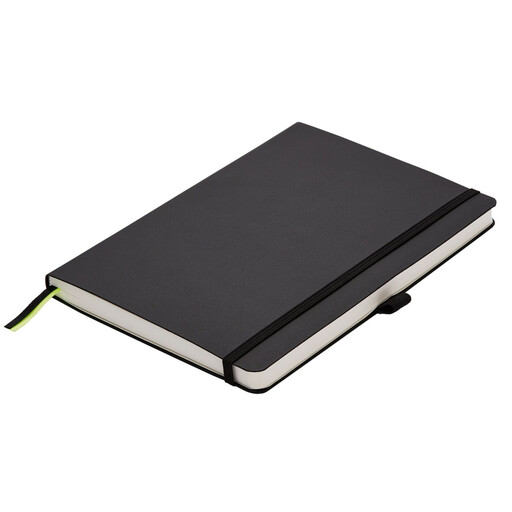
Why this product suits this profile: This model combines the lighter weight of a softcover with several organisational features for professionals, students and regular writers.
The specifications list 192 pages, 90-g/m² paper, thread stitching, two ribbon markers, a pen loop and a storage pocket. This makes the range of functions clear.
Thread stitching, two ribbon markers, elastic closure and rear paper pocket; A5 dimensions of approximately 145 × 210 mm.
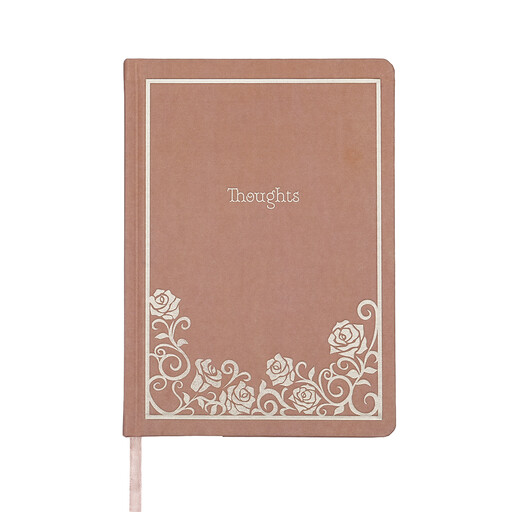
Why this product suits this profile: Its floral or nature-inspired design, fabric hardcover and lined paper make this model suitable for personal entries and as a stylish gift.
The description states the material, paper weight, page count and care instructions. It also makes no claims about specific environmental certifications.
96 sheets of lined 100-g/m² paper, ribbon marker, elastic band and textile surface with floral or nature-inspired motifs.
We have put together a complete, regularly updated list of products that fully meet these strict selection criteria and the safety regulations applicable in the EU.
For ballpoint pens and pencils, 70 to 90 g/m² is often sufficient. If you use gel pens or fountain pens, check the manufacturer’s information on ink compatibility. 100 g/m² provides a more robust paper base, but it is not an automatic guarantee against show-through.
Its lifespan depends on the binding, cover, transport conditions and exposure to moisture. A hardcover generally protects the contents better than a softcover. Store the notebook in a dry place, avoid bending the book block back too far, and handle the ribbon marker and elastic closure without pulling excessively.
Yes, the format is easy to use for notes, meeting minutes, task lists and journalling. For extensive drawings or very wide tables, A4 may offer more room. However, if you regularly write on the go, A5 provides a practical compromise between writing space and portability.