
Lieferung heute & morgen

Qualitätsgarantie

Willkommens-Angebote freischalten: KOSTENLOSE Lieferung | Bis zu 80 % RABATT | Kostenlose 30-Tage-JoyPlus-Testphase
App herunterladen
A lined hardcover notebook should do more in everyday life than simply look good. School pupils need space for notes, students organise their learning materials, working professionals record tasks, and journal writers look for a reliable surface for daily entries. However, it is often only after buying that you discover whether the format, paper and features really suit the intended use.
Notebook specifications do not always use “pages” and “sheets” consistently. For example, a product with 96 sheets has 192 writable pages if both the front and back can be used. Before buying, check whether the stated number refers to sheets or pages.
A hardcover generally protects the contents better than a softcover. However, the binding, how easily it opens and the closure are also important. A notebook with an elastic band can keep loose papers secure, while a bookmark makes it easier to find a page quickly. Without these details, a stylish notebook may be less practical in a rucksack or on a desk.
Paper thickness is given in grams per square metre, abbreviated to g/m². 100 gsm paper is thicker than 70 gsm paper and may be better suited to fountain pens, rollerball pens or gel pens. However, the writing experience also depends on the surface, amount of ink and pen tip. A blanket statement that paper is suitable for every writing instrument would therefore be misleading.
If you regularly write several paragraphs, A5 is usually the more practical choice. For spontaneous notes on the go, A6 can be the more space-saving option.
Look out for three specific details:
The Jubiluu A5 models each specify 96 sheets or 192 pages. The Jubiluu A6 version contains 80 sheets or 160 pages.
A notebook with a bookmark makes it easier to return to the last page you used. An elastic band keeps the book closed, while a pen loop – where included – means you do not have to search separately for the right pen. Decorative fabric or PU surfaces should be cleaned with a soft, dry cloth. Moisture can cause the paper to ripple and damage the cover material.
For products with small components such as a ribbon bookmark, elastic band or pen loop, follow the relevant safety information. According to the product information, the models mentioned are not suitable for children under three years of age.
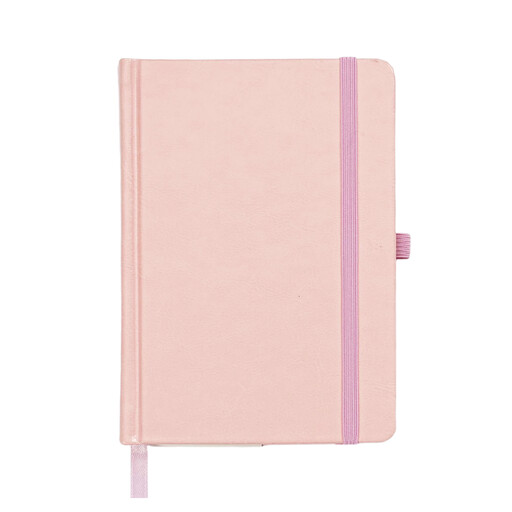
Why this product suits this profile: The compact A6 format is ideal for quick notes, lists and journalling on the go. With 80 sheets or 160 pages, it offers plenty of space for regular entries without adding much bulk to your luggage.
The product details clearly specify the format, paper weight and number of sheets. A bookmark, elastic band and pen loop are also listed.
A6 dimensions of approximately 10.5 × 14.8 cm, 100 gsm offset paper and a PU hardcover with three integrated accessories.
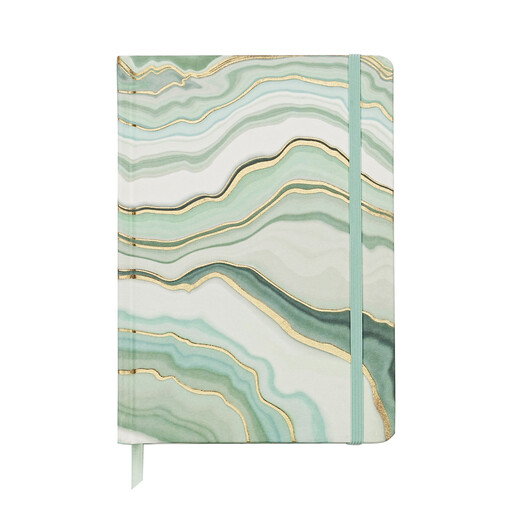
Why this product suits this profile: A5 provides room for longer texts, study notes and a personal diary. The fabric cover with foil or embossed detailing is designed for users who value both texture and appearance.
The choice is based on more than appearance: the 100 gsm ivory paper, 96 sheets and stated dimensions are all clearly specified.
A5 format, 192 pages, 100 gsm wood-free paper, plus a bookmark and elastic band; suitable as a gift for writing enthusiasts.
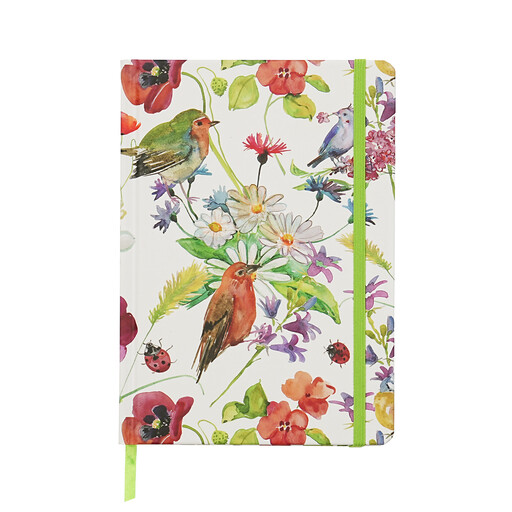
Why this product suits this profile: This A5 notebook combines a sturdy cover with a botanical design, making it suitable for the office, school, creative writing or regular journal entries.
The features go beyond the cover design: the product description specifies a bookmark, elastic band, 100 gsm paper and 192 pages.
Lined 100 gsm offset paper, hardcover, botanical design, plus an elastic band and ribbon bookmark for everyday use.
We have put together a complete, regularly updated list of products that fully meet these strict selection criteria and the safety regulations applicable in the EU.
For school and the office, A5 is usually practical because meetings, lesson content and task lists require more writing space. An A6 model works well as an additional pocket or commuter notebook. Creative users should consider whether they only want lined pages or also need additional blank areas.
If you are looking for a journal for writing or a diary, consider the cover, how easily it opens and the colour of the paper. A decorative fabric cover can serve as a personal accessory, while a PU hardcover is easy to care for with a slightly damp cloth. When choosing a gift, the colour option, format and accessories should also suit the recipient’s writing style.
That depends on how you intend to use it. A5 offers more space for longer texts and structured notes. A6 is lighter and easier to carry. For a detailed journal or a notebook for school and the office, A5 is often more practical; for quick notes on the go, A6 may be enough.
At 100 g/m², the paper is thicker than 70 g/m² and is used in the hardcover models mentioned here. Whether a particular fountain pen or rollerball shows through also depends on the ink and pen. With writing instruments that are prone to bleeding through, it is advisable to test them on a page near the back first.
There is no reliable way to give a general lifespan. It depends on the binding, how the notebook is used, transport and exposure to moisture. An elastic band can keep the book closed, but it does not replace dry storage and careful handling. Fabric and paper surfaces in particular should be protected from water, direct sunlight and excessive heat.