
Lieferung heute & morgen

Qualitätsgarantie

Willkommens-Angebote freischalten: KOSTENLOSE Lieferung | Bis zu 80 % RABATT | Kostenlose 30-Tage-JoyPlus-Testphase
App herunterladen
A lined notebook may seem straightforward at first glance. In practice, however, paper quality, binding and features determine whether it remains genuinely comfortable to use every day. School pupils, students, professionals and journaling enthusiasts should therefore look beyond the cover or decorative design.
An eye-catching hardcover can look appealing, but it does not automatically provide a secure closure or easy navigation. Without a rubber band, bookmark or pen loop, a notebook can quickly become impractical on the go. Loose sheets and suitable pens then have to be carried separately.
The specification 100 g/m² describes the paper weight, but it is not the sole indicator of every desired characteristic. The surface, shade and ink used also influence the writing experience. When choosing a lined notebook for fountain pens, gel pens or markers, check whether the manufacturer provides information about the paper type and intended use.
An A6 notebook is compact and easy to store in a handbag or backpack. For longer notes, however, its smaller writing area can be limiting. An A5 notebook offers considerably more room for lessons, meetings, journaling and creative writing, but naturally requires more storage space.
An A6 notebook typically measures around 10.5 × 14.8 cm. This format is ideal for brief notes, shopping lists, spontaneous ideas and a portable writing journal. Anyone who writes frequently while out and about benefits from its compact dimensions.
An A5 notebook measures approximately 14.8 × 21 cm. This writing area is versatile enough for school, university and the office. It also provides a well-organised space for a diary or creative writing journal. For structured weekly tasks, an undated A5 planner can be useful, provided that the notebook includes suitably divided pages. A lined notebook, by contrast, can be organised freely.
The reference models use 100 g/m² offset paper or cream-coloured, wood-free paper. These specifications provide a clear indication of the material quality. Cream or ivory-coloured pages may appear less high-contrast than pure white paper during longer writing sessions; personal preference remains the deciding factor.
Also look for:
The Jubiluu A6 models contain 80 sheets or 160 pages. The A5 versions offer 96 sheets or 192 pages. The Lamy B4 Softcover A6 is specified as having 192 pages of 90 g/m² paper.
A hardcover notebook protects the book block from pressure and creasing more effectively than a softcover. A rigid cover is particularly practical when carrying the notebook every day in a backpack or work bag. A hardcover does not, however, make the notebook waterproof. PU, fabric, paper and laminated finishes should be protected from moisture.
A notebook with a rubber band stays closed when placed between other documents. A notebook with a bookmark makes it easier to find the current page again. A pen loop is useful when you want to keep a particular ballpoint pen or fountain pen with the notebook. These details are not merely decorative; they should complement the way you write and work every day.
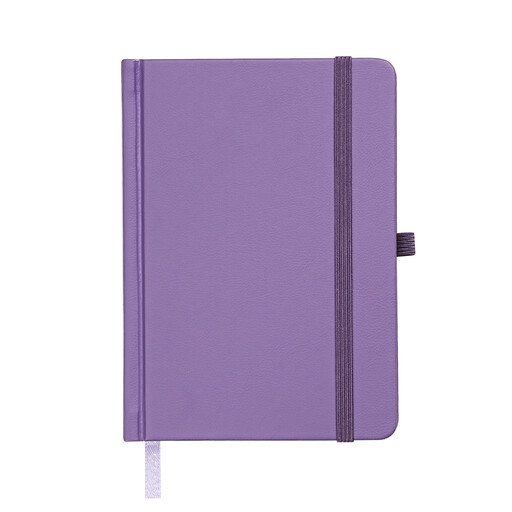
Why this product suits the profile: The compact A6 format is ideal for brief notes, lists and spontaneous entries. Features include 80 sheets of 100 g/m² offset paper, a bookmark, a rubber band and a pen loop.
The technical specifications clearly state the format, sheet count, paper weight and integrated accessories. This makes it easier to assess the notebook’s suitability for everyday use before buying.
A6 dimensions of approximately 10.5 × 14.8 cm, PU hardcover and pen loop.
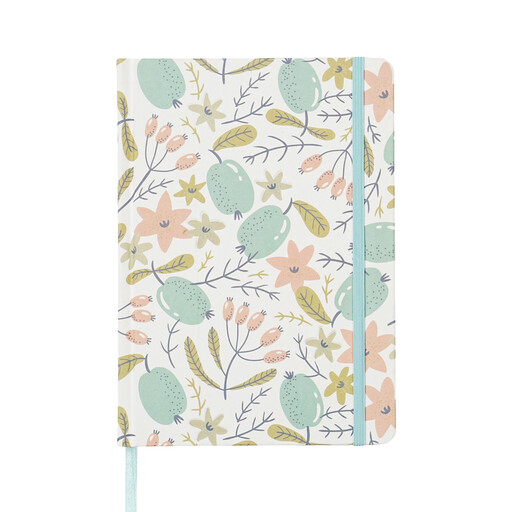
Why this product suits the profile: The A5 format combines a versatile writing area with a sturdy fabric hardcover. With 96 sheets or 192 pages of 100 g/m² wood-free paper, it is well suited to extended notes, journaling and creative writing.
The capacity is clearly specified. The bookmark and rubber band are listed as integrated features, so there is no need to add them separately.
A5 dimensions of approximately 14.8 × 21 cm, fabric hardcover and 192 pages.
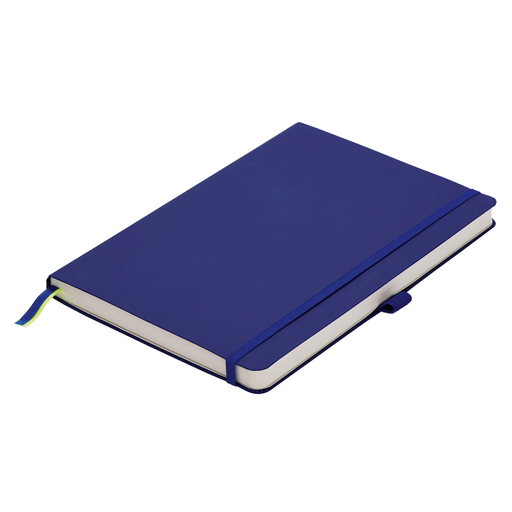
Why this product suits the profile: With 192 pages, two ribbon bookmarks, a pen loop and a back pocket, this A6 model is designed for frequent use and changing notes.
The feature set goes beyond that of a basic notebook: multiple bookmarks and the back pocket help with parallel topics and loose papers.
192 ivory-coloured pages of 90 g/m² paper, two ribbon bookmarks and a back pocket.
A notebook stays looking its best for longer when stored in a dry place and protected from direct sunlight. Depending on the finish, PU and fabric covers can be cleaned with a soft, slightly damp or dry cloth. Harsh cleaning products and excessive moisture can damage the paper, adhesive and finishing details.
For school and office use, choose a rubber band that is not kept stretched permanently. Bookmarks should be pulled out gently. Small components such as ribbons and loops are not suitable for children under three years of age.
We have compiled a complete, regularly updated list of products that fully meet these strict selection criteria and the safety regulations applicable in the EU.
A6 is ideal for portable quick notes and small lists. A5 offers more room for lessons, meetings, journaling and longer texts. The right choice depends on how you usually carry the notebook and how much writing space you need.
For occasional notes, 80 sheets may be sufficient. Anyone keeping a diary, writing journal or work notes over an extended period will have greater flexibility with 96 sheets or more. Check whether the retailer counts sheets or pages.
Yes, a hardcover can help keep the book block stable during transport. However, it does not automatically protect against water or severe deformation. A rubber band, a suitable bag and dry storage provide additional everyday protection.