
Lieferung heute & morgen

Qualitätsgarantie

Willkommens-Angebote freischalten: KOSTENLOSE Lieferung | Bis zu 80 % RABATT | Kostenlose 30-Tage-JoyPlus-Testphase
App herunterladen
A lined hardcover notebook should do more in everyday life than simply look good. It accompanies pupils and students in lessons, university students in lectures, professionals in meetings and journal writers as they record personal thoughts. However, it is often only after buying one that you discover whether the format, paper and features really suit the intended use.
A decorative finish or leather-look cover alone says little about how well a notebook will stand up to everyday use. With a hardcover notebook, the details of the cover material, binding and care requirements should be clear and easy to verify. PU, fabric and plastic each have different properties from real leather or a paper cover.
A hardcover generally protects the pages from pressure and creasing better than a softcover notebook. However, it may be slightly less flexible and take up more space in your bag.
Some product details refer to sheets, while others refer to pages. 80 sheets generally correspond to 160 written pages, provided that both sides can be used. If you only look at the page count, you may therefore be comparing different sizes.
Paper weight is also relevant: 90 g/m² and 100 g/m² describe the weight per square metre, not automatically how suitable the paper is for every type of ink. Claims about show-through or bleed-through should therefore always be considered alongside the specific paper type and writing instrument being used.
A notebook with a ribbon marker, elastic closure or pen loop can be more practical in everyday use. What matters, however, is whether these features are actually included and whether they suit the way you intend to use the notebook. An elastic closure keeps the book shut, but does not replace a pocket for loose documents. A ribbon marker marks your page, while a pen loop is only suitable for pens of the right size.
An A5 notebook measures approximately 14.8 × 21 cm and provides enough space for notes, daily planning, sketches and a writing journal. It will usually fit in a work bag or rucksack, making it suitable for the office and school.
An A6 notebook is considerably more compact at approximately 10.5 × 14.8 cm. It is suitable for short notes, shopping lists, ideas on the go or as a small diary and journal. The writing area is more limited, however. If you often write longer texts or meeting notes, A5 is likely to be the better choice.
The following details are particularly useful when choosing a lined notebook:
For fountain pens, gel pens or markers, check the manufacturer’s information about the paper. Paper weight alone cannot guarantee suitability for every writing instrument.
A hardcover is a sensible choice if the notebook is often carried around or used on a crowded desk. A softcover is lighter and easier to slip into narrow bags. When choosing a high-quality notebook, therefore, it is not just the appearance and price that matter, but the combination of format, cover, paper and features.
For PU or fabric covers, dry or lightly damp cleaning with a soft cloth is recommended. Moisture, direct sunlight and intense heat can affect the paper, adhesive and cover.
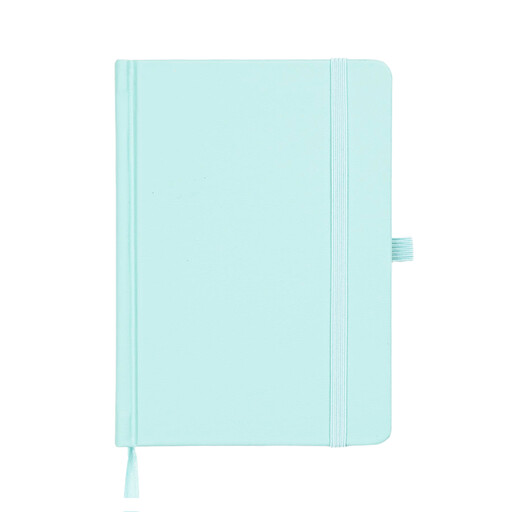
Why this product suits the profile: The compact A6 format is designed for short notes, lists and ideas on the go.
The features are clearly specified: 80 sheets or 160 pages, 100-g/m² offset paper, ribbon marker, elastic closure and pen loop.
A6 dimensions of approximately 10.5 × 14.8 cm and a PU hardcover available in ten colour options.
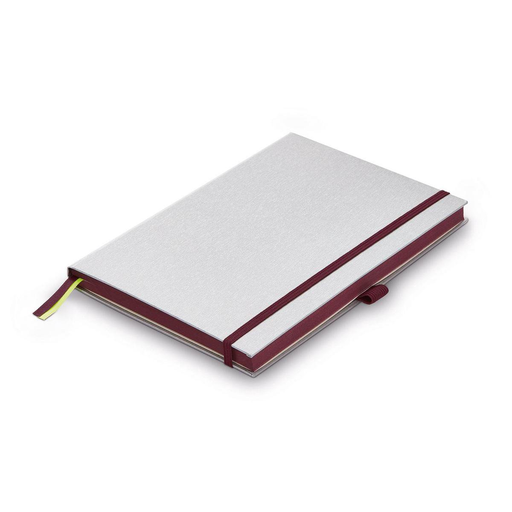
Why this product suits the profile: The A6 version combines a compact format with several features for regular writing and organisation.
The product details specify 90-g/m² paper, 192 pages, thread binding, a pen loop, elastic closure and two ribbon markers.
Additional rear pocket and eight removable sheets according to the product description.
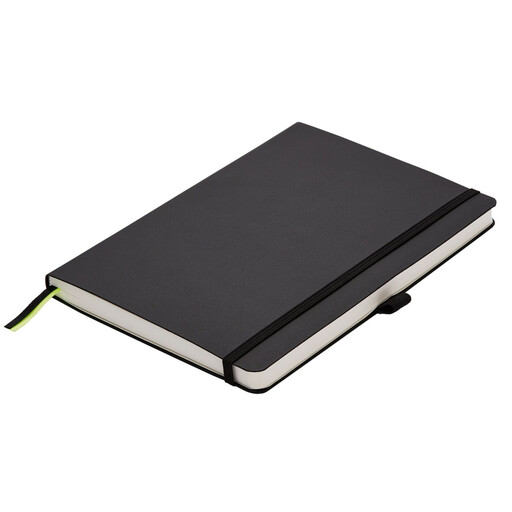
Why this product suits the profile: The A5 format provides more writing space for university, the office, journalling and extensive notes.
The details explicitly specify ruling, 192 pages, 90-g/m² paper, thread binding and eight removable sheets.
Pen loop, two ribbon markers, pocket and elastic closure for office and school documents.
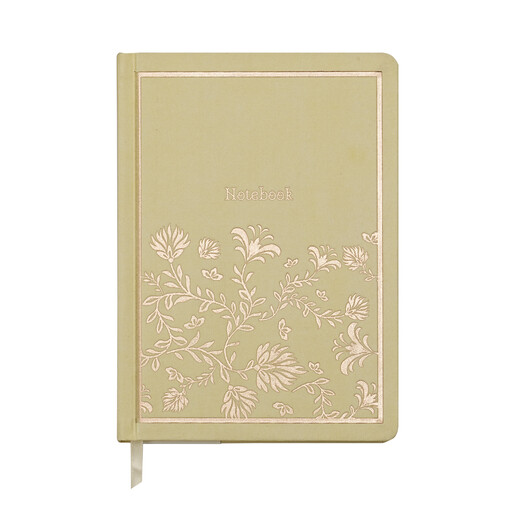
Why this product suits the profile: The decorative fabric cover is ideal for a diary or journal, personal notes or as a gift notebook.
The material and features are clearly specified: fabric cover, 100-g/m² paper, 96 sheets or 192 pages, ribbon marker and elastic closure.
A5 dimensions of approximately 14.8 × 21 cm and nature-inspired designs with embossed or foil finishes.
We have put together a complete, regularly updated list of products that fully meet these strict selection criteria and the safety regulations applicable in the EU.
It depends on how you plan to use it. A5 offers more space for lessons, meetings, longer texts and journalling. A6 is easier to carry and is ideal for short notes, lists and spontaneous ideas.
There is no one-size-fits-all answer. Its lifespan depends on the paper, binding, how it is transported and exposure to moisture. A hardcover can protect the pages during everyday use; dry storage and careful handling of the elastic closure and ribbon marker can help extend its life.
Paper weighing 90 or 100 g/m² may be suitable for many writing instruments, but this alone does not prove that it will prevent bleed-through. If you regularly use fountain pens or markers, check the specific product description and take care when using the paper with particularly wet ink.