
Lieferung heute & morgen

Qualitätsgarantie

Willkommens-Angebote freischalten: KOSTENLOSE Lieferung | Bis zu 80 % RABATT | Kostenlose 30-Tage-JoyPlus-Testphase
App herunterladen
Linen curtains lend any room a natural elegance and timeless comfort. Their characteristic texture and soft drape are highly sought-after for designing living rooms and bedrooms. However, the selection process has pitfalls that can lead to disappointment and unnecessary expense. Not every product marketed as a "linen curtain" lives up to expectations in terms of material and function.
As your Joybuy Product Recommendation Officer, I'll help you identify the key features to look for. We'll highlight the three most common buying mistakes and show you what really matters when finding the perfect curtains for your home.
Before you make a decision, it's important to distinguish common marketing claims from actual product features.
Many curtains are advertised with the term "linen" but are made entirely of synthetic fibres like polyester. A linen-look curtain may mimic the texture of real linen, but it doesn't offer its specific properties, such as breathability and the signature, slightly irregular weave. Anyone looking for the feel and material properties of natural fibres can easily make a poor purchase here.
The terms "room darkening," "light filtering," and "blackout" are often used interchangeably, but they describe different functions. A light-filtering curtain softens daylight and creates a soft ambiance, but it doesn't offer complete protection from brightness. A true blackout linen curtain, on the other hand, should be equipped with a special coating or a sewn-in liner that blocks nearly 100% of incoming light—a crucial factor for bedroom curtains.
Pure linen is a natural fibre that tends to shrink if cared for improperly, especially when washed in hot water. A curtain that fit perfectly before purchase can suddenly become too short after the first wash. High-quality linen products are often pre-washed to minimise this risk. This problem is less common with blended fabrics or easy-care alternatives.
To avoid these mistakes, you should carefully examine three key parameters.
The choice of material significantly impacts the look, care, and functionality.
Consider what function the curtain should serve in the specific room.
The design should complement your interior style.
Here are some recommendations tailored to specific requirements and interior styles.
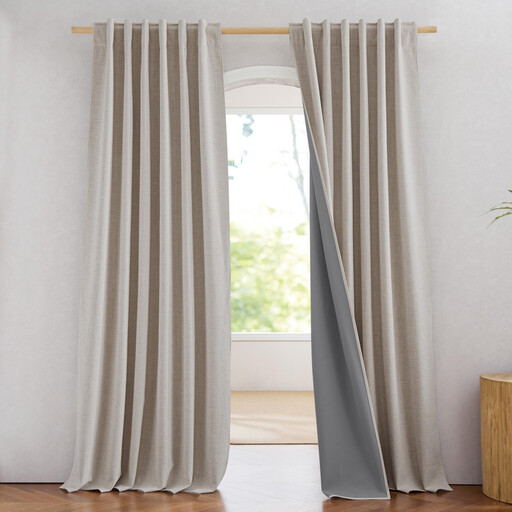
Why This Fits Their Persona: Ideal for those who need absolute darkness for a restful sleep. The combination of a linen blend fabric and a thermal insulating layer meets both aesthetic and functional demands in the bedroom.
This curtain avoids the pitfall of inadequate light blocking with an integrated black lining layer that, according to the manufacturer, blocks 100% of light, not just dims it.
Offers blackout and thermal insulation in one. The linen blend ensures an attractive look with high functionality.
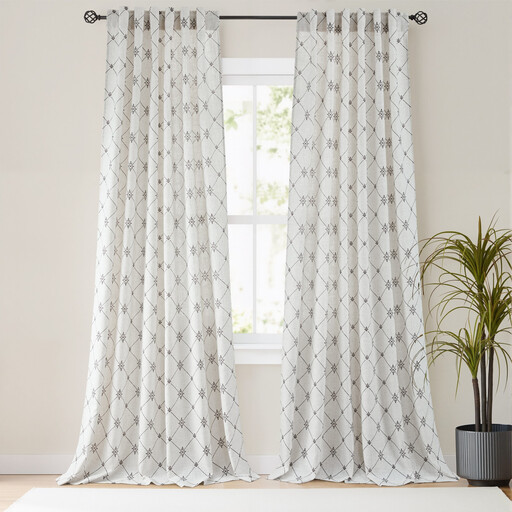
Why This Fits Their Persona: Perfect for anyone wanting to create a bright, cosy atmosphere in their living or dining room. The subtle pattern and light-filtering property are an ideal match for boho and nature-inspired interior styles.
This curtain is clearly declared as "light-filtering" and doesn't create the false impression of having a blackout function. The linen-cotton blend is also easier to care for than pure linen.
Strikes a balance between privacy and natural light. The subtle geometric pattern adds a stylish, understated touch to the room.
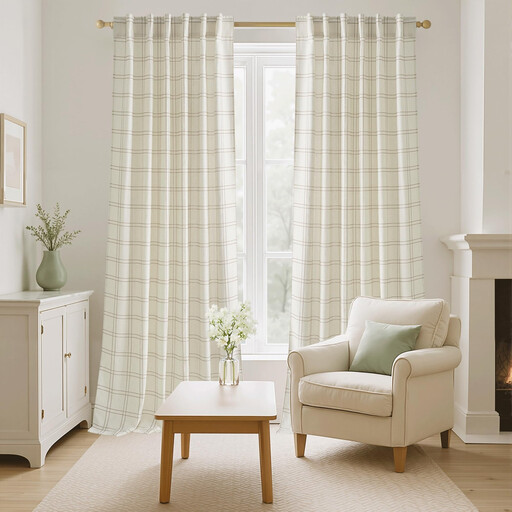
Why This Fits Their Persona: For everyone who loves the classic charm of farmhouse style. The gingham plaid pattern in subtle colours creates a warm and inviting atmosphere that pairs perfectly with wooden furniture and rustic decor.
The linen blend fabric offers the desired rustic look but is more durable and less prone to shrinking than pure linen, which makes it longer-lasting and easier to care for.
The timeless plaid pattern is a strong design element. The combination of a rod pocket and back tabs allows for flexible hanging options.
We have compiled a complete, up-to-date list of products that fully meet these strict selection criteria and applicable standards.
Measure the width of your curtain rod or track (not including the finials). For an appealing fullness, the total width of the curtains should be 1.5 to 2.5 times the width of the rod. The length depends on whether you want the curtains to end at the windowsill, below it, or reach the floor. Measure from the top of the rod to your desired endpoint.
Real linen curtains are made from the natural fibre of the flax plant. They are breathable, durable, and have a characteristic, slightly irregular texture. Linen-look curtains are typically made of polyester and mimic the appearance of linen. They are generally more wrinkle-resistant, easier to care for, and often less expensive, but they do not possess the specific material properties of real linen.
Always follow the manufacturer's care label. Generally, a cold wash or a gentle cycle at a maximum of 30°C (86°F) is recommended for pure linen or linen blend curtains. Avoid the tumble dryer and let the curtains air-dry, ideally by hanging them, to reduce heavy creasing. If necessary, iron them while they are still slightly damp.