Short on space
If drying and storage space are limited and you only iron a few linen napkins, take them straight off the line while they’re still slightly damp. Hoffmann Linen Weaving recommends ironing linen while it is still slightly damp.


For a few linen napkins, a steam iron is usually the obvious place to start: linen is easy to smooth when slightly damp, and the iron doesn’t need a separate base. If you regularly iron larger quantities, a steam generator iron may be worth considering for its larger tank, provided you have room for the base. A garment steamer is compact to store, but it doesn’t have an iron’s soleplate for pressing crisp edges precisely.
If drying and storage space are limited and you only iron a few linen napkins, take them straight off the line while they’re still slightly damp. Hoffmann Linen Weaving recommends ironing linen while it is still slightly damp.
If you want to press napkins neatly for a set table, look for an iron with a soleplate and a pointed tip that can reach seams and edges. Rowenta says the precision tip on the Focus Excel DW5310 is useful for narrow edges.
If you regularly iron lots of napkins one after another, you can weigh up longer ironing sessions without frequent refills against the extra space a steam generator needs. Tefal lists a removable 1,7 l tank for the Express Easy SV6131.
Best for: smoothing individual napkins or small quantities on an ironing surface.
Things to consider: The tank is smaller than a steam generator’s. The F.A.Z. buying guide also notes that steam irons may leave water droplets on fabrics.
Best for: ironing larger quantities regularly, if you have room for the base and an ironing surface.
Things to consider: The base needs extra space. Tank capacity and steam output are model-specific figures and, on their own, don’t prove that a steam generator will save time when pressing napkins.
Best for: freshening table linen when storage space is limited.
Things to consider: A garment steamer doesn’t have the soleplate of an iron for pressing a crisp edge precisely.
Hoffmann Linen Weaving recommends ironing linen while it is still slightly damp. As well as steam output and tank capacity, consider where you can safely put down the hot appliance and whether you have a suitable ironing surface.
| Buying priority | What to look for | Who is it most relevant to? |
|---|---|---|
| Limited drying and storage space | Appliance dimensions and a safe place to put it down; a steam generator needs room for its base. | If you only have a few napkins and space is tight, you’ll want to iron them one after another while they’re still slightly damp. Around 36 % of consumers in this group put space requirements first. |
| Smooth fabric and precise edges | Soleplate and tip shape; also check the napkins’ care label. | If you want your napkins to have a crisp edge for a set table, the soleplate and tip matter. For around 29 % of consumers in this group, a precise finish is the main priority. |
| Larger quantities without frequent refills | Weigh up tank capacity alongside the space needed for the whole steam generator. | If you regularly iron lots of napkins in one go, avoiding frequent refills may matter more than having a compact appliance. Around 21 % of consumers in this group prioritise larger quantities and longer ironing sessions. |
| Maintenance, drips and ease of use | Check the specific model for an anti-drip system, descaling process and automatic switch-off. | If you want to avoid drips on fabrics and time-consuming care, look for an anti-drip system and a straightforward descaling process. For around 14 % of consumers in this group, easy maintenance and handling are the main priorities. |
The tank and steam figures quoted for individual models come from the manufacturers. For example, Braun lists 45 g/min continuous steam and a 270 ml tank for the FI3194BK; these figures don’t show that it will give better results on linen napkins.
Steam output and tank capacity are manufacturer figures for specific models. A steam iron may be more than enough for a few napkins.
Start by considering the size of your batches and the space available. Then compare steam output, tank capacity and soleplate.
A garment steamer doesn’t have an iron’s soleplate. The fact that it is less suited to creating a sharply pressed napkin edge follows from its design, rather than from a comparative test on napkins.
A garment steamer is better suited to freshening fabrics. If defined edges matter to you, look for an appliance with a soleplate.
The F.A.Z. buying guide identifies water droplets on fabrics as a potential issue with steam irons.
Check the anti-drip system and descaling instructions for the exact model variant.
Drips can mean extra cleaning.
The FreeStyle 3 FI3194BK is a steam iron for smaller quantities, while the QuickStyle 3 Pro GS3024BL is a compact garment steamer.
The 3000 Series DST3041/80 and Azur 8000 DST8030/70 differ in the specifications listed by the manufacturer.
The Express Easy SV6131 is a steam generator iron for larger quantities, provided you have room for its base.
The Focus Excel DW5310 is a steam iron with a precision tip.
This selection features steam irons for pressing small quantities of napkins flat. Some models also have a spray function or features that make them easier to store.
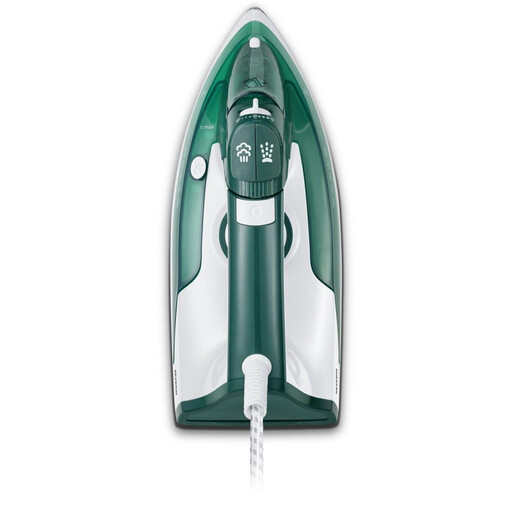 No image available
This steam iron has a spray function, so you can dampen napkins as needed before ironing them flat.
2400 W; variable steam output up to 30 g/min; steam boost 85 g/min; 175 ml water tank; stainless steel soleplate; anti-drip function.
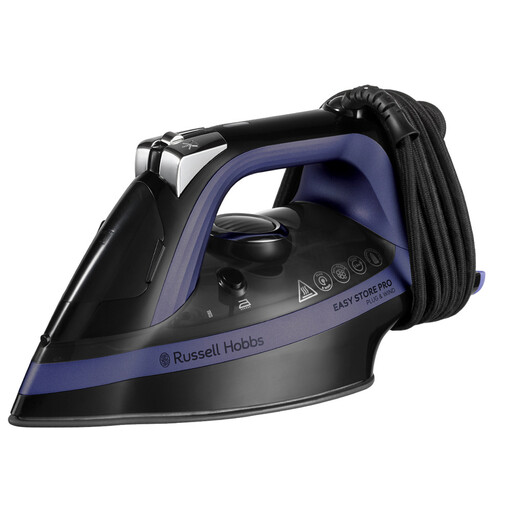 No image available
The integrated cord storage is useful if you want to put the iron away neatly after use.
2400 W; One-Temp Technology; steam boost 200 g/min; 320 ml tank; ceramic soleplate; integrated cord storage; automatic switch-off.
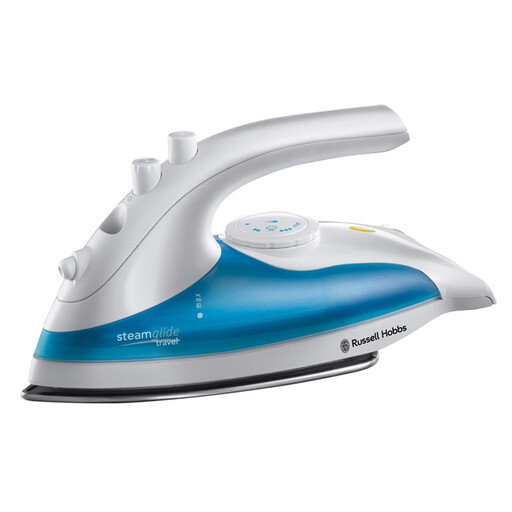 No image available
This compact travel iron may suit you if storage space is limited and you want to press napkins flat.
Dual voltage; stainless steel soleplate; variable steam output; spray function; 1,5 m cord.
 No image available
This steam iron has a soleplate for pressing fabrics flat on a suitable ironing surface.
2500 W; continuous steam 40 g/min; steam boost 160 g/min; Eco function; anti-drip system.
 No image available
The soleplate is suitable for pressing napkins flat; check that the features match your needs.
Steam boost 280 g/min; vertical steam; XL filling opening; stable heel rest; anti-scale technology; anti-drip system; automatic switch-off.
No. Hoffmann Linen Weaving recommends ironing linen while it is still slightly damp; you can dampen napkins that have already dried before ironing. Also check the care label.
No. A steam iron may be enough for a few napkins. A steam generator is more likely to suit you if you regularly iron larger quantities and have room for its base.
Check the descaling method for the specific model and whether the spare parts you need are available. The German consumer advice centre distinguishes the statutory guarantee provided by the seller from a voluntary manufacturer’s warranty.
For online orders in Germany, the German consumer advice centre’s guidance, updated on 5 August 2026, generally gives you 14 days from receiving the goods to cancel. Check the seller’s cancellation and returns information before placing your order.