What should you look for when buying?
Standard steam iron
A good fit if: You usually iron just a few napkins and put the appliance away afterwards.
The trade-off: It is more compact than a steam generator iron, but offers less steam and has a smaller tank.
Steam generator iron
A good fit if: You regularly have larger piles or other large items to iron, and have a suitable place to set it up.
The trade-off: As well as the iron, you’ll need space for the base unit and hose.
Your existing iron with added moisture
A good fit if: You already own a suitable appliance and the napkins’ care labels say they can be ironed.
The trade-off: One linen manufacturer recommends evenly dampening linen once it has dried out; this is not a comparative test of different appliances.
The care label specifies the maximum treatment permitted for each fabric. GINETEX GERMANY recommends following it when setting the temperature and steam.
| What matters |
What to check when buying |
Who it matters most to |
| Looking after linen properly |
Adjustable temperature and steam; a spray function if needed. |
If I want to smooth my linen napkins, I’ll set the temperature and steam according to each napkin’s care label. This matters most to around 36% of consumers. |
| Taking up little space |
Room to set up and store the whole appliance, plus a safe place for it to cool down. |
If I have little storage space, I want to be able to put the iron away easily once it has cooled. Having little room to set up and store an appliance is a priority for around 29% of consumers. |
| Ironing larger piles |
Check continuous steam output in g/min and tank capacity separately; don’t confuse a steam shot with continuous steam. |
If I regularly have lots of napkins to iron, I want to plan longer ironing sessions more easily. Around 21% of consumers prioritise ironing larger piles without frequent breaks. |
| Care and ongoing costs |
Instructions for water and descaling; distinguish a voluntary guarantee from your statutory rights. |
If I want to use a steam iron for longer, I’ll check how to care for it and what applies if something goes wrong. Ongoing maintenance and costs are a priority for around 14% of consumers. |
Steam irons at Joybuy
Standard steam irons for linen napkins in a small ironing area.
 No image available
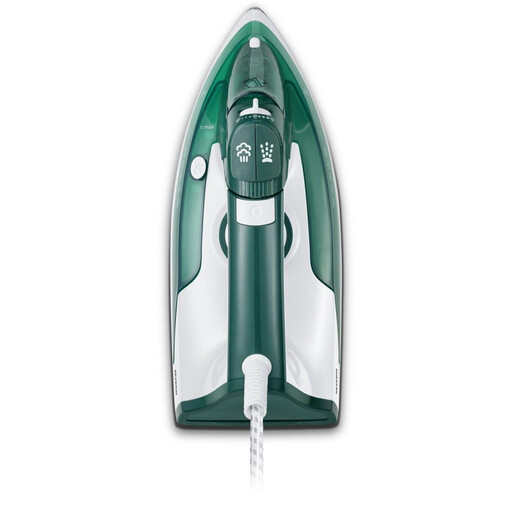
SEVERIN BA 3261 steam iron
Its standard steam iron design makes it a compact option; use the napkin’s care instructions to choose the right setting.
2400 W; variable steam output of 30 g/min; steam shot 85 g/min; removable 175 ml water tank; anti-drip function.
Joybuy
 No image available
Rowenta DW4320 Express Steam steam iron
Its standard steam iron design makes it a compact option; set it according to the care label.
2500 W; continuous steam output of 40 g/min; steam shot 160 g/min; Eco function; anti-drip system.
Joybuy
 No image available
Tefal FV8066 Puregliss steam iron
Its standard steam iron design makes it a compact option; always follow the napkin’s care instructions.
Steam shot 280 g/min; vertical steam; anti-scale technology; anti-drip system; automatic shut-off.
Joybuy
 No image available
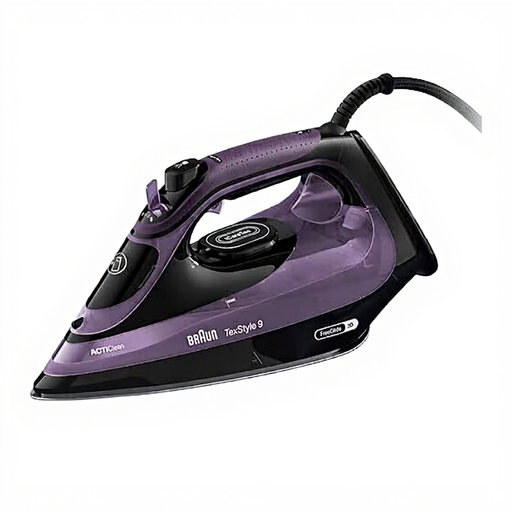
Braun TexStyle 9 SI9661VI steam iron, Violet
This standard steam iron could suit a small ironing area; follow the care label for each item.
Joybuy
 No image available
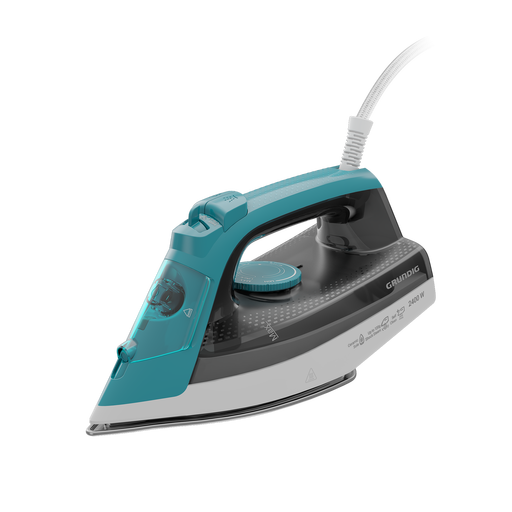
Grundig SI 3550 steam iron
This standard steam iron could suit a small ironing area; set the temperature according to the fabric care label.
Joybuy
Frequently asked questions
What temperature should I use to iron linen napkins?
Follow the ironing symbol on each napkin: it shows the maximum treatment permitted. One linen manufacturer recommends ironing its linen textiles while damp, using a high temperature and steam. This does not automatically apply to every blend, coating or decorative finish.
What can I do if the napkins have already dried out?
Linen weaver Hoffmann recommends evenly dampening linen that has dried out with clean water, then allowing the water a short time to soak in. Check the care instructions for the specific napkin first.
Why does a steam iron drip?
Philips lists limescale, a temperature that is too low for the steam function and using the steam shot too often among the possible causes for its appliances. Use and descale your appliance according to its instructions; this advice does not necessarily apply to other models.
What safety requirements apply to an iron in Germany?
Mains-powered electrical equipment covered by the EU Low Voltage Directive must meet its safety requirements; the directive covers 50 to 1,000 V AC. The European Commission explains that the CE marking is the manufacturer’s declaration, not an independently awarded quality mark. Also check the product’s identity and that safety information is available in German.
Who can help if the iron develops a fault after purchase?
If a product is faulty, you have statutory rights against the seller; these are separate from any voluntary manufacturer’s or retailer’s guarantee. The Verbraucherzentrale explains that the process depends on the purchase and the fault.


