For regular linen napkin ironing
If you regularly iron small batches, look for a short warm-up time and steam controls that suit the care label. GINETEX GERMANY and AEG Support explain care symbols and settings for linen.


A steam generator can be worth considering if you regularly iron several linen napkins in a row and have room for the base and hose. If you only iron a few napkins at a time, a suitable steam iron may be simpler. In either case, check the care label to see whether steaming and ironing are allowed.
If you regularly iron small batches, look for a short warm-up time and steam controls that suit the care label. GINETEX GERMANY and AEG Support explain care symbols and settings for linen.
If you need to put the base, hose and ironing board away after a short session, the appliance’s actual dimensions and ease of use matter. Philips and Rowenta publish dimensions for specific models.
If you iron often, compare how easy it is to access the water tank and descale the specific model. Tefal and Philips describe the features of their respective models; Philips notes that descaling methods vary by model.
A good choice if: you want to iron several napkins in a row regularly and are looking for a separate tank and controllable steam.
Things to consider: The base, hose and regular maintenance all need space and involve extra steps.
A good choice if: you only iron a few napkins at a time and want to avoid an additional appliance, perhaps by using a suitable iron you already own.
Things to consider: You won’t have a steam generator’s separate tank. Whether the results meet your needs depends on the fabric and the specific iron.
A good choice if: the care label rules out steam or says not to iron.
Things to consider: The result may not have the crisp finish you want; always follow the care label.
| Priority | What to check when buying | Who is it important to? |
|---|---|---|
| Quick start | Check the manufacturer’s stated warm-up time, controls and transport lock for the exact model. | If I don’t want to wait long for a short ironing session, I look at the stated warm-up time. Around 36% of consumers put frequent, short sessions first. |
| Linen finish | Check the care label, adjustable steam output and suitability of the soleplate. | If a smooth finish matters to me, the treatment still needs to follow the care label for each napkin. Around 29% of consumers put smoothing in line with the care label first. |
| Space for use and storage | Compare the appliance’s dimensions with your ironing area and allow room for the base, cable and hose. | If space is tight where I iron, I want to know how much room the appliance takes up when in use and when stored. Around 21% of consumers say space is their main concern. |
| Refilling and descaling | Compare tank access, how it can be refilled and the descaling instructions for the specific model. | If I iron often, I want to know how easy it is to refill and descale the appliance day to day. Around 14% of consumers put maintenance first. |
Manufacturers list steam boost and continuous steam output separately. These figures describe different features and are not interchangeable.
Compare both figures for the exact model and check whether the steam can be adjusted to suit the care label.
A larger tank can mean fewer refills, but it doesn’t tell you how quickly the appliance can be set up for a few napkins or put away afterwards.
Consider how the tank works, the appliance’s dimensions and its warm-up time alongside the usual length of your ironing sessions.
Even compact steam generators need space for the base, hose and ironing board, and must be descaled regularly.
For the Rowenta DG7623, a Joybuy product description contradicts the manufacturer’s information about its fixed tank. A difference like this could affect your decision about how the tank is handled.
If key details conflict, check the exact model number against the manufacturer’s information.
The Express Easy SV6131 is an example of a steam generator with manual settings and a removable tank.
The PerfectCare Compact GC7844/20 can be assessed by looking at its dimensions and its cartridge-free descaling system.
The Compact Steam Pro DG7623 is a steam generator with a fixed, refillable tank.
The CareStyle Compact IS 2143 is worth considering when comparing a compact design and the iCare setting.
According to AEG, the 8000 ST8-2-8OG has several fabric programmes, including one for linen.
This selection includes steam generators for repeated ironing and a standard steam iron as an alternative if you only have a few napkins to iron at a time and want to avoid an additional appliance.
 No image available
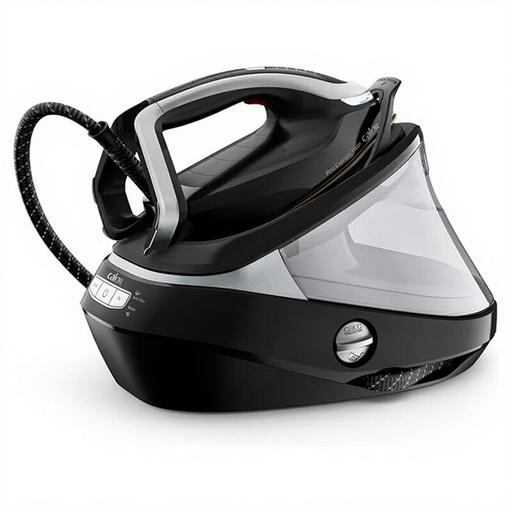
This steam generator is worth considering if you iron repeatedly; compare its tank capacity and steam output with your needs.
3,000 W; 1.2-l tank; 180 g/min continuous steam; 800 g/min steam boost; Durilium AirGlide; Autoclean.
 No image available
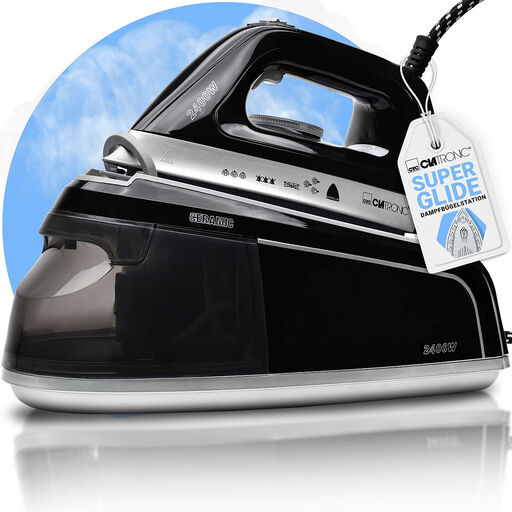
This model is described as a steam generator; check that its dimensions and ease of use suit your shorter ironing sessions.
3.5 bar; 1.2-l water tank; 2,400 W; Superglide soleplate; 80-minute operating time.
 No image available
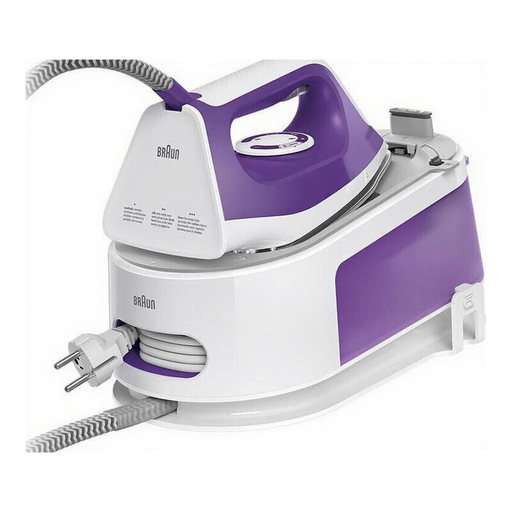
This steam generator is an option if you regularly iron several napkins in a row. Before buying, check that its settings are suitable for your napkins.
 No image available
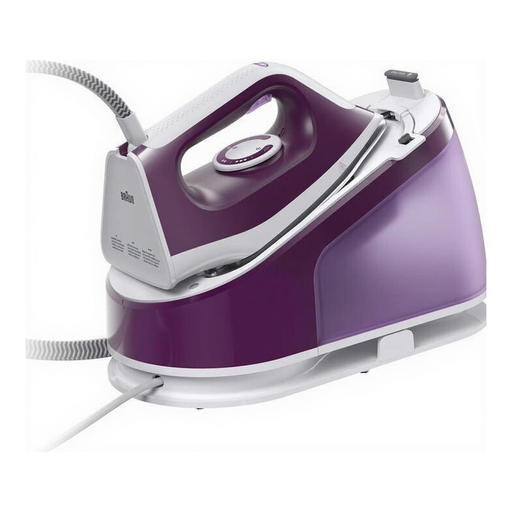
This steam generator is worth considering for repeated ironing; check that its available temperature settings match the care instructions for your napkins.
 No image available
This standard steam iron is an alternative if you only have a few napkins to iron at a time and don’t want a separate steam generator base.
280 g/min steam boost; vertical steam; XL filling opening; anti-scale technology; black/turquoise.
First, check the ironing symbol on each napkin. For linen, AEG recommends ironing while damp or dampening the fabric first, and using the linen setting on its steam generators. This manufacturer’s recommendation does not override a care label that forbids steam or ironing.
Yes. Follow the instructions for your specific model. Philips notes that hard water can lead to faster limescale build-up and that different model ranges use different descaling methods.
If you buy from a business seller in the EU, you are generally entitled to a legal guarantee from the seller for at least two years from the date you receive the goods. This is separate from any additional manufacturer’s guarantee.
Electrical appliances sold in the EU must meet the applicable product safety requirements. These include the required CE marking for appliances covered by the relevant harmonised rules. In Germany, old appliances must not go in household waste; the German Environment Agency lists recycling centres and suitable take-back points at retailers, among other options.