Rental hosts with lots of napkins to prepare between guest stays
You regularly iron larger batches and need to weigh up whether a large tank is worth the extra space required by a steam generator.


For a few linen napkins and limited storage space, a handy steam iron is usually enough. If you regularly iron large piles, the larger tank of a steam generator may be more practical. Linen is particularly easy to smooth when it is still slightly damp, according to Leinenweberei Hoffmann. The care label on your particular napkins should always come first, along with considerations such as space, refilling and descaling.
You regularly iron larger batches and need to weigh up whether a large tank is worth the extra space required by a steam generator.
You only iron a few napkins at a time and want an appliance that’s easy to get out and put away.
With coloured, printed or mixed-fabric napkins, choosing a setting that follows the care label matters more to you than using maximum heat.
First, think about how many napkins you usually iron between guest stays and where you’ll keep the appliance. Then consider the care instructions for your fabrics, as well as the effort involved in filling and descaling.
| What matters to you | What to look for when buying | Who is it most relevant to? |
|---|---|---|
| Ironing lots of napkins without frequent refills | Tank capacity and whether it can be refilled; space for the base unit and hose. | If I want to iron a larger pile in one go between guest stays, a suitable tank matters more to me than compact storage. Around 40% of consumers prioritise handling lots of napkins. |
| Keeping appliance and storage needs to a minimum | Check how easy it is to handle, along with the soleplate and tank size, where you’ll actually be ironing. | When I only have a few napkins to iron, I want an appliance that’s quick to get out and easy to put away afterwards. Around 30% of consumers prioritise small loads and limited storage space. |
| Protecting fabric and colour | Follow the care label; adjust the temperature and steam accordingly, and iron inside out if needed. | With printed or coloured napkins, I want to follow the care label rather than automatically choosing the highest heat. Around 20% of consumers put fabric protection first. |
| Allowing for drips and limescale | Check the descaling instructions and which water can be used; inspect the soleplate and ironing board before preparing laundry for guests. | If I regularly prepare napkins for guests, I want to stay on top of maintenance and avoid potential drips. Around 10% of consumers consider maintenance their top priority. |
A steam boost is a short burst, while continuous steam is the figure given for longer ironing sessions. On the same product page, Tefal gives conflicting steam boost figures of 350 and 360 g/min for the Express Easy SV6131.
Compare continuous steam, tank capacity and refill options separately. Don’t use the conflicting steam boost figure for the SV6131 as your deciding factor.
Colour, print and the exact fabric composition can all affect the right care approach. So a high linen setting isn’t automatically suitable for every napkin.
Check the care label first. For coloured or printed items, ironing them inside out may be a sensible precaution.
A larger tank can be useful when you have lots of napkins to iron, but it isn’t automatically an advantage for smaller loads. A steam generator also needs space for the base unit and hose.
Estimate the size of your usual load between guest stays and check that you have enough room both where you iron and where you store the appliance.
The FreeStyle 3 range is an example of a handy steam iron; the TexStyle 9 SI9682DB is a model with different features.
Philips describes the 3000 Series DST3041/80 as suitable for smaller laundry loads.
The Express Easy SV6131 is a steam generator with a refillable tank.
The Effective DX1550D1 is a steam iron for smaller ironing jobs.
This selection includes steam irons for smaller loads and steam generators for larger amounts of laundry. If you’re buying a mains-powered appliance for use in Germany, check the CE marking and relevant voltage range before you buy. The European Commission explains that the CE marking is the manufacturer’s declaration that the product meets the relevant EU requirements; it is not an independent quality mark.
 No image available
This steam iron is worth considering for smaller batches of napkins if you want a compact appliance rather than a separate steam generator.
The product name lists 2500 W, continuous steam of 40 g/min, a 160 g/min steam boost, an Eco function and an anti-drip system.
 No image available
This steam iron is a good option if you’re looking for an appliance for different fabrics and don’t want a separate steam generator.
The product name lists a 280 g/min steam boost, vertical steam, a large filling opening, a stable rest, anti-scale technology, an anti-drip system and automatic switch-off.
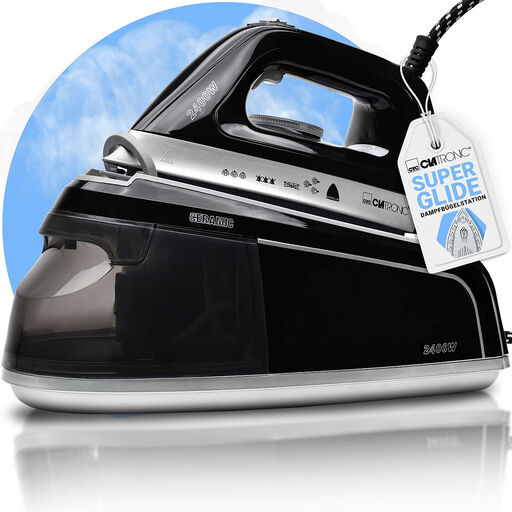 No image available
A steam generator may suit larger loads, provided you have enough room where you iron for the base unit and hose.
The product name lists 3.5 bar, a 1.2-l water tank, up to 80 minutes of operating time and 2400 W.
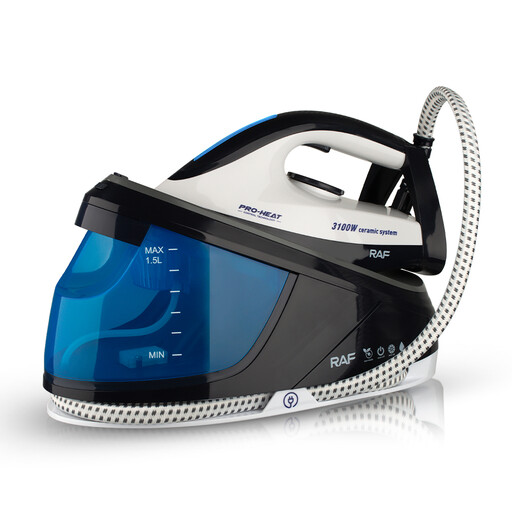 No image available
This steam generator iron is an option for larger laundry loads, as long as you have extra space for the base unit.
The product name lists 3100 W, steam output of 180 g/min, a removable 1.5-l tank, a ceramic soleplate, automatic switch-off and an anti-drip system.
No, not necessarily. Leinenweberei Hoffmann recommends ironing linen while it’s slightly damp, or evenly dampening items that have dried out first. The care instructions for your particular napkins should always take priority.
For affected Philips appliances, the manufacturer lists limescale, a temperature that’s too low to produce steam and, in steam generators, condensation in the hose among the possible causes. Check the manual for your model. For a steam generator, Philips recommends releasing steam away from the fabric first if the appliance has been idle for a while.
Check the manual to see which descaling method is required and whether you’ll need any cleaning products or replacement parts. Also make sure you have space for the ironing board, base unit and hose.
Yes, if the appliance falls under the relevant EU rules. The European Commission describes the CE marking as the manufacturer’s declaration that the product meets the applicable EU requirements; it is not an independent quality mark.
An old iron should be taken to a separate collection point for waste electrical and electronic equipment. The German Environment Agency lists municipal collection points, which generally accept old appliances free of charge. If you want to return it to a retailer, check their current take-back arrangements first.