Short, frequent ironing sessions
You only iron a few linen placemats at a time, as and when needed, and want an appliance that’s quick to get ready and easy to put away.


For frequent small loads, a compact steam iron with adjustable steam is usually the obvious place to start. If you’re tackling deeper creases, the soleplate’s manoeuvrability and the right temperature for your placemats matter too. A dry iron avoids the need to care for a water tank or descale the appliance, but you’ll need to dampen dry linen first. A steam generator is worth considering if you also regularly iron larger loads. Always follow the care label on each placemat: Forum Waschen / GINETEX Germany recommends ironing suitable linen items while thoroughly damp and inside out; GINETEX Germany explains the temperature dots shown in the iron symbol.
You only iron a few linen placemats at a time, as and when needed, and want an appliance that’s quick to get ready and easy to put away.
Your placemats have pronounced creases or edges that need careful smoothing. Adjustable moisture and an easy-to-manoeuvre soleplate matter more to you than having the smallest possible appliance.
You’d rather not maintain a water tank and, if the care label allows, you’re happy to dampen the placemats yourself before ironing.
Start by checking the care label on each placemat: Forum Waschen / GINETEX Germany recommends ironing suitable linen items while thoroughly damp and inside out.
| What matters when buying | What to check | Who is it important to? |
|---|---|---|
| Short ironing sessions | Compare ease of handling, how easy the appliance is to store and the effort involved in filling it. | If I only iron a few placemats at a time, I want to be able to get the appliance out quickly and put it away easily. Around 36% of consumers prioritise short, frequent ironing sessions. |
| Creases and edges | Check the steam control and how easy the soleplate is to manoeuvre around edges and seams. | For pronounced creases and narrow seams, I need adjustable moisture and a soleplate I can guide precisely. Around 29% of consumers prioritise smoothing linen creases and getting neat edges. |
| Protecting the fabric | Check the care symbol and permitted temperature for each placemat; if you’re ironing different fabrics, choose an iron with adjustable temperature. | If I iron placemats with different care instructions, I want to treat each one appropriately rather than relying on the fibre description alone. Around 21% of consumers prioritise protecting the specific fabrics they own. |
| Minimal appliance maintenance | Check the model’s descaling instructions and consider whether you’re happy to dampen the fabric yourself. | If I want to avoid maintaining a tank and descaling the appliance, I need to decide whether dampening the fabric separately is practical for me when using a dry iron. Around 14% of consumers prioritise keeping appliance maintenance to a minimum. |
The fibre description is no substitute for the care label. Blended fabrics may have different temperature limits.
Check the iron symbol on each item first, then set the temperature and steam accordingly.
Manufacturers list these figures separately. A high, short burst of steam doesn’t mean the iron produces the same amount of steam continuously.
When comparing models, compare like-for-like figures from the manufacturer and don’t use them alone to predict ironing results.
A steam generator’s larger tank is designed for longer ironing sessions. If you often iron small loads, you should also consider the extra set-up involved.
Look more closely at a steam generator if you regularly have larger loads to iron as well.
The base unit and hose take up extra space and involve additional steps.
A dry iron doesn’t produce steam. For suitable linen items, Forum Waschen / GINETEX Germany recommends ironing them while damp.
Check the care label to see whether and how you can dampen the placemat before ironing.
The DST1020/30 and GC7844/20 illustrate the difference between a steam iron and a separate steam generator.
The TexStyle 3 SI 3055 is a steam iron to consider when weighing up quick ironing sessions and precise control around edges.
The Ultimate Pure FV9844 is a steam iron to consider if you also have larger ironing jobs alongside your placemats.
The BA 3211 is a dry iron option, while the BA 3210 is a separate steam iron model.
The Steamforce Pro DW9520 is another steam iron option for households with larger ironing jobs as well as placemats.
Here you’ll find individual steam irons, including compact travel models, for short ironing sessions with linen placemats.
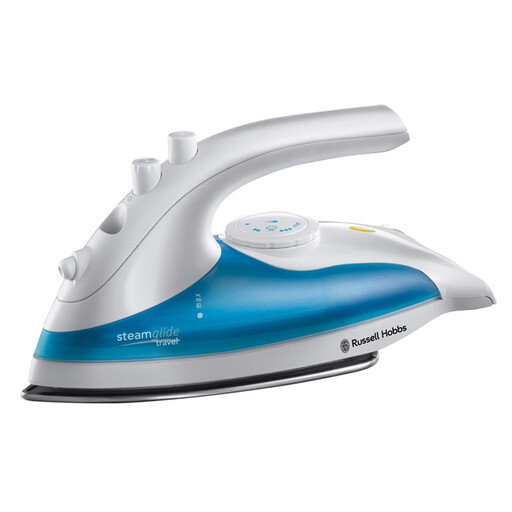 No image available
The compact travel design is a good fit if you want a handy appliance for quick ironing sessions.
Dual Voltage; SS; 1.5 m.
 No image available
An individual steam iron for small loads, provided the placemat’s care label allows steam.
2,500 W; continuous steam 40 g/min; steam boost 160 g/min.
 No image available
This individual steam iron is worth considering if you have other ironing jobs to tackle alongside your placemats.
The product name specifies a steam boost of 280 g/min; this doesn’t tell you its continuous steam output. Other listed features include vertical steam, an XL water inlet, anti-limescale technology, an anti-drip system and automatic shut-off.
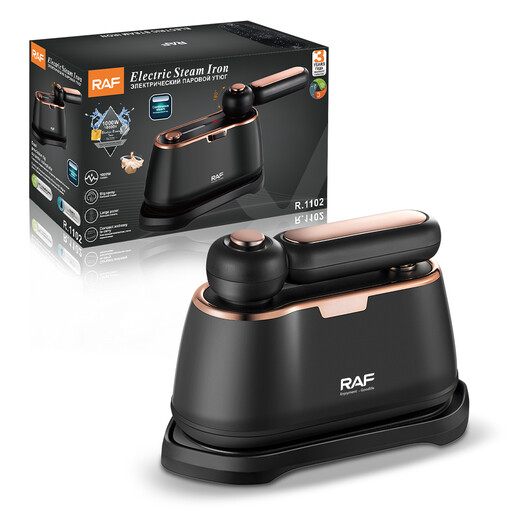 No image available
The compact travel design is a good fit if you want an iron that takes up little space for quick sessions.
180° rotating handle; 120 ml water tank; vertical and continuous steam.
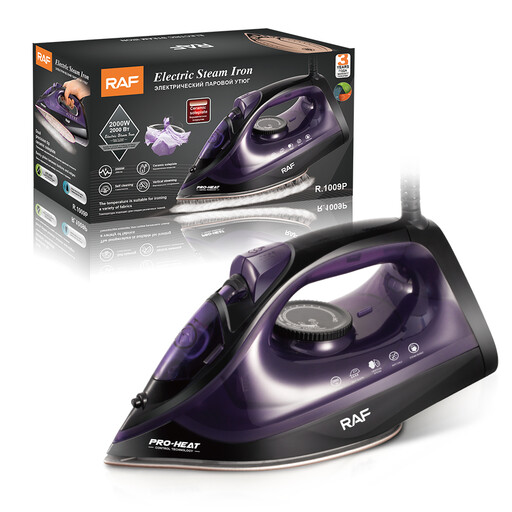 No image available
An individual steam iron for placemats, provided the care label allows steam.
Ceramic soleplate; 210 ml water tank; steam boost; self-cleaning function; vertical steam.
No. Follow the care label on each placemat, as linen fabrics can also be blended with other fibres. Forum Waschen / GINETEX Germany recommends ironing suitable linen items while thoroughly damp and inside out.
Follow your model’s instructions for filling and descaling. Tefal says that local water hardness affects how often descaling is needed, so there isn’t one water or cleaning rule that automatically applies to every appliance.
No. For a few items, an individual steam iron is the simpler starting option. A steam generator is more worthwhile if you regularly have longer ironing sessions or larger laundry loads.
When you buy from a trader, European Union consumer information states that you’re entitled to a legal guarantee of at least two years from the date you receive the goods. If an item is faulty, the seller is generally responsible for repairing or replacing it; this is separate from any voluntary manufacturer’s guarantee.
An old iron is electrical waste and must be collected separately, not put in your household rubbish. The German Environment Agency explains separate collection; check with your local council for a suitable collection point.