For placemats pressed flat with crisp edges, a steam iron used on a suitable heat- and steam-resistant surface is usually the better option. A handheld garment steamer needs less ironing space, but it doesn’t apply direct pressure from the soleplate. According to Leinenweberei Hoffmann, slightly damp linen is easier to smooth, provided the care label allows it. GINETEX notes that steam can still cause damage at an ironing temperature of no more than 120 °C, so always follow the care label for your specific item.
Who these ironing appliances are for
Placemats to iron, with limited space
If you want to smooth small areas of linen and press the edges, but can’t leave an ironing board set up, a suitable horizontal ironing surface is essential. Check whether you can set up a safe surface for the hot iron and steam.
Households with limited drying space
Slightly damp linen may be easier to smooth, but it will still need space to dry afterwards. Make a plan for dealing with the extra moisture in the room too; the consumer advice centre recommends regular ventilation.
For ironing other household laundry too
If you regularly iron larger loads as well as placemats, consider the water tank and the space needed for the appliance together. F.A.Z. Kaufkompass points out that a steam generator isn’t necessary for every household with only a small amount of laundry.
What to consider when choosing
Steam iron
Suitable if: You want to lay placemats flat and press the edges directly.
Trade-off: You’ll need a heat- and steam-resistant surface, even if the appliance itself is compact.
Handheld garment steamer
Suitable if: You want to smooth light creases in securely hung fabrics and can’t set up an ironing surface.
Trade-off: You’ll still need space to hang and dry your items. A steamer doesn’t apply the direct soleplate pressure needed for sharply pressed edges.
Steam generator
Suitable if: You regularly iron larger loads as well as placemats, and have room for both the steam generator and an ironing surface.
Trade-off: A larger tank doesn’t reduce the space needed for the ironing surface.
Dry ironing
Suitable if: The care label rules out steam but allows ironing.
Trade-off: Stubborn creases in linen can be harder to smooth without adding moisture; if ironing is prohibited, that takes precedence.
First, check the care label and the space available for ironing and drying. The percentages below show the main priorities when choosing an ironing appliance for linen placemats in a small space.
| Priority |
What to check when buying |
Who it matters most to |
| Pressing flat in a small space |
The appliance’s storage dimensions and whether the available surface is suitable for heat and steam. |
If I want to press small placemats with crisp edges, I need a suitable surface without having to leave an ironing board set up. Around 36% of consumers are likely to see pressing flat with limited floor and storage space as their top priority. |
| Smoothing with limited drying space |
Adjustable steam rather than just a steam shot, as well as space to lay out or hang and dry the item. |
If I smooth a placemat while it’s slightly damp, I’ll still need to let it dry completely afterwards. Around 29% of consumers are likely to see limited drying space as their top priority. |
| Protecting the fabric and surface |
The care symbol, permitted temperature and whether steam is allowed; if needed, use the reverse side or a pressing cloth in line with the fabric care instructions. |
For blended fabrics, prints or coatings, I want to follow the care label for the specific placemat. Around 21% of consumers are likely to see protecting the fabric as their top priority. |
| Keeping maintenance in mind |
Check the instructions for water and descaling for the specific model, access for cleaning and the availability of spare parts. |
If long-term care matters to me, I want to know how to descale and clean the specific appliance. Around 14% of consumers are likely to see maintenance and ongoing costs as their top priority. |
Common misconceptions
-
Assuming a garment steamer and an iron do the same job
A compact design won’t automatically give you straight placemat edges: a garment steamer works on hanging fabric, while an iron makes direct contact with the fabric when pressing it flat.
First decide whether simply freshening up the fabric is enough or whether you want to press the edges flat. Then check whether you have space to hang the item or a suitable ironing surface.
-
Confusing a steam shot with continuous steam
Manufacturers list these figures separately. A steam shot doesn’t tell you how much steam is released continuously during several ironing strokes.
Compare figures for the same model using the same unit and operating mode, such as continuous steam in g/min separately from the steam shot.
-
Treating one test rating as the final verdict
On 2 November 2026, CHIP named the Tefal Ultimate Pure FV9844 the winner of its test; on 30 September 2026, COMPUTER BILD ranked the FV9844E0 in eighth place and reported water leaking from it. These details don’t prove that exactly the same appliance version was tested under the same conditions.
Compare full model numbers and different test reports. If drying space is limited, comments about dripping and the appliance’s weight are also relevant.
-
Only thinking about care and a safe ironing surface after buying
Descaling and a suitable resting surface affect how you use an appliance. The manufacturer’s care and warranty information doesn’t replace checking the terms that apply to the specific model.
Before choosing, check the manual, access for maintenance, the ironing surface available and the seller’s information about your rights if the product is faulty.
Depending on the appliance, you’ll need to plan for maintenance access and a heat- and steam-resistant ironing surface.
Suitable brands and model ranges
Braun
TexStyle steam irons for flat ironing, and QuickStyle Mini garment steamers as an alternative when you don’t have an ironing board.
- Braun lists an 80-ml tank for the QuickStyle Mini GS 1061 RD and says it can be used without an ironing board.
- That doesn’t automatically provide the direct pressure needed for sharply pressed linen edges.
Tefal
The range includes everything from steam irons to a steam generator for larger loads of laundry.
- Tefal lists up to 50 g/min of continuous steam and a removable scale collector for the FV6830. The Duo Power JF4031 is supplied with an ironing mat.
- Check whether your available surface is suitable for heat and steam; features and care instructions vary by model.
Philips
Azur steam irons with temperature and steam features that vary by model, designed for household laundry.
- Philips lists up to 55 g/min of continuous steam and a 240-g steam shot for the Azur DST8020/20.
- These figures apply to this model variant. Check the placemat’s care label, even if the manufacturer advertises a temperature feature.
Rowenta
The Focus Excel range includes steam irons with manual steam control.
- Rowenta lists 45 g/min of continuous steam, a 300-ml tank and a precision tip for the DW5310D1.
- According to Rowenta, this particular variant doesn’t have an automatic shut-off; you can’t assume other models have the same features.
Joybuy products for placemats and laundry
This selection includes irons for pressing suitable placemats flat and a steam generator for placemats and other items that need ironing. Check the care label before use, and set up the steam generator and ironing surface securely.
 No image available
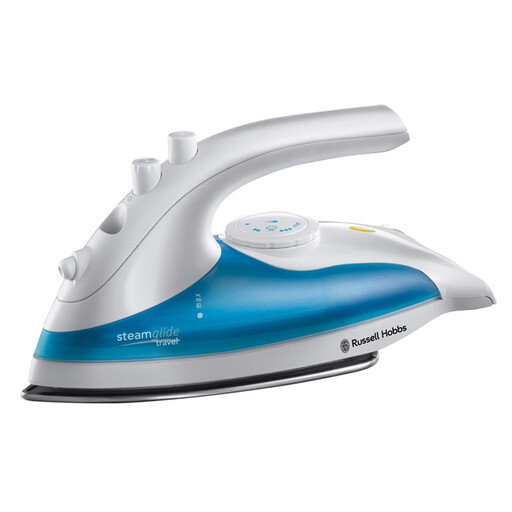
Russell Hobbs Travel Iron Dual Voltage 22470
The soleplate and dry-ironing option suit placemats whose care labels allow ironing but advise against steam.
Dual voltage; 1.5-m cable.
View at Joybuy
 No image available
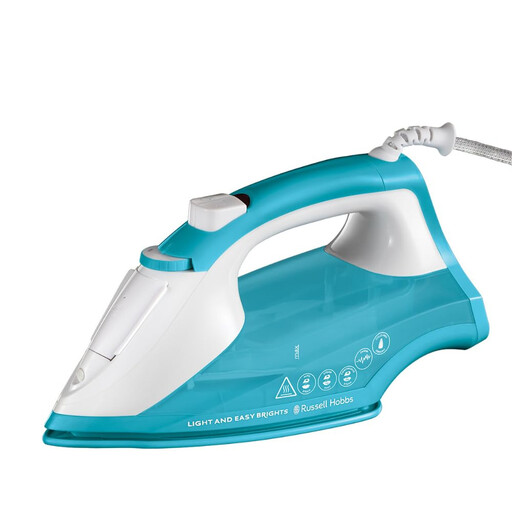
Russell Hobbs 26482-56 Light & Easy Brights
The ceramic soleplate and continuous steam are designed for placemats that are suitable for ironing and need to be pressed flat. Check the care label to make sure steam is allowed.
View at Joybuy
 No image available
Rowenta DW4320 Express Steam
The stainless steel soleplate is designed for direct ironing, making it suitable for placemats laid flat, as long as their care labels allow ironing.
View at Joybuy
 No image available
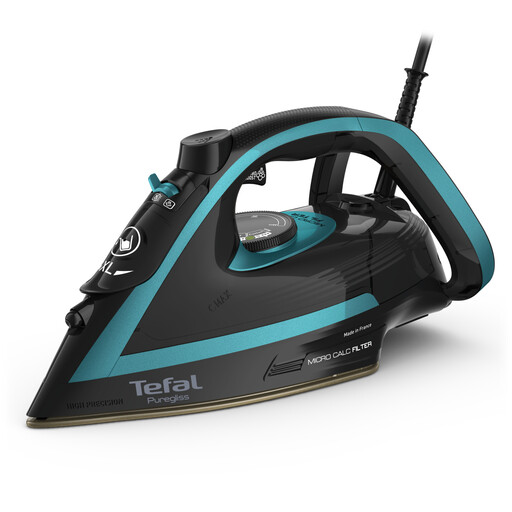
Tefal FV8066 Puregliss
The steam soleplate and selectable heat and steam settings are designed for direct ironing. Follow the care label for your specific placemat.
View at Joybuy
 No image available
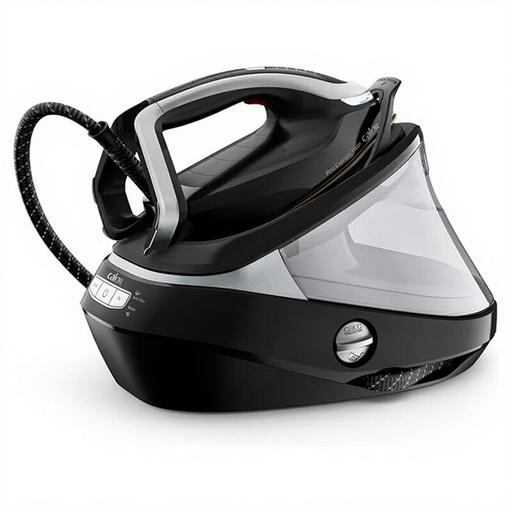
Tefal Pro Express Vision GV 9821
This steam generator can handle placemats and other items that need ironing, provided you have a flat ironing surface.
Requires a stable, flat surface for the steam generator and a suitable ironing board.
View at Joybuy
Frequently asked questions
Can I steam-iron every linen placemat on the highest setting?
No. Always follow the care label for the specific placemat. GINETEX lists different temperature limits and ironing prohibitions; at certain low temperature settings, steam can cause damage even when ironing is generally allowed.
How can I iron freshly washed placemats when space is limited?
If the care label allows it, you can press linen flat while it’s slightly damp; according to Leinenweberei Hoffmann, this makes it easier to smooth. Let the placemat dry completely before putting it away, and ventilate the room to clear excess moisture.
What water should I use in an iron, and how should I descale it?
Follow the instructions for your exact model, as water recommendations and descaling systems vary. Tefal notes that local water hardness affects maintenance needs. Unplug the iron before cleaning it and let the soleplate cool down.
What are my rights if an iron bought online in Germany is faulty?
If a product is faulty, your statutory rights are generally against the seller; a voluntary manufacturer’s guarantee is separate. The consumer advice centre says consumers buying online usually have a 14-day right to cancel. The details depend on the purchase contract and the specific circumstances.
Does a new electric iron in Germany need to carry a CE mark?
New, ready-to-use appliances covered by German low-voltage rules, particularly those operating at 50 to 1,000 V AC, must carry the required CE marking before being placed on the market. The Federal Institute for Occupational Safety and Health explains these requirements. The marking isn’t an independent performance test and doesn’t prove that an iron is suitable for a particular placemat.


