Those with a set laundry window
If you need to finish your placemats during a shared washing or ironing slot, you’ll need to factor in heat-up time, refilling and putting the iron away afterwards.


For a few placemats in a short, shared laundry window, a compact steam iron with adjustable temperature is a sensible starting point. According to Leinenweberei Hoffmann, linen is easier to smooth when it is slightly damp. A dry iron may be an option if you add moisture separately and would rather avoid a water tank. A steam generator is better suited to regularly ironing larger batches together and needs room to stand. The care label on each placemat should always be your guide.
If you need to finish your placemats during a shared washing or ironing slot, you’ll need to factor in heat-up time, refilling and putting the iron away afterwards.
You want your placemats to look visibly smooth, and you adjust the temperature and steam according to the care label and the colour or print of each item.
You only iron a few placemats at a time and are weighing up an integrated steam tank against a lightweight dry iron with separate dampening.
A good fit if: you iron small or medium-sized batches during a shared laundry window and want to add moisture using the iron itself.
The trade-off: You’ll need to fill the tank and, depending on the model, maintain or descale it. The manufacturer’s steam specifications don’t guarantee a particular result on your placemats.
A good fit if: you occasionally iron individual items, have limited storage space and can dampen the fabric beforehand, where permitted by the care label.
The trade-off: There’s no water tank to fill, but you’ll need to dampen the fabric as an extra step.
A good fit if: you regularly iron lots of placemats and other suitable textiles together, and have room for the base unit.
The trade-off: A separate tank can be useful for larger batches, but the base unit and hose need space. There’s no evidence that it saves time when ironing small quantities.
| Priority | What to check | Who looks for this? |
|---|---|---|
| Smooth linen gently | Set the temperature and steam according to the care label. For coloured or printed items, check the instructions for which side to iron. | If a smooth finish matters to me, I follow the care label on the specific placemat. Around 36% of consumers prioritise a gentle finish on linen. |
| Finish within the laundry window | Check the stated heat-up time and tank capacity; don’t treat steam figures as a guaranteed ironing time. | If my ironing window is short and fixed, I want to know how heat-up time and any refilling breaks will fit into it. Around 29% of consumers prioritise a short, predictable ironing time. |
| Iron larger batches together | Consider tank capacity and the space a steam generator needs together. | If I iron several placemats and other suitable laundry in the same session, I want a solution that suits the size of the batch. Around 21% of consumers prioritise ironing larger quantities. |
| Limited space and maintenance | Compare the size of the appliance and its model-specific maintenance requirements; if you choose a dry iron, factor in the need to dampen fabric separately. | If I only iron occasionally and have limited storage space, I don’t want to keep an unnecessarily bulky appliance. However, dry linen will need to be dampened separately when using a dry iron. Around 14% of consumers prioritise saving space and keeping maintenance to a minimum. |
The care label on the specific placemat sets out how it may be treated. Using an unsuitable temperature or steam setting could damage it.
Check the care label first, then set the temperature and steam accordingly. GINETEX GERMANY explains that the dots in the iron symbol indicate temperature ranges.
Manufacturers list these figures separately. None of them on its own guarantees an ironing time or a particular result on your placemats.
For your laundry window, also compare the stated heat-up time, tank capacity and how often you may need to refill it.
A large separate tank is most useful for bigger batches. For individual items, the extra space needed for the base unit and storage may matter more.
Before you buy, consider how many items you usually iron together and how much room you have. A dry iron may also be an option if you can add the necessary moisture separately.
The FreeStyle 3 FI 3194 is a steam iron option for small batches, with an integrated steam function and manual temperature control.
The Easygliss Plus FV5736 is a steam iron with a 270-ml tank, anti-drip function and automatic shut-off.
The range includes hand irons for smaller batches and a steam generator for larger batches ironed together.
The BA 3211 is a dry iron for occasional small batches, where moisture can be added separately.
The Focus Excel DW5310 is a steam iron with a 300-ml tank and precision tip.
The models below include steam irons and a steam generator for ironing linen placemats in small or larger batches. Before buying, check the CE marking and conformity information for the specific offer.
 No image available
This compact steam iron may suit batches where you want to add moisture using the appliance itself.
250-ml tank; 40 g/min continuous steam; steam boost up to 160 g/min.
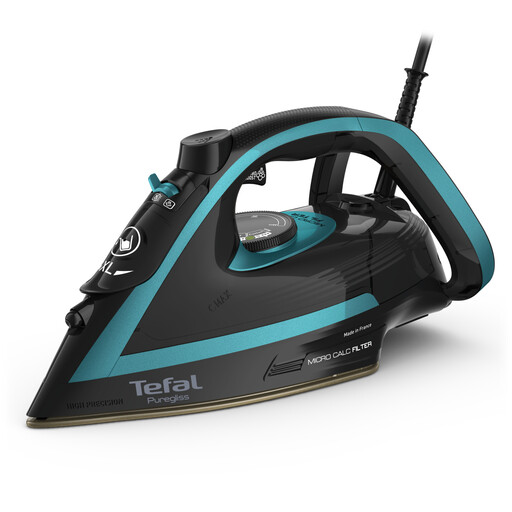 No image available
A hand iron for anyone who wants to use steam from the appliance and check the filling opening and available settings before buying.
50 g/min continuous steam; steam boost up to 280 g/min; XL filling area.
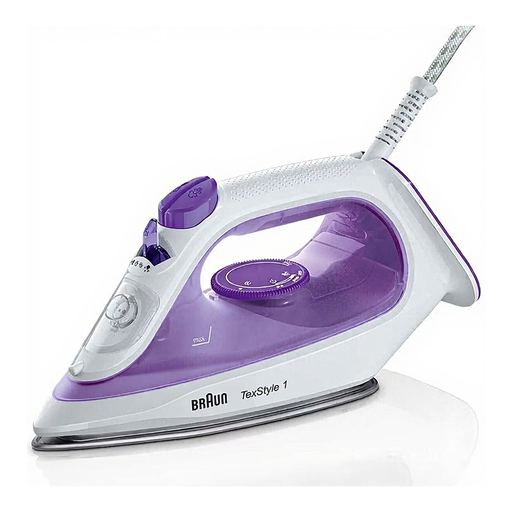 No image available
The stated heat-up time may be a useful factor when choosing an iron for a short ironing window. Also check that its features suit the size of your batch.
35-second heat-up time; 220-ml water tank; spray function.
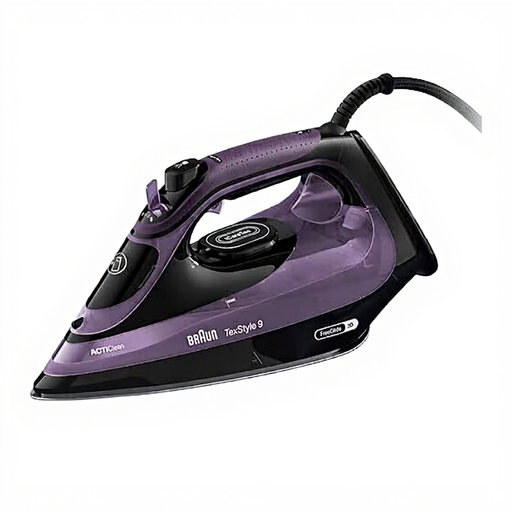 No image available
The stated temperature and steam settings may help you choose an iron to suit your fabric care needs, but the placemat’s care label should always be your guide.
330-ml tank; 60 g/min continuous steam; steam boost up to 250 g/min; iCare temperature control and spray function.
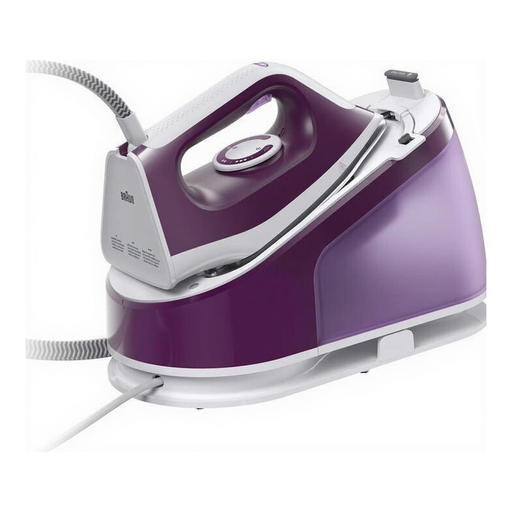 No image available
This steam generator may suit larger batches ironed together. Make room for the base unit, and don’t assume the steam figures guarantee a particular ironing time.
1.7-l tank; 120 g/min continuous steam; steam boost up to 400 g/min; four temperature settings and spray function.
No. Follow the care label on the specific placemat: it sets out the permitted treatment and may rule out steam. Leinenweberei Hoffmann recommends ironing linen while it is slightly damp, but this general care advice doesn’t replace the instructions for a printed, coated or mixed-fibre item.
For linen that can be ironed, Leinenweberei Hoffmann recommends dampening the fabric evenly with clean water and letting it soak in briefly. Alternatively, it suggests using a damp pressing cloth with a dry iron. Check the placemat’s care instructions first.
It depends on the model. Braun lists a self-cleaning function for the FI 3194, while Philips lists Quick Calc Release for the DST7040/80 and Smart Calc-Clean for the PSG6023/20. Check the instructions for the specific appliance to find out what maintenance steps to follow and what type of water to use.
Electrical appliances covered by the EU Low Voltage Directive must carry the CE marking. Your Europe describes it as the manufacturer’s declaration, not an independent quality mark, so check the marking and conformity information for the specific offer. According to Your Europe, when you buy from a trader in the EU, you’re entitled to a legal guarantee of at least two years from the date you receive the goods. This is separate from any voluntary manufacturer’s guarantee.