People who iron to a set laundry schedule
If you iron several linen placemats straight after a planned laundry day, tank capacity and continuous steam output may be important when choosing a model.


If you regularly iron several linen placemats after a shared laundry day, a steam generator iron could be a good fit, provided its continuous steam output, water tank and descaling requirements suit the amount you need to iron and the space you have to store it. According to GINETEX Germany, the care label determines how an item may be treated; the fact that it is linen alone does not determine the right temperature or whether steam is suitable. If you only have a few sets and limited storage space, a standard steam iron may be the more compact option. When comparing models, don’t let a powerful steam boost distract you from checking the continuous steam output.
If you iron several linen placemats straight after a planned laundry day, tank capacity and continuous steam output may be important when choosing a model.
The care label specifies how the individual set may be treated. GINETEX Germany and clevercare.info recommend choosing the ironing temperature according to the label, rather than the fibre alone.
If you only iron a few sets now and then, weigh up the space needed for a separate steam generator against the amount you actually iron.
A good fit if: You want to iron several suitable sets one after another in a set time slot.
The trade-off: A steam generator needs storage space, and manufacturers’ figures do not prove that it will save you a specific amount of time when ironing linen placemats.
A good fit if: You only have a few sets to iron occasionally and storage space matters more to you than ironing for longer without refilling.
The trade-off: Base your decision on how many sets you iron each time and how much space you have for the appliance.
A good fit if: You’re happy with linen’s natural texture and the care label does not require ironing.
The trade-off: This won’t give you the deliberately smooth finish of ironing.
For a shared laundry routine, the main things to consider are how much you need to iron each time, the care instructions, maintenance requirements and available storage space.
| What matters | What to check when buying | Who it matters most to |
|---|---|---|
| Iron several sets without frequent breaks | Compare the continuous steam output in g/min, tank capacity in l and whether you can refill the specific model while it is in use. | If I iron several sets after a planned laundry day, I want to stop to refill as rarely as possible. Around 40% of consumers prioritise ironing several sets without frequent interruptions. |
| Iron linen according to the care label | Check the ironing symbol and any restrictions on steam for the specific set; check the steam generator’s temperature and steam controls. | When I iron linen, I follow the set’s care label rather than relying on the fibre alone. Around 30% of consumers prioritise treating fabrics appropriately. |
| Factor in limescale and maintenance | Check the model-specific descaling instructions, whether a container or limescale collector is included, and any parts you may need. | If I use the steam generator regularly, I want to know how descaling works and what maintenance it involves. Around 20% of consumers pay particular attention to maintenance and descaling. |
| Balance storage space against how often you’ll use it | Compare the dimensions of the steam generator and ironing space with the number of sets you actually iron each time. | If I only iron a few sets occasionally, I don’t want to set aside unnecessary space for an appliance. Around 10% of consumers place particular importance on storage space and occasional use. |
A steam boost and continuous steam output are different specifications. So, if you’re ironing several sets in a row, the continuous steam figure matters too.
Compare the two figures separately, and also take into account the capacity of the specific model’s tank and its refilling options.
The fibre alone does not determine how the individual placemat may be treated. According to GINETEX Germany, the care label is what matters.
Check the label before ironing and see whether the set is suitable for steam.
Philips points out that limescale can reduce steam output and cause stains. Descaling systems and their maintenance requirements vary by model.
Before buying, check the instructions for the specific appliance to see what descaling steps are required.
Descaling takes time; depending on the system, you may need to carry out different maintenance steps or use specific parts.
The features below relate to the product lines and models mentioned; they are not a general assessment of the brands.
For the Express Protect SV9202, Tefal lists a continuous steam output of 130 g/min, a removable 1.8-l tank and a limescale collector.
For the PerfectCare 6000 PSG6023/20, Philips lists a removable 1.8-l tank, OptimalTEMP and Smart Calc-Clean.
For the CareStyle 5 IS 5245 BL, Braun lists a continuous steam output of 140 g/min, a 2.0-l tank and Eco, iCare and Turbo programmes.
According to Rowenta, the Silence Steam Pro DG9246F0 has a removable 1.3-l tank, five electronic settings and a removable limescale collector.
The La Vaporella XT90C is a boiler steam generator; Polti lists a removable 1.4-l tank and three preset ironing programmes.
This selection features steam generator irons for ironing several sets after a shared laundry day. EUR-Lex describes the requirements of the EU Low Voltage Directive for electrical equipment within the 50 to 1,000 V AC range; these include CE marking. Check the marking and electrical specifications on the specific listing and appliance.
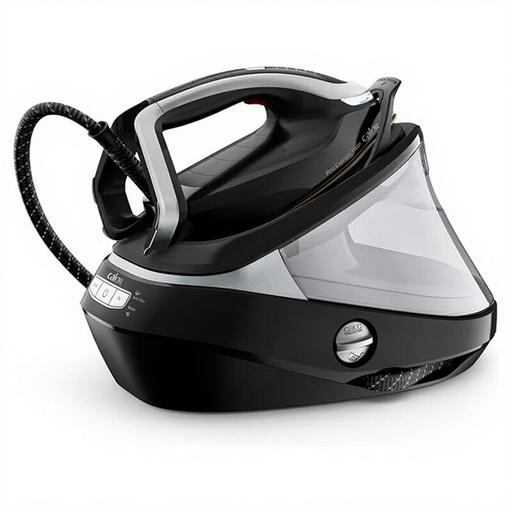 No image available
The steam generator format may be useful for ironing several sets in a row; compare the specifications with the amount you actually need to iron.
According to the product name: 3,000 W, 1.2-l water tank, 180 g/min continuous steam output and 800 g/min steam boost.
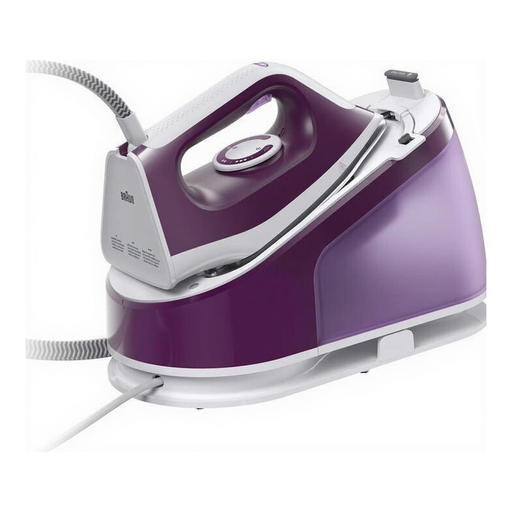 No image available
The steam generator format may be useful for batch ironing; compare the continuous steam output, tank capacity and descaling requirements for this specific model.
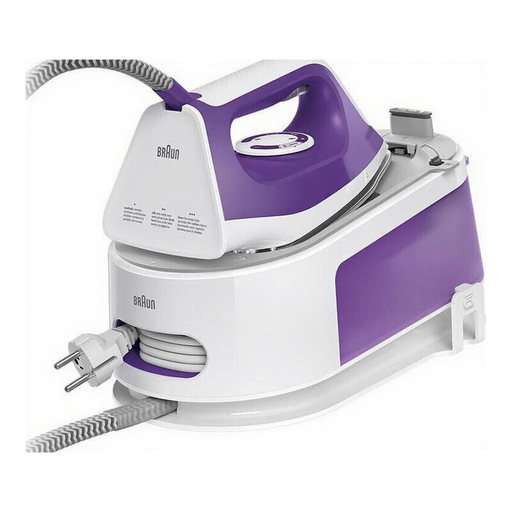 No image available
The steam generator format may be useful for ironing several sets at a time; check the continuous steam output, tank capacity and descaling requirements against the specifications for this specific model.
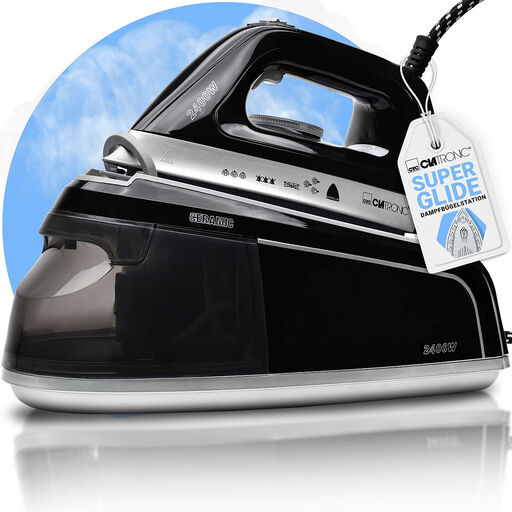 No image available
A steam generator may be useful for batch ironing; compare the tank capacity and power with the number of sets you actually need to iron.
According to the product name: 3.5 bar, 1.2-l water tank, 2,400 W and Superglide soleplate.
No, not based on the fibre alone. According to GINETEX Germany, the care label for the specific set states the maximum treatment it can withstand; set the temperature and steam accordingly.
Take the sets out promptly after the wash and reshape them as they dry. If the care label allows ironing and you want a smooth finish, you can group several sets together for one ironing session and choose the tank capacity and storage space according to the amount you actually need to iron.
Follow the instructions for the specific model, as descaling methods can vary between ranges. Philips warns against opening certain descaling caps while the appliance is hot.
When you buy from a retailer in the EU, you are generally entitled to a statutory guarantee of at least two years from the date you receive the goods, against the seller. A separate manufacturer’s guarantee has its own terms and does not replace this entitlement, as Your Europe explains.
Electrical equipment within the 50 to 1,000 V AC scope of the EU Low Voltage Directive must carry CE marking. Check the marking and electrical specifications on the specific listing and appliance; EUR-Lex describes the scope but does not confirm that an individual appliance complies.