Press a scarf smooth
If you want to smooth out individual linen scarves, make sure you have access to a heat-resistant surface when you need it. GINETEX and LinenMe also recommend taking the care label and the fabric’s moisture level into account.


For smoothing individual linen scarves, a steam iron is the obvious place to start if you have a heat-resistant surface to hand. A handheld clothes steamer is better suited to freshening up a scarf on a hanger, while a steam generator is worth considering mainly if you regularly iron other laundry too and have room for the base unit. According to GINETEX, the care label determines the permitted temperature and steam treatment; LinenMe recommends ironing linen while it is slightly damp.
If you want to smooth out individual linen scarves, make sure you have access to a heat-resistant surface when you need it. GINETEX and LinenMe also recommend taking the care label and the fabric’s moisture level into account.
A handheld clothes steamer could be a good fit if you’d rather freshen up a hanging scarf than press its edges. Tefal also lists horizontal use for the Pure Force DT8720E0; you’ll need a suitable surface for this.
If you regularly iron other textiles as well as scarves, you could consider a steam generator. Braun promotes vertical steaming for freshening up lightly creased clothes on a hanger; the separate base unit needs extra space.
The key question is whether you want to press the scarf smooth or mainly freshen it up while it’s hanging. This determines the surface you’ll need, how much space to allow and which setting to use.
A good fit if: you want to smooth individual scarves on a firm, heat-resistant surface.
The trade-off: You’ll need a suitable surface for pressing horizontally.
A good fit if: you want to freshen up a hanging scarf without keeping an ironing board set up.
The trade-off: Vertical steaming doesn’t guarantee the same result as pressing with an iron’s soleplate.
A good fit if: you regularly have larger loads of laundry to iron as well as scarves, and have a safe ironing surface available.
The trade-off: The separate base unit takes up extra space; vertical steaming doesn’t guarantee the same pressing result on linen.
| What matters | What to check before buying | Who is it important to? |
|---|---|---|
| A precise pressing result | Temperature and steam controls, as well as a suitable heat-resistant surface; the care label specifies the permitted treatment. | If I want to press individual linen scarves smooth, with crisp edges, I need a stable surface and the right setting. Around 36% of consumers rank the pressing result as their main concern. |
| Limited space | Check whether the appliance is designed for vertical use or explicitly for horizontal use, and where it can be placed safely; let the scarf dry completely before putting it away. | If I have little space for drying and would rather freshen up a scarf on a hanger, having an ironing space permanently set up isn’t ideal. Around 29% of consumers prioritise a compact footprint. |
| Gentle fabric care | Check the iron symbol and steam guidance on the scarf itself; for dark or embellished items, check whether a protective pressing cloth is suitable. | If my scarf is dyed, embellished or made from a blend of fibres, I’d rather follow its care label than rely on the fibre name alone. Around 21% of consumers prioritise protecting the fabric. |
| Maintenance | Check the model-specific descaling instructions and tank capacity; a separate base unit needs extra space. | If I want to factor in cleaning and descaling as well as the initial purchase, I care about what the instructions say about maintaining the appliance. Around 14% of consumers pay particular attention to maintenance requirements. |
The vertical-steam function on the appliances featured here can also be used to freshen up hanging textiles. That doesn’t mean it will smooth a scarf as precisely as pressing it with an iron’s soleplate.
Before you buy, decide whether you mainly want to freshen up a scarf or press it smooth, including its edges.
The care label on a finished scarf may call for a lower temperature or restrict steam because of its dye, fibre blend or embellishments.
Set the temperature and steam according to the specific care label, rather than relying on the fibre name alone.
Even a small appliance needs a suitable surface for horizontal pressing. A steam generator also has a separate base unit, and the scarf must be completely dry before you put it away.
Make room for a safe ironing surface you can use when needed, as well as somewhere for the scarf to dry.
The examples below refer to the specific model ranges named and don’t represent a statement about a brand’s entire range or the availability of its products.
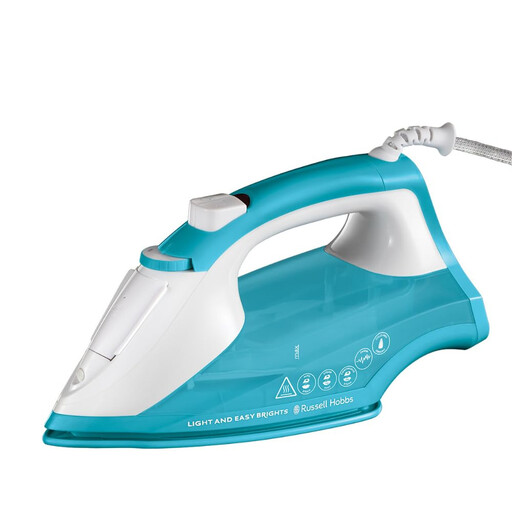
The Express Steam DW4320 is a steam iron with manual controls and an additional vertical-steam function.
The 1000 Series DST1020/30 is a steam iron with variable steam and temperature controls, designed for individual items.
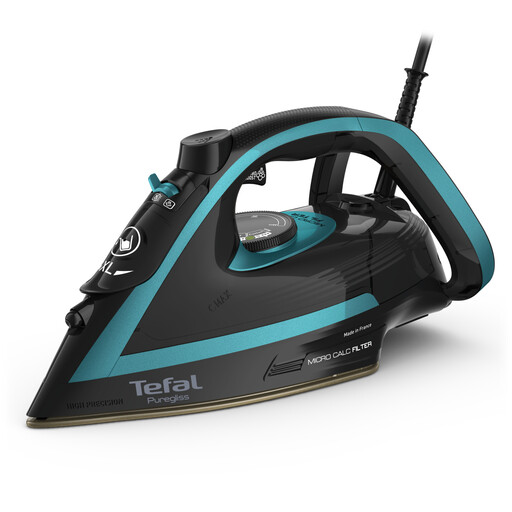
According to Tefal, the Pure Force DT8720E0 is designed for vertical steaming and horizontal ironing.
The CareStyle 7 IS7262GY is a steam generator for households that regularly iron other laundry as well as scarves.
This selection includes steam irons for precise pressing on a suitable surface, as well as handheld clothes steamers for freshening up or steaming horizontally.
 No image available
For precise pressing on a heat-resistant surface; the product description lists fabric-specific temperature selection and adjustable steam control.
35 g/min continuous steam, 135 g/min steam boost, 240-ml tank and anti-scale system.
 No image available
For precise pressing on a heat-resistant surface; vertical steam is also specified for hanging textiles.
40 g/min continuous steam, 160 g/min steam boost, 250-ml tank and stainless-steel soleplate.
 No image available
For horizontal pressing on a suitable surface; the product description also lists vertical steam.
50 g/min continuous steam, 280 g/min steam boost, Micro-Calc filter and automatic shut-off.
 No image available
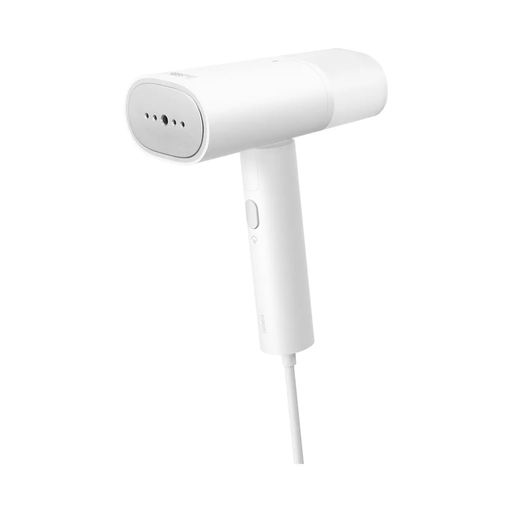
For homes without a permanently available ironing surface; the product description lists vertical and horizontal use. A flat surface is needed for horizontal steaming.
Foldable design and 160-ml tank; weight listed as approximately 770 g.
 No image available
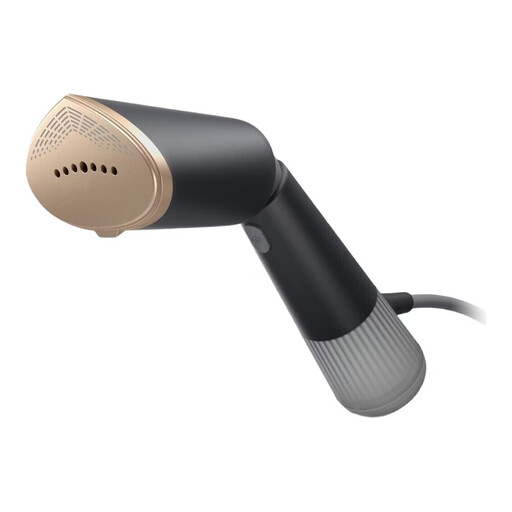
For freshening up hanging clothes without an ironing board; horizontal steaming is described for use with the supplied StyleMat, but it isn’t the same as precise pressing with an iron’s soleplate.
Two steam settings, 24 g/min continuous steam and a 35-second heat-up time.
If the care label permits ironing and the steam setting you’ve chosen, you can iron linen while it’s slightly damp, but not wet. LinenMe recommends ironing slightly damp linen; let the scarf dry completely before putting it away, and check for any restrictions relating to colour, finish or embellishments.
Follow the iron symbol on the finished scarf’s care label, rather than relying on the fibre name alone. GINETEX specifies maximum soleplate temperatures of 200 °C for three dots, 150 °C for two dots and 110 °C for one dot; steam must not be used at the one-dot setting.
Follow the instructions for the specific model and its descaling system. Philips notes that limescale can reduce the steam output of its steam irons and cause discolouration; cleaning methods vary by model.
Electrical appliances covered by the EU Low Voltage Directive must meet safety and conformity requirements; the voltage range covers 50 to 1.000 V AC. For the specific listing, check details such as product identity, CE marking and clear German instructions and warnings. A product description alone doesn’t prove that an individual item complies.
An old iron should be taken to a separate collection point for waste electrical equipment. The German Environment Agency lists local authority collection points; additional conditions apply if you return it to a retailer.