Little-and-often ironer
You only iron one or a few scarves at a time and want an easy-to-use appliance that’s manageable for short sessions.


For frequent, short ironing sessions with linen scarves, a standalone steam iron is a natural starting point: F.A.Z. Kaufkompass considers a steam iron sufficient for many households that do not have large amounts of laundry to iron. A handheld garment steamer is better suited to freshening up scarves while they are hanging, while a steam generator is more appropriate if you regularly have larger loads to iron. The right choice depends on the finish you want and the care label on each scarf.
You only iron one or a few scarves at a time and want an easy-to-use appliance that’s manageable for short sessions.
You want to smooth creases, edges or narrow areas of a scarf with precision; the soleplate and pointed tip matter more to you than simply freshening it up.
You’d rather smooth a scarf while it’s hanging, or you need to pay particular attention to the different care symbols on each scarf.
Choose an appliance based on the finish you want and how much you usually iron in one go.
A good choice if: you want to iron individual linen scarves flat and with precision.
The trade-off: The soleplate is suited to precise pressing; for short sessions, the handle and controls matter too.
A good choice if: you mainly want to freshen up a scarf while it’s hanging.
The trade-off: Its documented vertical steaming function does not demonstrate an equivalent result when pressing fabric flat.
A good choice if: you also regularly have larger loads to iron.
The trade-off: The separate base takes up space; a larger water tank is not automatically an advantage when you only have a few scarves to iron.
| What matters to you | What to check when buying | Who will find this especially important? |
|---|---|---|
| Easy handling for small loads | The appliance’s design, handle and storage requirements, and whether the amount you usually iron justifies a separate steam generator. | If I only iron one or a few scarves, I want to get the appliance ready quickly and put it away easily. Around 36% of consumers prioritise ease of use for small loads. |
| Precise pressing | The shape of the iron’s tip and whether the soleplate is suited to the finish you want. | When ironing creases and narrow scarf edges, controlled, flat pressing matters more to me than simply freshening them up. Around 29% of consumers prioritise precise pressing. |
| Care symbols and steam | Check the care label and adjust the temperature and use of steam accordingly. GINETEX lists the 110 °C symbol as meaning ‘iron without steam’; it is not a one-size-fits-all setting for linen scarves. | If different scarves have different care symbols, I want to follow their instructions rather than iron them all based on the fibre alone. Around 21% of consumers prioritise protecting the fabric. |
| Drips, limescale and interruptions | Check the exact model variant for an anti-drip function, descaling features and automatic switch-off. | For frequent, short sessions, I want to avoid water marks and be able to care for and switch off the appliance in a way that suits my routine. Around 14% of consumers pay particular attention to maintenance and safe stopping. |
The care symbol applies to the specific scarf. A low maximum ironing temperature may mean that steam must not be used.
Check the label before using the iron for the first time, and adjust the temperature and steam accordingly.
For short ironing sessions, the separate base and extra space it takes up may be unnecessary. F.A.Z. Kaufkompass considers a steam iron sufficient for many households that do not have large amounts to iron.
A steam generator needs extra storage space, and maintaining its water system is another regular task.
First, think about how many items you normally iron in one session and how much space you have to set up and store the appliance.
Features vary by model. Rowenta lists an anti-drip function for the DW4320D1, but not automatic switch-off.
Check the specifications for the exact model variant for both features.
The FreeStyle 3 range is aimed at shoppers looking for a handheld steam iron with an open handle and precision tip.
According to the manufacturer, the Ultragliss Plus FV6846E1/23 combines steam, a precision tip and a removable limescale collector.
The Express Steam DW4320D1 may appeal to shoppers who want to adjust the steam and temperature manually.
Philips offers steam irons, garment steamers for freshening clothes while hanging and steam generators for larger loads.
The Joybuy products below are standalone steam irons for pressing small loads flat. This selection does not include garment steamers or steam generators.
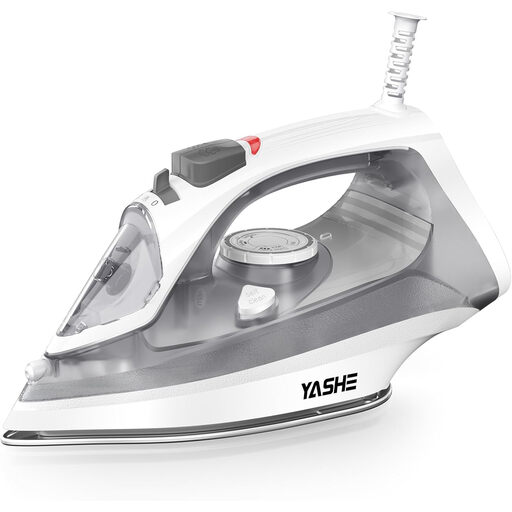 No image available
As a standalone steam iron, it’s an option for pressing small loads flat.
2300 W; 300 ml water tank; 150 g/min steam boost; non-stick soleplate; self-cleaning; anti-drip function.
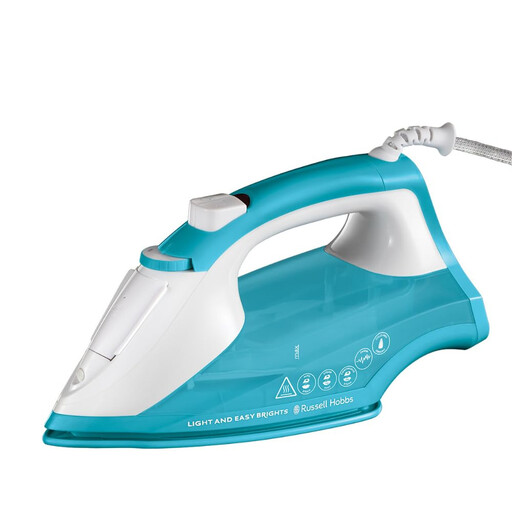 No image available
As a standalone steam iron, it’s an option if you want to iron scarves flat.
 No image available
The handheld design and soleplate are suited to ironing small loads flat, provided the care label allows steam.
2400 W; non-stick soleplate; automatic cleaning function; anti-drip function.
 No image available
This steam iron is an option if you want to iron scarves flat and control the steam precisely.
2500 W; continuous steam 40 g/min; steam boost 160 g/min; Eco function; anti-drip system.
 No image available
It’s an option for ironing flat if you also bear the anti-drip function in mind when using steam.
Steam boost 280 g/min; vertical steam; anti-drip system; automatic switch-off.
No, not just because it is made from linen. The care label on the specific scarf sets the maximum ironing temperature. The symbol documented by GINETEX for 110 °C means ‘iron without steam’; if ironing is prohibited, an iron is not suitable.
A garment steamer is an option if you want to freshen up a scarf while it’s hanging. The documented features do not demonstrate an equivalent result for precise, flat pressing, so choose according to the finish you want and the care label.
Follow the descaling and water guidance in the instructions for your specific model. Philips says that limescale can build up more quickly in its steam generators when used with hard water, and that regular descaling can help prevent discolouration and leaks. This guidance is not a universal set of instructions for all irons.
The Verbraucherzentrale explains that online purchases in Germany generally come with a 14-day right to cancel, starting from the conclusion of the contract or receipt of the goods ordered. Your statutory rights against the seller if goods are faulty are separate; a guarantee is a voluntary offer. The details and exceptions depend on the contract.
EU product safety rules also apply to goods sold online. As part of its market surveillance, the Bundesnetzagentur lists checks including correct CE marking, identifiable manufacturer details and German-language instructions with the necessary warnings. A CE mark alone is not an assessment of quality or ironing performance.