Smoothing linen towels
You want to press creases out of linen tea towels and follow the care label on each one. GINETEX GERMANY explains that the label specifies the maximum treatment allowed.


For frequent, small ironing loads, a traditional steam iron with adjustable temperature and steam settings is a sensible place to start – provided the care label says the item can be ironed. ETM TESTMAGAZIN describes steam irons as handy for short sessions. A dry iron means there’s no tank or steam channel to maintain, but stubborn creases may need to be dampened separately. A steam generator iron is more suitable if you also have larger loads of laundry and the extra space and set-up are manageable.
You want to press creases out of linen tea towels and follow the care label on each one. GINETEX GERMANY explains that the label specifies the maximum treatment allowed.
You get your iron out regularly for short sessions and value ease of use more than a large, separate tank. ETM TESTMAGAZIN describes steam irons as handy for short sessions.
You want to use steam, but you’re also mindful of drips, limescale care and straightforward cleaning. Tefal says how often you need to descale depends, among other things, on the hardness of your local water.
Best for: ironing a few towels regularly and adjusting the heat and steam to suit.
Things to consider: the tank and steam channels need maintenance. Power ratings alone don’t tell you how quickly an iron heats up or how well it will work on your towel.
Best for: pressing items flat without filling a water tank or maintaining steam channels.
Things to consider: stubborn creases may need to be dampened separately. If so, follow the towel’s care instructions.
Best for: larger loads of laundry or particularly stubborn creases, if you have enough space.
Things to consider: the separate tank and extra set-up can be inconvenient if you only have a few tea towels to iron.
Best for: steaming garments while they’re hanging.
Things to consider: steaming doesn’t necessarily replace pressing a tea towel flat.
GINETEX GERMANY says the care label on each towel specifies the maximum treatment allowed. So check the temperature, steam settings and iron’s features against your specific ironing needs.
| What matters to you | What to check before buying | Who might find this most important? |
|---|---|---|
| Smoothing creases in linen | Check for adjustable temperature and controllable steam or a spray function; follow the care label. | When I iron linen tea towels, I want to match the heat and moisture to the care label rather than assume the right setting from the fabric name alone. Around 36 % of consumers put smoothing items in line with their fabric’s care requirements first. |
| Short ironing sessions | Compare ease of use and heating time in product tests, as well as weight, handle and storage requirements; wattage is not a measure of heating time. | When I’m only ironing a few towels, getting the iron out and putting it away should be easy. Around 29 % of consumers say short ironing sessions are their top priority. |
| Steam care and drips | Check the descaling instructions, tank opening, anti-drip feature and which water is suitable for the specific model. | When I use steam, I want to plan for limescale care and avoid leaving towels wet. Around 21 % of consumers put maintenance and avoiding drips first. |
| Safety and consumer rights | Check the automatic shut-off and instruction manual; distinguish your statutory rights from a voluntary guarantee. | For short ironing sessions, I want to know what safety features the specific model has and who to contact if something goes wrong. Around 14 % of consumers prioritise safety and their rights after purchase. |
Care instructions can vary depending on the towel and its finish. A setting that’s too high can damage the fabric.
Check the label before ironing and set the temperature according to the treatment it allows.
Using the wrong setting can damage the towel.
If you often iron for short sessions, getting the iron out, setting it up and putting it away matter too. A wattage rating isn’t a measure of heating time.
Compare ease of use and heating time in product tests, and consider how much space you have for the iron.
Limescale and condensation can still be an issue, even with these features. Too much steam can leave the towel or ironing board damp.
Check the instructions for your specific model on water, descaling and steam settings.
Cleaning and, if necessary, ironing the towel again to dry it will take extra time.
For the Braun TexStyle 3 SI 3055 Black, Braun’s German series page lists a 270-ml tank, while a Joybuy listing for the SI3055BK states 220 ml. The difference makes it important to check the exact variant.
Compare the full model name and key features before treating details from different listings as interchangeable.
Otherwise, the capacity or features you expect may not match the variant you buy.
Documented steam irons in the FreeStyle 3 and TexStyle 3 ranges offer useful points of comparison for handling and features.
The documented models range from dry irons to steam irons, with different requirements for water and steam care.
The documented Azur 8000 DST8020/20 is an option for buyers considering automatic temperature control.
The One Temperature 25090-56 is designed for buyers who don’t want to switch between temperature settings when ironing suitable fabrics.
The DB 6005 CB is a documented steam iron that lets you switch off the steam for occasional dry pressing.
The Express Steam DW4320 is a steam iron with manual controls.
The models below are steam irons for pressing items flat, including a travel iron. Compare their temperature controls, tank capacity and care features with the labels on your towels and your ironing habits.
 No image available
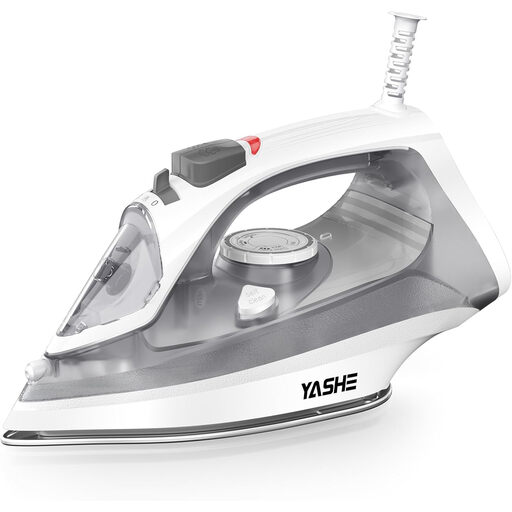
The adjustable thermostat and stated suitability for linen may be useful for towels with different care labels.
2300 W; 300-ml water tank; 150 g/min steam boost; non-stick soleplate; self-cleaning and anti-drip features.
 No image available
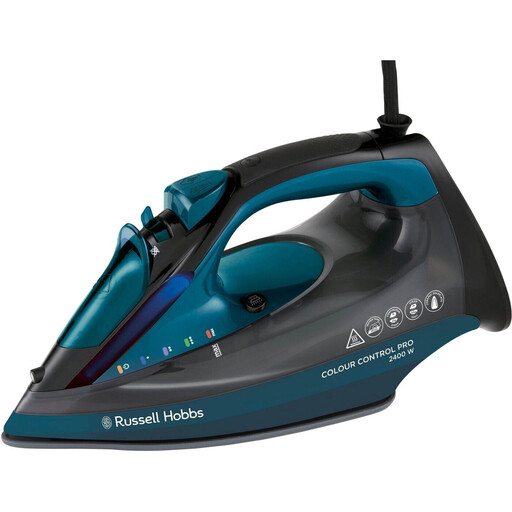
The temperature display for different fabric types may be helpful if you want to adjust the setting to suit each care label.
Ceramic soleplate; continuous steam; anti-drip system; self-cleaning and automatic shut-off.
 No image available
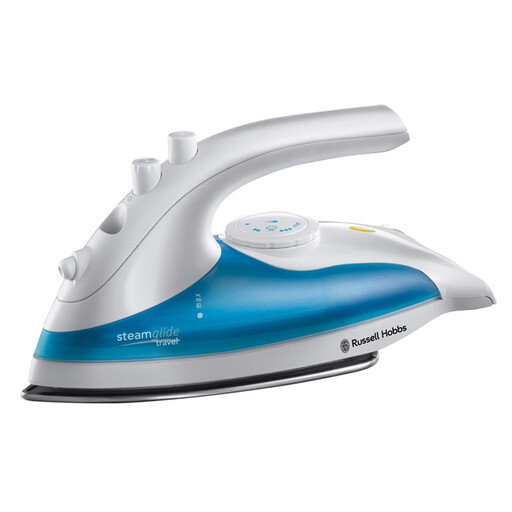
The dry-iron option, adjustable steam and spray function offer different ways to press items flat.
Dual voltage; stainless steel soleplate; 80-ml water tank; compact travel design.
The tank is smaller than those on the other models listed here, so check whether it suits your ironing sessions.
 No image available
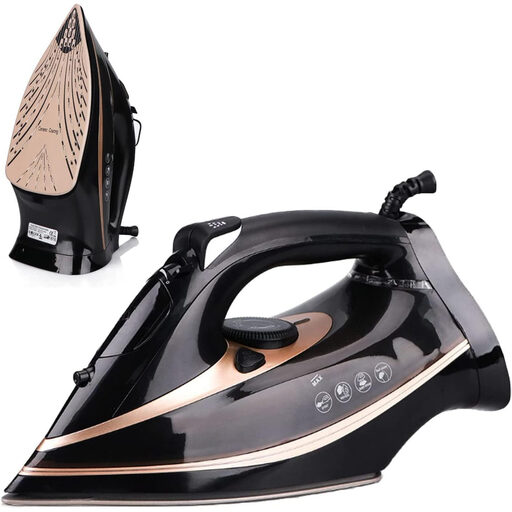
The ceramic soleplate and stated self-cleaning feature may be worth considering when choosing an iron for pressing flat with steam.
2600 W; 300-ml water tank; 70 g/min steam; 120 g extra steam boost; self-cleaning function.
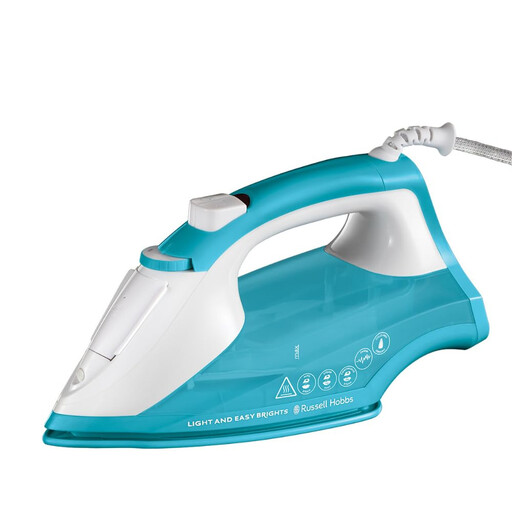 No image available
The stated fabric-based temperature setting and continuous steam are useful features if you want to choose the setting to suit the towel.
Ceramic soleplate; 35 g/min continuous steam; anti-drip system and self-cleaning.
No. Follow the care label on the specific towel, which states the maximum treatment allowed. The fact that a particular towel made from 50 % cotton and 50 % linen can be ironed at a high temperature according to its manufacturer doesn’t automatically apply to other towels. GINETEX GERMANY explains what care symbols mean.
Reduce the amount of steam or finish by ironing without steam, if the care label allows it. Philips lists condensation on the ironing board, frequent bursts of steam and a setting that’s too low as possible causes. Check the instructions for your specific model.
It depends on the model and, among other things, the hardness of your local water. Tefal recommends checking the instructions for your specific appliance. If needed, you can ask your water supplier about water hardness.
If you buy from a trader in the EU, you have a statutory guarantee of at least two years from the date you receive the goods. Your Europe explains that the seller is your point of contact for statutory claims if a product is faulty. This is separate from any voluntary manufacturer’s guarantee.
It’s a conformity mark for relevant EU requirements, which the manufacturer is responsible for applying; it isn’t a quality mark. Your Europe says the manufacturer is responsible for ensuring the product meets the applicable requirements and bears the mark.