Frequent, quick ironing sessions
If you regularly iron just a few linen tea towels, weigh the heat-up time against the effort of setting up and putting away the appliance.


If you often iron small batches of linen, a steam generator is worth considering only if the extra steam outweighs the repeated effort of setting it up, filling it and putting it away. For just a few tea towels, a steam iron may be the more practical choice. For stubborn creases, compare continuous steam and steam boost separately. Heat-up time, storage space and descaling also affect how convenient it is for a quick ironing session. Check the care label and, before deciding on a specific purchase, review the conformity information for the model you’re considering.
If you regularly iron just a few linen tea towels, weigh the heat-up time against the effort of setting up and putting away the appliance.
If your main aim is to smooth out heavily creased tea towels and seams, look for adjustable steam settings. Always follow the care label.
If you need to put the steam generator away after every use, or want to factor in descaling and the risk of marks on light-coloured tea towels, check the footprint and cleaning requirements of the specific model.
For frequent, small batches, first consider the total effort involved each time you iron. Then compare steam performance, the space it takes up and maintenance requirements.
| What matters | What to check before buying | Who is this particularly important for? |
|---|---|---|
| Ready to use quickly | Compare the heat-up time of the complete model, and how easy the tank and hose are to handle. | If I’m only ironing a few tea towels, I don’t want to wait ages or spend a long time setting everything up. Around 36% of consumers prioritise getting started quickly. |
| Creases in linen | Compare continuous steam and steam boost separately; check the care label and the appliance instructions. | I want to smooth out stubborn creases without overlooking the care instructions. Around 29% of consumers prioritise crease removal. |
| Storage space | Check the dimensions and locking mechanism of the specific model, and make sure you have room for the base and hose. | If I put the steam generator away after every quick session, the space it takes up matters to me. Around 21% of consumers prioritise storage space. |
| Descaling and marks | Check the model’s cleaning method and water recommendations against the hardness of your local water. | I want to plan for descaling and avoid possible discolouration on light-coloured tea towels, rather than relying on an anti-scale feature alone. Around 14% of consumers prioritise descaling and avoiding marks. |
Steam boost doesn’t tell you how much steam the appliance produces continuously. For the Tefal SV6131, Tefal Germany lists different steam boost figures in its product description and technical specifications.
If you’re ironing several tea towels, compare continuous steam and how easily you can adjust it first. If figures conflict, check the details for the exact model before buying.
A large tank can be useful for longer ironing sessions, but it doesn’t automatically make a steam generator more practical for small batches.
Consider how easy the tank is to handle, the space the appliance takes up and the effort involved in each short session together.
Philips notes that limescale build-up can reduce steam output and cause discolouration. Maintenance requirements vary by model.
Before buying, check the descaling process for the exact model and follow its instructions.
Tefal describes the Express Easy SV6131 as a compact steam generator designed to heat up quickly, with a refillable tank.
According to Rowenta, the Compact Steam Pro DG7623 combines a high-pressure boiler with a compact base and precision tip.
The Vaporella Simply VS20.20 is an option to consider if you’re looking for a removable tank and manual temperature control.
Braun presents the CareStyle 3 IS3231GY as a model designed with compact storage and ease of handling in mind.
The 3000 Series PSG3001/30 is another option combining continuous steam with a ceramic soleplate.
This selection includes steam generators and, as an alternative for comparison, a steam iron for quick linen ironing sessions.
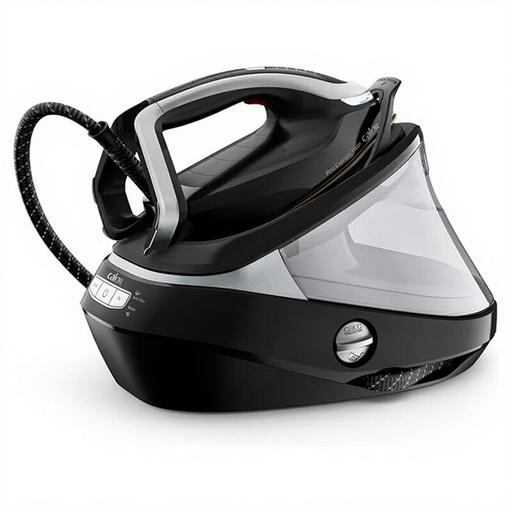 No image available
For anyone who wants to compare continuous steam and steam boost separately.
The product name lists 180 g/min continuous steam, 800 g/min steam boost, a 1.2-l tank and 3000 W.
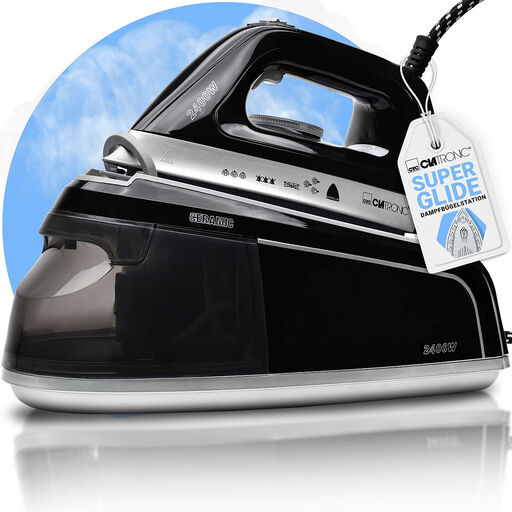 No image available
For anyone who wants to compare details such as tank capacity and storage when choosing a steam generator.
The product name lists 3.5 bar, a 1.2-l water tank, 2400 W and a Superglide soleplate.
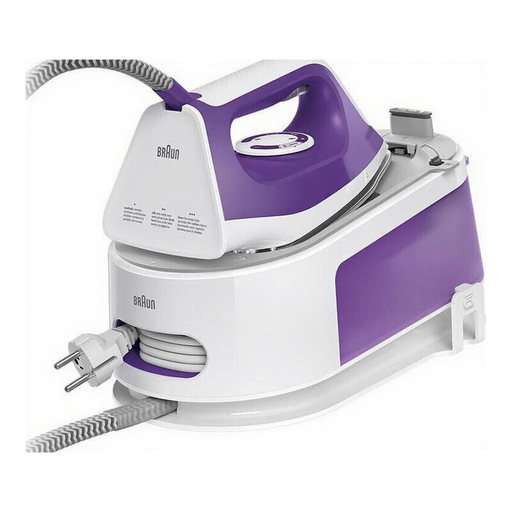 No image available
A steam generator to compare if, for quick ironing sessions, you first want to see whether the extra steam is worth the effort of setting it up.
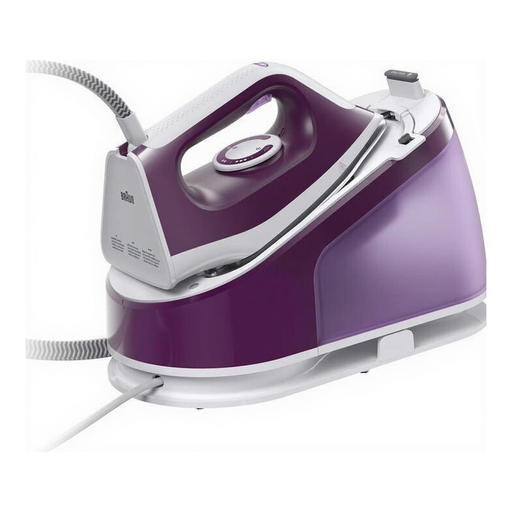 No image available
Another steam generator option to compare with a steam iron if you regularly iron small batches.
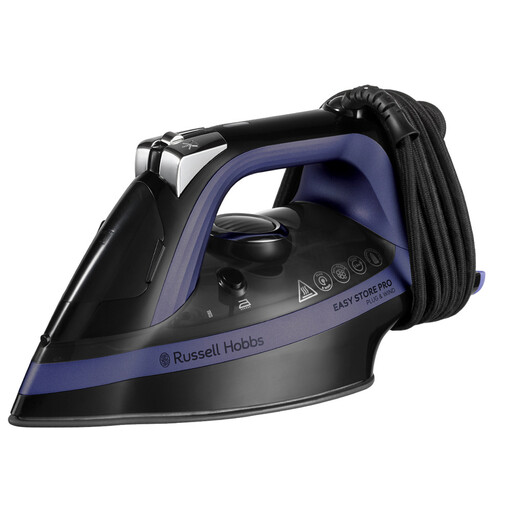 No image available
As a steam iron, this is an alternative for anyone who wants to avoid the storage and set-up involved with a steam generator when ironing just a few tea towels; that doesn’t mean it’s automatically more powerful.
The product name lists 2400 W, One-Temp technology, 200 g/min steam boost, a ceramic soleplate and a 320-ml water tank.
No. Don’t decide based on the fabric alone: always follow the tea towel’s care label and the appliance instructions. Forum Waschen recommends ironing linen while it’s still damp and turned inside out. GINETEX explains that the ironing symbol sets limits on how an item can be treated, and that some low-temperature settings may rule out using steam.
Allow space for the steam generator, iron and hose, and follow the instructions for the specific model. For certain PerfectCare models, Philips says to unplug the appliance and let it cool before opening the descaling cap. Don’t assume the same procedure applies to other models.
It depends on the model. Check the water and descaling instructions for the appliance you’ve bought rather than following recommendations for a different product range. Philips notes that limescale can build up more quickly in hard water.
In Germany, the seller is generally responsible for dealing with statutory consumer rights if a product is faulty. These are separate from a voluntary manufacturer’s guarantee. The Verbraucherzentrale says the statutory period is generally two years, and explains that for sales contracts from 31 July 2026, it can be extended once by twelve months if you choose a repair.
By applying the CE marking, the manufacturer declares that the product complies with the EU rules that apply to it. It isn’t a central EU certification or an independent quality mark. Mains-powered household appliances covered by the Low Voltage Directive must meet its requirements. Before deciding on a specific purchase, check the conformity information for the model you’re considering.