For one or a small batch of tea towels, a compact iron is a natural place to start. Slightly damp linen is easier to smooth, but you’ll still need room for it to dry completely afterwards. A steam iron can help with dry creases, while a steam generator with a separate base is better suited to regular, larger ironing loads and enough space to set it up. Follow the care label on each towel for the right temperature and steam setting.
Who each option is right for
Households with limited drying space
If you iron linen tea towels in small batches, you’ll still need space and airflow afterwards so they can dry completely. Leinenweberei Hoffmann says slightly damp linen is easier to smooth, while the German Environment Agency recommends airing rooms regularly when there’s moisture in the air.
If you want a crisply pressed linen towel
If a neatly pressed towel matters more to you than simply freshening it up, you’ll need a suitable ironing surface and a setting that matches the care label. GINETEX GERMANY explains that the label shows the maximum treatment the item can withstand.
Households with larger ironing loads
If you regularly iron lots of towels alongside other laundry, a steam generator may be an option, provided you have room for its separate base. Tefal’s GV9225 is one example of this design from a manufacturer.
What to look for when buying
Compact dry iron
A good fit if: you’re ironing just a few slightly damp towels and don’t need a built-in steam function.
Bear in mind: You may need to dampen dry creases separately; the towels will still need to dry completely afterwards.
Traditional steam iron
A good fit if: you want to tackle dry creases or use steam while ironing.
Bear in mind: The water tank and descaling add maintenance, and more steam doesn’t give you extra drying space.
Steam generator
A good fit if: you regularly iron larger loads in one go and have room for a separate base.
Bear in mind: The base takes up extra space, so it isn’t automatically the better choice for small batches.
Handheld garment steamer
A good fit if: you mainly want to freshen up lightweight fabrics while they’re hanging.
Bear in mind: Philips notes that a garment steamer won’t give the same results as an iron on thicker linen.
When drying space is limited, the appliance type isn’t the only thing to consider. Make sure you have a clear space where the towels can dry completely, and check their care labels before ironing.
| Priority |
What to check when buying |
Who it matters most to |
| Drying routine |
Allow space for small batches and a clear area where towels can dry completely. |
If I only iron a few towels, I still need room and airflow for drying afterwards. Around 36% of consumers put the drying routine first. |
| A smooth finish |
Check the care label, temperature control and suitability of the ironing surface. |
If I want a crisply pressed towel rather than just refreshed fibres, I follow the care label and use a suitable ironing surface. Around 29% of consumers prioritise the ironing result. |
| Compact design |
Compare the appliance dimensions with the space available for use and storage; if you’re considering a steam generator, allow room for its separate base too. |
If I’m short on worktop space, I want an appliance that’s easy to set up and put away. Around 21% of consumers say compact design is their top priority. |
| Maintenance |
For steam irons, check the model-specific guidance on water and descaling. |
If I only iron small batches of slightly damp towels, I want to keep appliance maintenance to a minimum. Around 14% of consumers put maintenance first. |
Common misconceptions
-
Confusing a burst of steam with continuous steam
Manufacturers list steam boost and continuous steam as separate settings. So a high steam boost figure doesn’t mean the same thing as continuous steam.
Compare the figures separately, then check that the temperature and intended use are suitable for the towel’s care label.
-
Assuming more steam can make up for a lack of drying space
Slightly damp linen is easier to smooth, but it still needs to dry completely afterwards. Damp laundry in a room also makes regular ventilation important.
Iron smaller batches and keep a well-ventilated space clear for drying before putting the towels away.
-
Choosing a steam generator just because it has a high steam output
A steam generator has a separate base, so it takes up more space than a standalone iron. Its stated steam output doesn’t prove it will dry towels faster or work better for small batches.
Measure your work and storage space, and consider whether you regularly iron larger loads in one go.
-
Always choosing the highest temperature for linen
The care label applies to the specific towel and shows the maximum treatment it can withstand. The fabric name or appearance is no substitute for checking the label.
Check the label before setting the temperature, especially for blended fabrics, coatings or printed designs.
Brands and models to consider
Severin
The BA 3211 is a documented example of a small iron without a steam function.
- Severin says the model has continuous temperature control and no steam function.
- For dry creases, you may need to add moisture separately; these details don’t necessarily apply to other Severin models.
Philips
The 3000 and Azur 8000 series models mentioned are steam irons with different features.
- Philips lists a 300 ml tank and up to 40 g/min of continuous steam for the DST3041/80, and up to 55 g/min for the DST8020/20.
- These are manufacturer specifications, not the results of a comparison test on linen tea towels. Philips also notes that a garment steamer won’t give the same results as an iron on thicker linen.
Braun
The TexStyle SI 5225 PU is an example of a steam iron with adjustable temperature.
- Braun lists a mechanical thermostat and up to 50 g/min in Turbo mode.
- Claims about smooth gliding and quick crease removal are the manufacturer’s descriptions and haven’t been independently verified here for linen tea towels.
Tefal
The FV9844 and GV9225 models mentioned illustrate a standalone iron and a steam generator with a separate base.
- Tefal lists up to 60 g/min of continuous steam and an automatic shut-off for the FV9844; the GV9225 has a separate base and delivers up to 140 g/min.
- The manufacturer’s figures don’t prove an advantage when it comes to drying. The steam generator takes up extra space.
Rowenta
The Focus Excel DW5310 is a steam iron with manual controls.
- Rowenta lists 45 g/min of continuous steam and a 300 ml tank.
- According to the German manufacturer’s website, the model doesn’t have an automatic shut-off. Claims about steam distribution are from the manufacturer and haven’t been independently tested on linen towels.
Joybuy products for this purpose
The following Joybuy products include standalone steam irons and compact irons for ironing on a flat surface. They don’t replace the need for space to dry towels completely.
 No image available
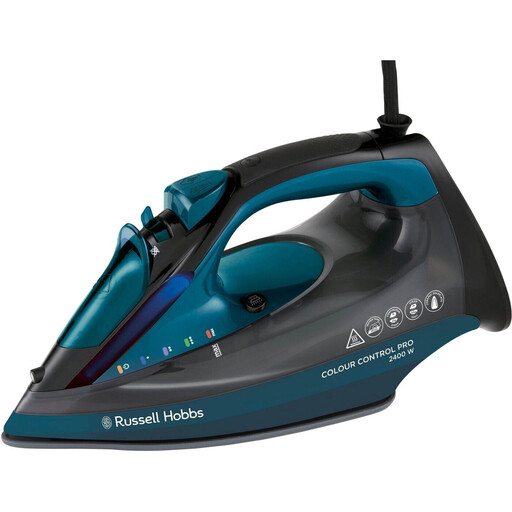
Russell Hobbs Colour Control Pro 27280-56
Designed for smooth ironing, with adjustable temperature and an extra steam function.
The description lists a ceramic soleplate, continuous steam, a steam boost and a water tank. The display shows settings for delicate and hard-wearing fabrics.
View at Joybuy
 No image available
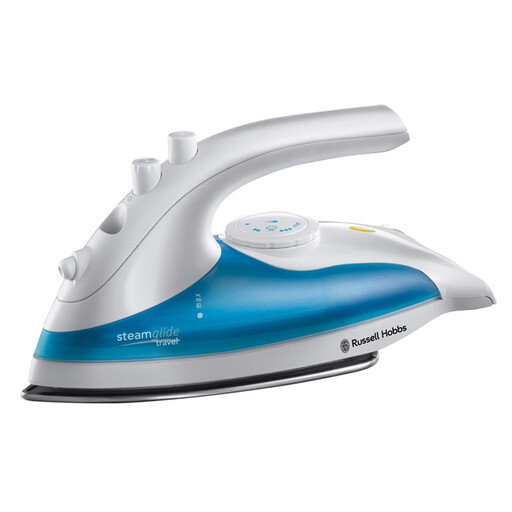
Russell Hobbs Travel Iron 22470
Described as a compact standalone iron with a dry ironing option and adjustable steam output.
The product description lists a stainless steel soleplate, an 80 ml tank and continuous steam at 10 g/min. It also includes a spray function and dual voltage.
View at Joybuy
 No image available
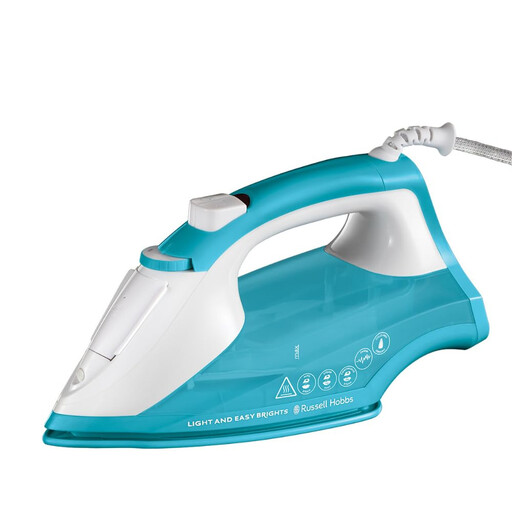
Russell Hobbs 26482-56 Light & Easy Brights
Designed for smooth ironing, with several settings and an extra steam function.
The description lists a ceramic soleplate, five temperature settings, dry ironing, continuous steam and a spray function. It specifies 50 g/min of continuous steam, a 180 g/min steam boost and a 350 ml tank.
View at Joybuy
 No image available
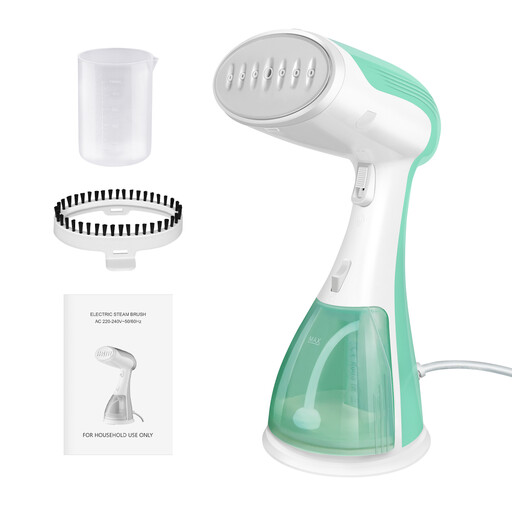
Handheld Portable Garment Steam Iron, 1500W
The description says it can be used for ironing on a flat surface and has an additional steam function.
It lists a metal soleplate, a steam output of 27 g/min and a 300 ml water tank.
View at Joybuy
 No image available
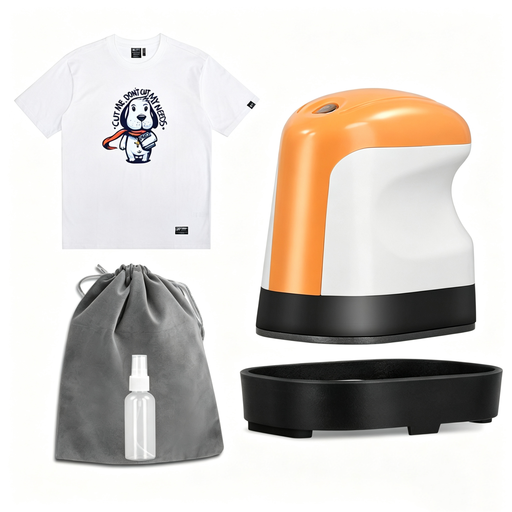
Mini hand iron, white-orange finish with accessories
The description says it’s suitable for home use and DIY embroidery on fabrics. Before ironing linen, check that the intended use is compatible with the care label.
It lists three temperature settings: 120 °C, 150 °C and 180 °C. The title mentions accessories; the description lists a heat-resistant stand.
View at Joybuy
Frequently asked questions
Can I iron every linen tea towel on the highest setting?
No. Follow the care label on each towel: GINETEX GERMANY says it shows the maximum treatment the item can withstand. The fabric name and appearance alone aren’t enough to determine the right temperature.
Can I fold the towels straight after ironing?
Only if they’re completely dry. Leinenweberei Hoffmann says slightly damp linen is easier to smooth; if there’s damp laundry in the room, the German Environment Agency recommends taking particular care to ventilate it well.
What water should I use in a steam iron, and how often should I descale it?
It depends on the model, so follow the water and descaling instructions for your appliance. Philips says limescale build-up can reduce steam output and cause marks; this doesn’t mean there’s one descaling schedule that applies to other brands.
What EU requirements apply to a mains-powered iron?
Mains-powered appliances with a voltage rating of 50 to 1,000 V AC that are sold in Germany and fall under the Low Voltage Directive must carry the required CE marking. The instructions and safety information must be understandable to consumers in the country where the product is sold. EUR-Lex sets out these requirements; they don’t confirm that a particular appliance has already been tested.
Can you work out the running cost of a steam generator from its wattage alone?
No. The wattage shows the appliance’s power rating; the actual cost also depends on how long you use it and how much electricity it consumes. A steam generator also needs model-specific care for water and limescale.


