For a fixed camera position, a compatible wired remote shutter release can let you take a photo without touching the camera. First, though, check whether the self-timer or an app supported by your camera will do the job. If you want to step away from the camera while arranging your print and lighting, a compatible wireless remote may be an option. The key factors are your camera model and its connection or wireless support: a remote shutter release won’t change the lighting or exposure of the dark background.
Who is a remote shutter release for?
Photographers with a fixed shooting position
If you’re photographing a print with your camera in a fixed position, taking the photo without touching the camera can help prevent movement when you press the shutter. First compare the release options you already have, then check that a wired remote shutter release matches your camera’s connection. Canon UK and Nikon UK describe release options for specific cameras and connections.
Creators who change their set-up
If you rearrange the print or lighting between shots, a supported camera app or wireless remote can let you take a photo from a short distance away. Check support for your specific camera model; Sony, for example, describes the RMT-P1BT as compatible with cameras that have a built-in Bluetooth receiver.
Photographers taking repeated shots
Timer or interval functions may be useful for planned sequences. As well as choosing the right camera version, check whether you need any additional connection accessories. Rollei notes that its Wireless Remote Shutter Release requires a camera cable, while JJC describes timed functions for the TM series.
What should you look for when choosing one?
First check that the release method works with your camera, then choose according to your shooting routine and the extra features you need.
| What matters to you |
What to check before buying |
Who is it important to? |
| Camera compatibility |
Match the full camera model name against the manufacturer’s list; check the connection, any adapter required and wireless support. |
If you want to avoid choosing a remote for the wrong connection or camera model, compatibility is your top priority. Around 36% of consumers say it matters most to them. |
| Taking photos without touching the camera |
Check whether your camera already has a self-timer or app function; with a wired model, consider whether the cable will reach your shooting position. |
For a single shot with a fixed set-up, you don’t want to touch the camera when taking the photo and don’t need a series of shots. Around 29% of consumers prioritise this straightforward way of taking a photo. |
| Freedom to move around your set |
Check Bluetooth support or whether a receiver is needed, along with the required camera cable and the power supply for the specific model. |
If you want to leave the camera while arranging your print and lighting, being able to operate it from a distance matters to you. Around 21% of consumers prioritise this freedom of movement. |
| Timed shots |
Only if you’re planning a series of shots, check the timer functions, the right model version and any required connection accessories. |
If you want to take repeated shots to a schedule, timer or interval functions are essential to your workflow. Around 14% of consumers prioritise this kind of sequence. |
Avoid common buying mistakes
-
Choosing by camera brand alone, instead of checking the model and connection
Even cameras from the same brand can have different connections or model-specific compatibility lists. Fujifilm also notes that an adapter is required for some RR-100 camera combinations.
Before ordering, check the full model name and connection against the manufacturer’s information.
Allow for the cost of an additional adapter if one is listed for your specific camera combination.
-
Assuming wireless operation means there’s no cable at all
A radio remote can be operated wirelessly and still need a cable to connect to the camera. Rollei explicitly states that its Wireless Remote Shutter Release 28146 requires a camera cable, which must be selected to suit your camera.
Check what’s included and whether the cable is compatible with your camera model.
Wireless models may also require compatible batteries.
-
Expecting a remote shutter release to correct the lighting and exposure
A remote shutter release operates the shutter, but it won’t automatically change the lighting or exposure of your subject against a dark background.
Check a test shot and adjust your camera settings or lighting if needed. Canon UK explains exposure compensation as a way to adjust camera settings for bright or dark scenes.
Key brands at a glance
Canon
Canon offers wired remote shutter releases for specific EOS connections, as well as app-based remote shooting for supported cameras.
- The E3 and N3 connection types are different; Canon describes compatible remote releases for each connection.
- The app function and wired remote shutter release must match your specific camera model or connection.
Nikon
Nikon offers model-specific wired remote shutter releases such as the MC-DC2, and describes app-based remote shooting through SnapBridge for supported cameras.
- With certain cameras, the MC-DC2 lets you take a photo without touching the camera.
- The brand alone doesn’t guarantee compatibility; check the accessory information and app support for your model.
Sony
The RMT-P1BT is a Bluetooth remote control for supported Sony cameras.
- According to Sony, it uses the camera’s built-in Bluetooth receiver, so no additional receiver is needed.
- This feature is available only with supported cameras and doesn’t apply to all Sony remote controls.
Fujifilm
The RR-100 is a wired option for cameras included in Fujifilm’s compatibility list.
- The model-specific list shows which cameras the remote shutter release is designed for.
- Fujifilm says an additional adapter is needed for some camera combinations.
Rollei
Rollei describes its Wireless Remote Shutter Release 28146 as offering radio and interval functions.
- The additional features described may be useful for wireless operation and planned sequences of shots.
- According to Rollei, a compatible camera cable is required; the feature details are provided by the manufacturer.
JJC
JJC describes wired timer remote shutter releases for the TM series, with versions for specific cameras.
- The manufacturer lists timing, exposure and interval settings.
- Choose the right version for your camera model; the feature description isn’t an independent reliability test.
Joybuy products for smartphone photography
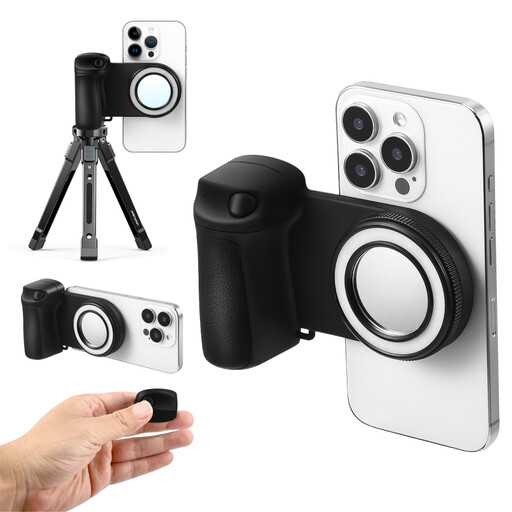
For smartphone photography where you want to take a photo from a short distance away, a grip with a detachable remote may be a good option.
 No product image available
Magnetic smartphone grip with detachable Bluetooth remote and fill light, 1/4-inch tripod thread, black
For smartphone photography where you want to take a photo from a short distance away; the Bluetooth remote is detachable.
The 1/4-inch tripod thread is useful for a fixed smartphone set-up.
Includes a fill light; the product title also lists vlogging, video recording and photography as uses.
View on Joybuy
Frequently asked questions
Do I need to buy a remote shutter release to take a single photo of my linocut print?
Not necessarily. First check your camera’s self-timer or whether app-based remote shooting is supported by your model; either may be enough to take a photo without touching the camera when it’s in a fixed position.
What should I check before connecting a wired remote shutter release?
Compare your full camera model with the accessory list and check the exact connection. Canon distinguishes between E3 and N3, while Fujifilm lists an additional adapter for some RR-100 combinations.
Will a remote shutter release automatically expose the dark background correctly?
No. The remote shutter release operates the shutter, but with a scene featuring a dark background, you should check the shot and adjust the exposure settings or lighting if needed.
Does a wireless remote still need a cable to the camera?
It depends on the system. Rollei says its Wireless Remote Shutter Release 28146 requires a camera cable, so check which connection your specific model needs before buying.


