You don’t automatically need a separate remote shutter release to photograph a linocut print. Try the self-timer or a compatible camera app first, if the delay suits your workflow. If you want to take the shot without touching the camera on its stand, a suitable cable or a wireless remote compatible with your camera model may be an option. However, none of these release methods will correct colour casts or banding caused by artificial light.
Who might benefit from a remote shutter release?
Photographers with a fixed copy stand setup
If you’re photographing the same linocut print several times on a stand, a suitable cable or compatible camera remote can let you take the shot without touching the camera body. Canon Germany and Nikon Germany describe these options for certain cameras and models.
Photographers who change their print arrangements
If you rearrange prints or lighting between shots, a compatible wireless remote or app can make it easier to take a photo from your workstation. Nikon Germany and Sony Germany list wireless remotes for compatible cameras.
Beginners looking to keep accessories to a minimum
If you’d rather not buy a separate shutter release just yet, check whether your camera model has a self-timer or supports remote control via an app. Canon Germany describes these features for compatible cameras.
What should you look for when choosing one?
Wired remote shutter release
A good fit if: You’ll be staying beside your fixed setup and your camera supports the connector on the specific cable model.
Bear in mind: Cable length and connector type limit your freedom of movement; cameras from the same brand don’t necessarily use the same connector.
Wireless camera remote
A good fit if: You want to take the shot from a little way away while rearranging prints, and your camera supports the connection you’ve chosen.
Bear in mind: Even with a wireless connection, a transmitter-and-receiver system may need an additional cable specific to your camera.
Self-timer or camera app
A good fit if: You want to try the camera features you already have before buying separate accessories.
Bear in mind: The self-timer takes the shot after a delay; an app will only work if your camera and connection are supported.
| Priority |
What to check before buying |
Who is it important to? |
| Compatibility |
Check your camera model, connector or Bluetooth support, and what’s included in the box. For example, Canon Germany distinguishes between E3 and N3 connectors for its cable releases. |
I want to be sure the shutter release will work with my camera model before placing an order. Around 36% of consumers check compatibility first. |
| Taking shots from a fixed setup |
Check whether a simple shutter button will do and whether the cable suits your setup. For the MC-DC3, Nikon Germany lists half-press and full-press functions for compatible cameras. |
When taking repeated shots, I want to release the shutter without touching the camera on its stand. Around 29% of consumers put this first. |
| Freedom of movement |
Check camera compatibility, connection type and any accessories you’ll need. Rollei notes that its Wireless remote shutter release requires an additional camera cable. |
When I rearrange prints between shots, I want to be able to take the picture from where I’m standing. Around 21% of consumers prioritise freedom of movement. |
| Making use of existing features |
Check your camera manual to see whether the self-timer or app-based remote control is available for your model. |
Before buying accessories, I want to try the shutter release options my camera already offers. Around 14% of consumers prioritise this. |
Avoid common buying mistakes
-
Choosing one based on camera brand alone
Different connectors may be used even within the same brand. For the cable releases mentioned here, Canon Germany distinguishes between E3 and N3.
Before ordering, check the full camera model, connector and shutter release model. Also check exactly what’s included in the box.
-
Assuming “wireless” means there are no cables at all
With a transmitter-and-receiver system, the connection to the remote may be wireless, while a suitable cable is still needed to connect the receiver to the camera. Rollei notes that its Wireless remote shutter release requires this additional cable.
For the specific model, check which connections are needed between the remote, receiver and camera, and whether other items, such as batteries, are included.
Depending on the model, you may also need to buy batteries.
-
Blaming the shutter release for image problems under artificial light
A remote shutter release changes how you take the shot; it doesn’t affect the white balance or possible banding caused by flickering light.
Take a test shot under the lighting you plan to use, then assess the colour and any banding separately from whether the camera moves when you press the shutter. Canon Germany describes anti-flicker features for compatible EOS models.
Brands and models to consider
Canon
Cable releases and app-based remote control for compatible EOS cameras.
- Canon Germany lists the RS-60E3 for the E3 connector and the RS-80N3 for the N3 connector.
- The connectors aren’t interchangeable, and app compatibility also needs to be checked for your specific camera model.
Nikon
Wired and Bluetooth remotes for compatible Nikon cameras.
- For the MC-DC3, Nikon Germany lists half-press and full-press functions, as well as a shutter lock. The ML-L7 has shutter and video buttons, among others.
- Compatibility isn’t universal across Nikon cameras, so check your specific model.
Sony
The RMT-P1BT is a Bluetooth remote for specifically supported Sony cameras.
- Sony Germany describes how it uses the camera’s built-in Bluetooth receiver, so no additional receiver is needed.
- Before buying, make sure your specific camera model is supported.
Panasonic
The DMW-RS2E is a wired option in the LUMIX accessories range.
- Panasonic lists a shutter button, video start/stop and a tripod clip.
- Before buying, check whether your specific camera combination requires a firmware update.
Rollei
The Wireless remote shutter release uses a transmitter and receiver with compatible cameras.
- Wireless operation may be an option if your camera and connection are supported.
- Rollei notes that you’ll need to choose a suitable camera-specific connection cable.
Related products at Joybuy
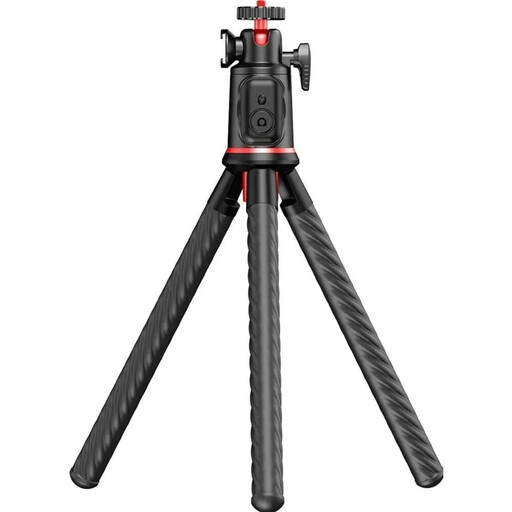
Here’s a Joybuy product with a tripod and Bluetooth remote. Before buying, check against your camera model whether the remote can operate your camera’s shutter.
 No image available
Rollei Easy Creator MonkeyPod Flexible Mini Tripod Selfie Stick 360° Ball Head Bluetooth Remote
May suit a fixed photography setup if you’re looking for a mini tripod with a Bluetooth remote; check that the remote works with your camera.
Described as a flexible mini tripod and selfie stick with a 360° ball head and Bluetooth remote.
Maximum load: 2 kg. Make sure the tripod is securely and stably set up before letting go of the device.
View at Joybuy
Frequently asked questions
Will the self-timer do instead of a separate remote shutter release?
Yes, if your camera model has a suitable self-timer and the delay works for your workflow. A compatible app may also be an option you already have; check the features available on your specific camera.
How do I connect a remote shutter release?
Match your camera socket to the connector specified for the particular cable model. For Bluetooth models, check that your camera is supported. The Rollei Wireless remote shutter release also requires a suitable camera cable.
Can a remote shutter release prevent colour problems or banding under artificial light?
No, a remote shutter release only changes how you take the shot. White balance affects colour differences, while certain flickering light sources can cause banding. Canon Germany describes anti-flicker features for compatible EOS models. Check the results with a test shot under the lighting you’ll actually use.
What ongoing costs and rights should I be aware of?
Check whether the suitable camera cable and, where necessary, batteries are included. In Germany, statutory consumer rights are distinct from a voluntary guarantee, as explained by the Verbraucherzentrale (German consumer advice centre).


