
Lieferung heute & morgen

Qualitätsgarantie

Willkommens-Angebote freischalten: KOSTENLOSE Lieferung | Bis zu 80 % RABATT | Kostenlose 30-Tage-JoyPlus-Testphase
App herunterladen
For many cat owners, an open litter tray in the living room or hallway is a compromise between their cat's needs and their own home aesthetic. A litter box enclosure offers an elegant and practical solution, concealing the litter tray while creating new storage or an additional surface. However, not every model delivers on its promise. As a Joybuy Product Recommendation Officer, I'm here to help you avoid common purchasing mistakes and find a model that works for both you and your cat.
The selection of cat furniture is vast, but some products have design flaws that can quickly become problematic in daily use. Pay close attention to these three common pitfalls.
A completely enclosed cabinet without adequate air circulation is a major problem. Inside, the concentration of ammonia from urine can increase, which not only leads to strong odours but can also irritate your cat's respiratory system. Many cats will instinctively avoid such poorly ventilated spaces.
Some budget-friendly enclosures are made from untreated particleboard or low-quality engineered wood. These materials are not moisture-resistant. Splashes from urine or water during cleaning can cause the material to swell, warp, and permanently absorb odours. Such a piece of furniture quickly becomes unhygienic and unusable.
If the enclosure is too small for the litter tray or for the cat itself, it won't be used. An interior that's too cramped or an awkwardly placed, small entrance can make your cat feel uncomfortable, causing it to avoid the litter box cabinet. The result is accidents outside the designated area.
To find a durable and functional solution, you should check a few key specifications before buying. These criteria are crucial for your cat's acceptance and for your own ease of use.
Look for models made from MDF (medium-density fibreboard) or solid wood with sealed surfaces. A melamine resin coating or a lacquer finish makes the material water-repellent and easy to clean. Such surfaces prevent moisture from penetrating and ensure a long service life for the cat furniture.
A good indoor cat house will have sufficiently large ventilation openings, usually on the back panel, to ensure constant air circulation. Also, check the internal dimensions and compare them with your existing or planned litter tray. The entrance should be large enough for your cat to enter and exit comfortably.
For straightforward cleaning, models with large, wide-opening doors—ideally double doors—are recommended. This allows you to easily lift the litter tray out. A thoughtful design, combined with a high-quality cat litter, significantly minimises cleaning effort. A clumping litter like Jeden Tag Everyday Cat Litter Ultra White Clumping quickly binds liquids and odours, making the daily removal of waste much easier.
Based on these quality criteria, we have put together a selection of models for different requirements and living situations.
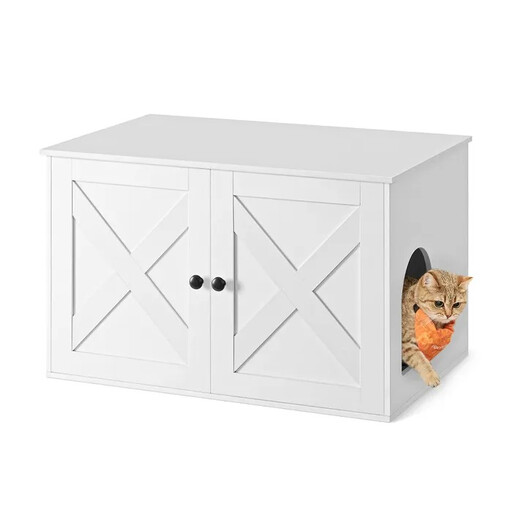
Why This Fits Their Persona: This model is ideal for anyone looking for a discreet solution. It disguises itself as a modern end table, blending seamlessly into a living room or bedroom without being recognisable as a cat accessory.
The coated MDF surface is moisture-repellent and easy to clean, avoiding the pitfall of unsuitable materials. The divider allows for flexible adjustment to the size of the litter tray.
Dual function as a piece of furniture and a litter box cabinet; removable divider for a flexible interior layout.
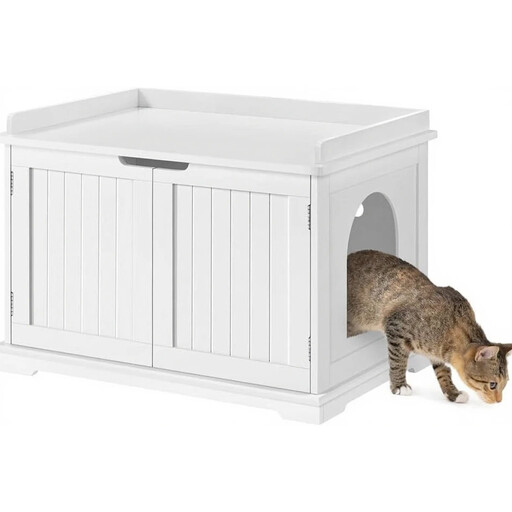
Why This Fits Their Persona: With its spacious interior and sturdy construction, this cabinet is perfect for large cat breeds like Maine Coons or for households where multiple cats share a litter box.
Nine ventilation holes on the back ensure good air circulation and prevent odour build-up. The water-repellent surface and adjustable interior size address the pitfalls of poor materials and incorrect dimensions.
High load capacity (tabletop and floor panel up to 40 kg); large double doors for easy access; raised edge on the tabletop prevents items from falling off.
A clean and stress-free toilet area is just one part of a cat-friendly home. Nutrition also plays a central role in their health and happiness. High-quality wet cat food with a high moisture content supports hydration and provides your cat with essential nutrients. Products like Sheba Fresh Cuisine Taste of Tokyo offer varied meals tailored to the needs of adult cats.
We have compiled a complete, real-time list of products that fully satisfy these strict selection criteria and UK safety regulations.
First, set up the enclosure without the doors so your cat can explore it. Place their usual litter tray inside. Once your cat is using the enclosure regularly, you can attach the doors. To ease the transition, leave one door slightly ajar at first.
The litter tray inside should be scooped daily to remove clumps. The enclosure itself should be wiped down weekly with a damp cloth and a mild, pet-safe cleaner. A deep clean of both the cabinet and the tray is recommended every 2-4 weeks.
In a well-designed model with sufficient ventilation, odour will not build up. The air circulation allows ammonia vapours to escape. Using a high-performance clumping, odour-absorbing cat litter is also crucial for minimising smells from the outset.