
Lieferung heute & morgen

Qualitätsgarantie

Willkommens-Angebote freischalten: KOSTENLOSE Lieferung | Bis zu 80 % RABATT | Kostenlose 30-Tage-JoyPlus-Testphase
App herunterladen
As a cat owner, you know the dilemma. You love your pet, but an exposed litter box can disrupt the aesthetic of your carefully decorated living space. A litter box enclosure offers a solution that is both functional and elegant. It conceals the litter box, reduces litter tracking, and can help contain odours. This article introduces various models and approaches to help you find the perfect option for your home and your cat.
Choosing the right model depends on several factors. A well-considered purchase ensures that both you and your cat will be happy with the new piece of furniture.
The dimensions of the cabinet are crucial. Before buying, measure your existing litter box to ensure it will fit inside the enclosure. Plan for extra space so your cat can comfortably turn and move around inside. Some models, often called a litter box cabinet, offer an adjustable or removable divider. This allows you to create a separate compartment for litter, scoops, and other accessories, making organisation easier.
Cat furniture should be durable and easy to maintain. Most enclosures are made from MDF (Medium-Density Fibreboard) with a water-resistant coating. This surface is easy to clean with a damp cloth and is resistant to moisture. Look for clean workmanship and sturdy hinges, especially on models with doors, to ensure longevity.
Adequate ventilation is essential to prevent the build-up of odours and moisture inside the cabinet. Models with discreet vents on the back or side panels are ideal for this purpose. The entrance for the cat should be large enough and easily accessible. For cleaning, easy access for you is just as important. Double doors on the front allow you to effortlessly remove and clean the litter box.
Here is a selection of products that cater to different needs and interior styles.
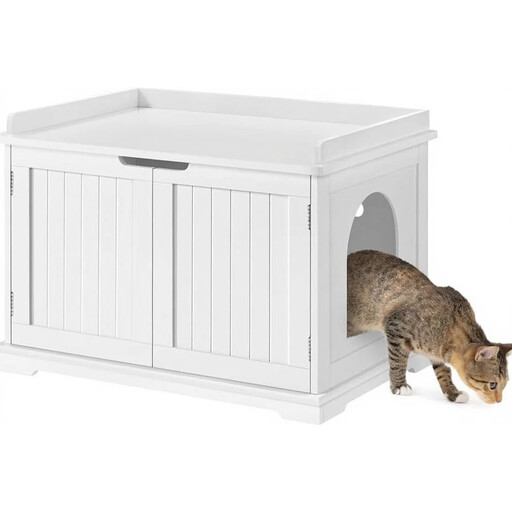
Why It Stands Out This model combines a clean, modern design with thoughtful functionality. It blends discreetly into most home environments and, thanks to its sturdy build, can also be used as a side table or bench.
Pros
Who It's For For cat owners looking for a simple, versatile, and sturdy solution that integrates seamlessly into bright, modern interiors. Ideal as a discreet litter box hideaway in the hallway, bathroom, or living room.

Why It Stands Out This all-in-one solution is a cat tree with an integrated litter box. It combines areas for playing, scratching, sleeping, and toileting in a compact footprint, making it a space-saving option for smaller apartments.
Pros
Who It's For For owners of small to medium-sized cats living in apartments with limited space. It's the ideal choice if you want to combine multiple functions into a single, stylish piece of furniture.
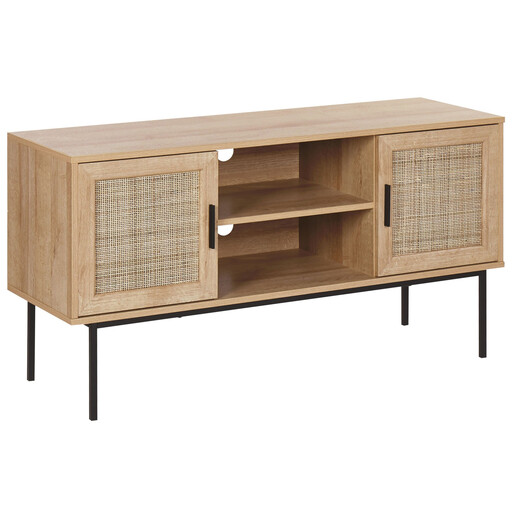
Why It Stands Out For DIY enthusiasts and design lovers, a standard piece of furniture can be an excellent base for a custom cat cabinet. This boho-style TV stand with its rattan doors provides natural ventilation and an appealing aesthetic that doesn't look like a pet product.
Pros
Who It's For For creative cat owners who prefer a customised solution and are willing to modify a piece of furniture with minimal effort. It's perfect for anyone wanting an unconventional take on modern cat furniture.
If you prefer a fully custom solution and want to build your own litter box cabinet, you'll need the right components. High-quality doors are crucial for both aesthetics and function.
? Discover our selection of wooden cabinet doors to bring your DIY project to life.
1. How do I get my cat used to a litter box enclosure? Start by setting up the cabinet without the doors so your cat can acclimate to the new furniture. Place their familiar litter box inside. Once the cat uses the enclosure regularly, you can attach the doors. You might want to leave one door slightly ajar at first to ease the transition.
2. How important is ventilation in a cat litter box cabinet? Good ventilation is very important. It prevents the concentration of ammonia odours, which is crucial for your cat's health and comfort. It also reduces moisture inside, thereby preventing the growth of mould and bacteria. Look for models with integrated vents or holes.
3. Can any cabinet be converted into a litter box enclosure? In principle, yes, as long as the cabinet is large enough, is sufficiently stable, and allows for adequate ventilation (or can be retrofitted with it). You will need to create an entry opening for the cat that is large enough and has no sharp edges. Additionally, the material should be moisture-resistant or properly sealed.