
Lieferung heute & morgen

Qualitätsgarantie

Willkommens-Angebote freischalten: KOSTENLOSE Lieferung | Bis zu 80 % RABATT | Kostenlose 30-Tage-JoyPlus-Testphase
App herunterladen
A living room armchair should be comfortable, suit the room and withstand the intended use. In practice, however, three typical buying pitfalls lead to unnecessary expense: product images often give a misleading impression of size, material descriptions remain too vague, and seemingly practical extra features are advertised without important details.
Before you buy, it is worth looking at objective information such as external dimensions, seat height, maximum weight capacity, upholstery fabric, frame construction and assembly requirements. This makes it easier to judge whether an armchair is suitable as a TV chair, reading chair, recliner or accent chair.
An upholstered armchair can look compact in product photos, but with armrests and backrest it actually needs considerably more space. You should also consider that doors, drawers or radiators must not be blocked. Therefore, measure:
With an armchair that has an adjustable backrest, you must also allow for clearance behind the piece of furniture.
Velvet armchairs, corduroy armchairs and models with a faux fur cover differ significantly in care and use. A soft surface is no proof of abrasion resistance or easy cleaning. Check whether the cover is removable, whether it can only be spot-cleaned, and whether the manufacturer provides specific care instructions.
With delicate fabrics, avoid direct sunlight, moisture and harsh cleaning products. For households with children or pets, a hard-wearing, easy-to-wipe cover can be more practical than a highly textured surface.
The maximum weight capacity must match the intended use. It should not be confused with the armchair's own weight. The frame construction and the base are also important: metal frames, wood-based materials, solid wood legs and plastic elements all have different properties.
A stated weight limit only applies when the armchair is used as intended. An armchair with armrests or a lounge chair is not designed to be used as a step, ladder or climbing aid.
The external dimensions show whether the armchair will fit in the room. For seating comfort, seat height, seat depth and seat width are also relevant. A low seat height can be suitable for a lounge or reading corner, while a higher TV chair can make getting up easier. The key factor is the combination of your height, sitting posture and intended use.
With space-saving models, you should consider not only the footprint but also the seat width. Armrests increase comfort but take up space on the sides.
Pay attention to the exact material description, for example corduroy, velvet, polyester, faux fur or faux leather. The padding should also be described. Among the models presented here, foam, PU foam and high-density sponge are mentioned. These details provide technical guidance, but do not replace checking the actual firmness of the seat.
For cleaning, clear instructions are important. If a cover is not machine-washable, it should only be spot-cleaned according to the manufacturer's instructions.
An armchair with a metal frame can offer different stability and appearance than a model with wooden legs or a plywood frame. Check whether assembly is required and whether tools and instructions are included. When buying for a balcony, you also need to clarify whether the furniture is suitable for outdoor use. The models presented here are predominantly described for indoor use; therefore, permanent placement outdoors should not be assumed.
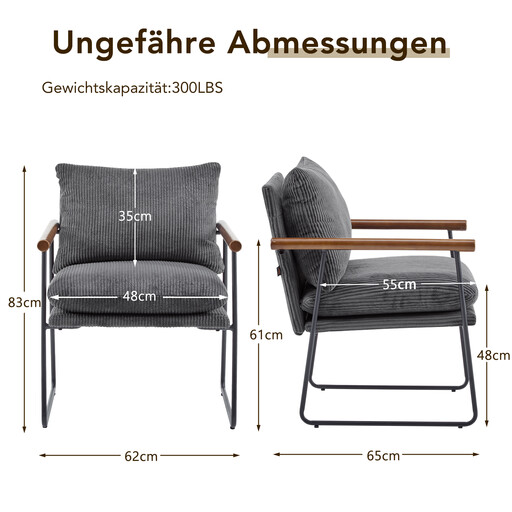
Why this product suits the profile: At 65 × 62 × 83 cm, this upholstered armchair is suitable for smaller living rooms, bedrooms or a compact reading corner.
The specific external dimensions make floor space planning easier. The metal frame is stated as the construction, rather than just advertising with a general stability claim.
Corduroy cover, padded seat and armrests; the compact design is intended for individual seating.
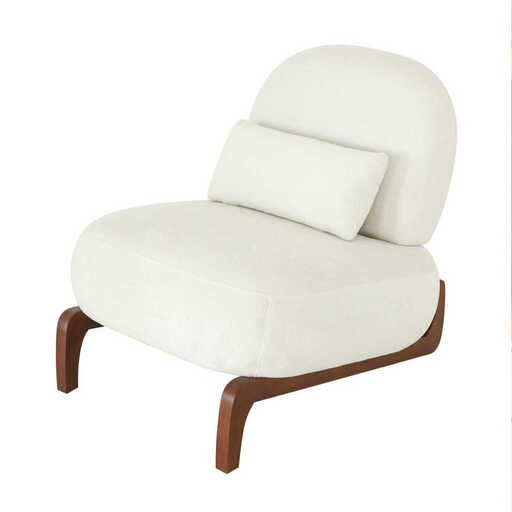
Why this product suits the profile: This model combines a velvet cover, an armless design and solid wood legs. It works as an accent chair in the living room, bedroom or waiting area.
Materials, dimensions of 86.9 × 72.1 × 69.9 cm and the need for assembly are clearly stated. The floor space should be measured before purchase.
Velvet cover, solid wood legs and a design without armrests; assembly instructions are provided.
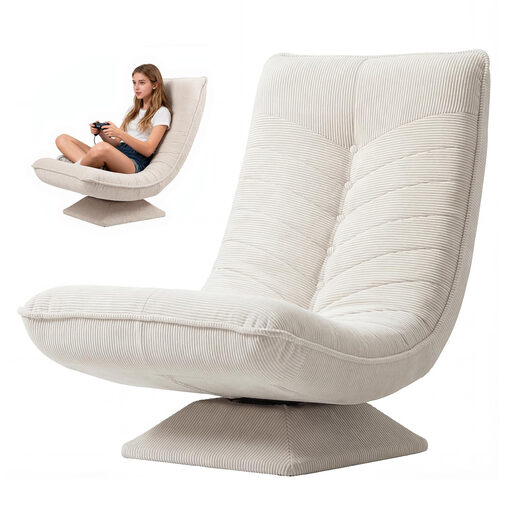
Why this product suits the profile: This foldable TV chair with a 360° swivel function and a backrest adjustable up to 120° is designed for reading, watching television and gaming.
The weight capacity is stated as 150 kg. The chair is delivered without assembly; a level, stable surface is required for secure placement.
13 cm cushion thickness, 360° rotation, foldable construction and a stated weight capacity of up to 150 kg.
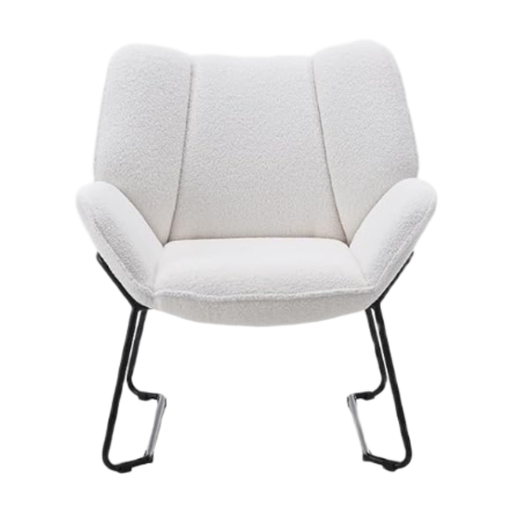
Why this product suits the profile: This upholstered tub chair has armrests, a seat height of 40.5 cm and a stated weight capacity of 120 kg.
Frame material, seat height, dimensions of 67 × 71.5 × 80 cm and maximum weight capacity are all stated. Assembly must be carried out completely and correctly.
Metal frame, padded backrest, armrests and a base described as non-slip.
We have put together a complete, regularly updated list of products that fully meet these strict selection criteria and the safety regulations in force in the EU.
After delivery, you should first check that the upholstery fabric, frame and feet are undamaged. For models that require assembly, all screw connections must be tight. Check them again after the first period of use.
For cleaning, the following applies:
Unlike an electrically adjustable recliner, a living room armchair does not require a continuous power supply. With swivel or foldable models, moving parts should be checked regularly for secure fit and smooth operation.
In addition to the external dimensions, you should allow for clearance space, armrests and, if applicable, the recline range of the backrest. For delivery, you must also check door widths and the hallway.
That depends on the usage and your willingness to care for it. Corduroy, velvet, polyester and faux fur differ in texture and cleaning. The specific care instructions from the respective manufacturer are decisive, not just the name of the fabric.
It is not possible to give a reliable general lifespan. It depends on the load, construction, care, frequency of use and location. An appropriate weight limit, stable placement and regular checking of the connections can contribute to the intended use.