
Lieferung heute & morgen

Qualitätsgarantie

Willkommens-Angebote freischalten: KOSTENLOSE Lieferung | Bis zu 80 % RABATT | Kostenlose 30-Tage-JoyPlus-Testphase
App herunterladen
A well-chosen floor lamp can completely transform the atmosphere of a living room. It's more than just a light source—it's a design element that creates a cosy ambience, illuminates reading nooks, or adds a modern touch. But the market is flooded with models whose descriptions often promise more than they deliver. Before you make a decision, it's crucial to understand the typical pitfalls that can lead to a purchase you'll regret.
This guide will help you separate the wheat from the chaff. We'll focus on the objective criteria that define a quality floor lamp and show you how to avoid the three most common mistakes:
To make an informed decision, don't be swayed by marketing buzzwords. Instead, focus on verifiable technical specifications and material properties. Three factors are especially important.
A lamp's impact depends heavily on its light quality. Here are the key metrics:
A high-quality floor lamp for the living room is distinguished by its solid construction. The most important factor is the base. A heavy base made of metal or solid wood provides the necessary stability and prevents the lamp from tipping over if accidentally bumped. Models with lightweight plastic bases are often unstable. Also, pay attention to the craftsmanship of the connecting parts and the lampshade. A black or metal floor lamp fits well with a modern interior design style and is typically robust.
Some features offer genuine added value. A dimmable floor lamp with a separate, flexible reading arm is an extremely practical 2-in-1 solution. It combines diffuse ambient light with directional light for reading or crafts. The type of switch is also relevant: a foot switch is convenient to operate when the lamp is behind a sofa, while a rotary dimmer on the lamp's pole allows for precise control.
Instead of making a blanket recommendation, we have identified models tailored to specific user profiles and requirements.
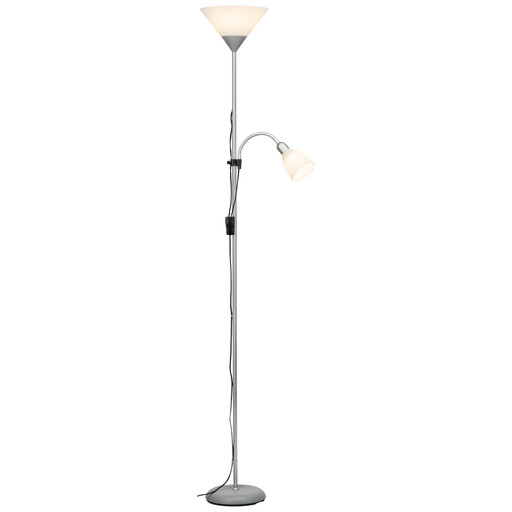
Why This Fits Their Persona: Ideal for users who need both general room lighting and a targeted reading light. Perfect for placement next to the sofa or an armchair to meet different lighting needs with just one lamp.
This model bypasses the "Feature Trap" by relying on proven, separately switchable light sources instead of complex smart technology. The light quality is clearly defined and easy on the eyes, with warm white LEDs for both functions.
Combines an uplighter for indirect ambient light and a flexible reading arm. Both light sources can be switched separately and use energy-efficient LED technology.
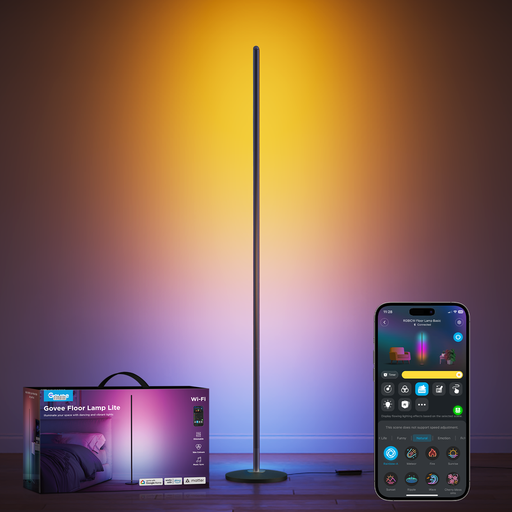
Why This Fits Their Persona: For tech enthusiasts who want to fully integrate their lighting into their smart home. Ideal for gaming rooms, home cinema setups, or creating dynamic light scenes via app or voice command.
This lamp avoids the "Feature Trap" with its mature app control and reliable compatibility with Alexa and Google Assistant. The smart features here are not a gimmick but the core of the product, offering real added value.
Offers RGBIC technology for 16 million colours, 58 scene modes, and music synchronisation. Control is convenient via Wi-Fi and Bluetooth through the Govee Home App or by voice.
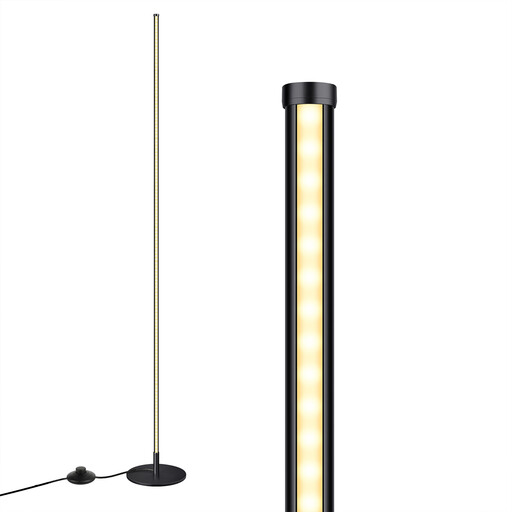
Why This Fits Their Persona: For anyone looking for a simple, modern floor lamp that blends seamlessly into their interior design concept. Its minimalist design doesn't distract but provides high-quality, dimmable light.
This model counteracts the "Stability Trap" with a solid metal construction and a weighted base. The robust foot switch for the dimming function is more durable than the sensitive touch sensors found on some competing products.
Offers stepless dimming via a practical foot switch and a memory function. The segmented design allows for easy assembly and an adjustable height.
We've curated a complete, up-to-date list of products that fully meet these strict selection criteria.
For comfortable ambient lighting in a living room, floor lamps with a luminous flux between 1000 and 1500 lumens are recommended. If the lamp will also serve as a primary reading light, an additional, directional beam of about 400–500 lumens is ideal. Dimmable models offer the greatest flexibility here.
For a cosy and relaxing atmosphere, a warm white light colour between 2700 K and 3000 K is the most common choice. This light is similar to that of a traditional incandescent bulb and feels very homely. Neutral white light (approx. 4000 K) can be useful in reading nooks or work areas, but often feels cool in the main living space.
LED floor lamps have several key advantages. They are significantly more energy-efficient, consuming up to 80% less electricity than halogen lamps, which lowers running costs. They also have a much longer lifespan, often exceeding 20,000 operating hours. Another benefit is their low heat emission, which increases safety, especially in households with children or pets.