
Lieferung heute & morgen

Qualitätsgarantie

Willkommens-Angebote freischalten: KOSTENLOSE Lieferung | Bis zu 80 % RABATT | Kostenlose 30-Tage-JoyPlus-Testphase
App herunterladen
Living room furniture should look good, suit the space and perform reliably in everyday life. However, unclear measurements, exaggerated product claims and unsuitable materials often lead to disappointing purchases. In smaller homes in particular, design is not the only consideration: a coffee table that is too deep can obstruct walkways, an unsuitable sofa can quickly look bulky, and a lack of storage can result in visible clutter.
This guide explains which details really matter when choosing living room furniture, and how to select coffee tables, console tables and corner sofas according to your room size and requirements.
The space occupied by a piece of furniture is not the same as the total space required. Additional room is needed in front of a sofa, between the coffee table and seating, and around doors and drawers. A slim console table measuring 30 cm deep may be suitable for a narrow hallway, while a coffee table that is 50 cm deep can already restrict movement in a small living room.
Before buying, you should therefore measure not only the product’s width, depth and height, but also mark its position on the floor with masking tape. This makes it easier to check whether cupboard doors, drawers or a lift-top mechanism have enough room to operate.
Claims such as “robust” or “durable” are difficult to assess without technical details. More useful information includes material, product weight, maximum load capacity, leg construction and assembly details.
The mechanism is also crucial for a table with an adjustable-height function. Check whether the height information specifies a clear range, whether the tabletop locks securely and whether there are warnings about overloading. Families with children should also look out for potential pinch points in the lift-top mechanism.
When choosing a sofa, buyers should distinguish between the upholstery construction and marketing claims. A sofa with a spring core or pocket springs may offer a different seating feel from a model made entirely from foam, due to its construction. However, this does not provide a blanket indication of personal comfort or actual service life.
More important are verifiable details such as seat height, seat depth, upholstery material, cover fabric, load capacity per seat and whether the sofa can be used as a sofa bed.
For small rooms, space-saving living room furniture with multiple functions is often a good choice. A coffee table with storage can hold remote controls, cables or blankets. A console table behind the sofa makes use of wall space that would otherwise often remain unused.
Pay attention to the following points:
Engineered wood, also known as wood-based material with a melamine coating, is found in many living room furniture pieces. This type of surface can generally be cleaned with a dry or slightly damp cloth. It should nevertheless be protected from standing water, heat and abrasive cleaning products.
For rustic furniture with a wood-effect finish and metal frame, check that the construction is explicitly stated to be made from the specified materials. For sofas, the cover fabric and filling are particularly important. Linen, chenille, foam and spring cores or pocket springs have different properties in terms of feel, cleaning and seating comfort.
A specific maximum load capacity is more useful than general claims about stability. During assembly, numbered parts, clear instructions and the supplied fittings should be provided. After assembly, it is advisable to check all screws and connection points.
For a console table with shelves, pay attention to the load capacity of each level. Decorations, lamps and baskets should be distributed evenly to prevent the furniture from tipping or wobbling.
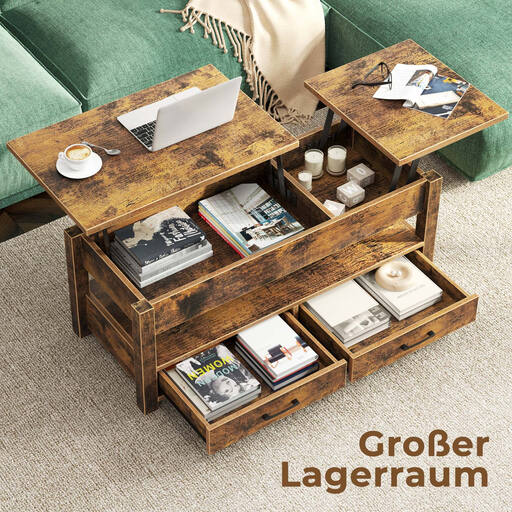
Why this product suits this profile: Measuring 100 × 50 × 48 cm when closed, with several storage areas, it combines a compact footprint with a range of uses.
The product description specifies separate concealed compartments, drawers and an open compartment. This makes the storage layout clear rather than relying on vague promotional claims.
Lift-top function, two drawers and an open compartment; assembly with instructions and accessories provided.
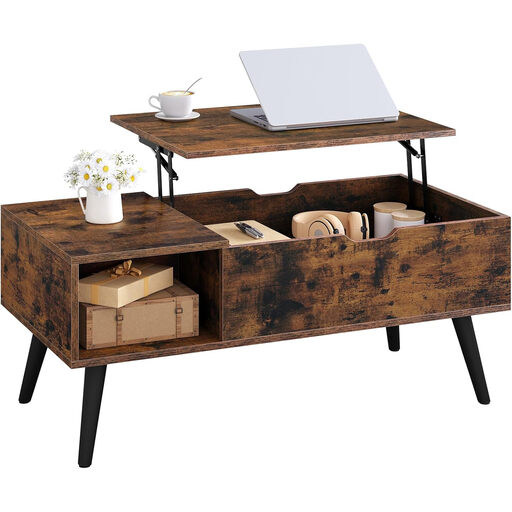
Why this product suits this profile: If you prioritise technical details and easy-care surfaces, this table offers a clearly specified height range of 43 to 57 cm and a melamine coating.
The height adjustment is specified with precise measurements. The product information also states a maximum load capacity of 50 kg, along with care and safety instructions.
100 × 50 cm tabletop, concealed compartment and open storage shelf; according to the product information, the surface is water-repellent and scratch-resistant.
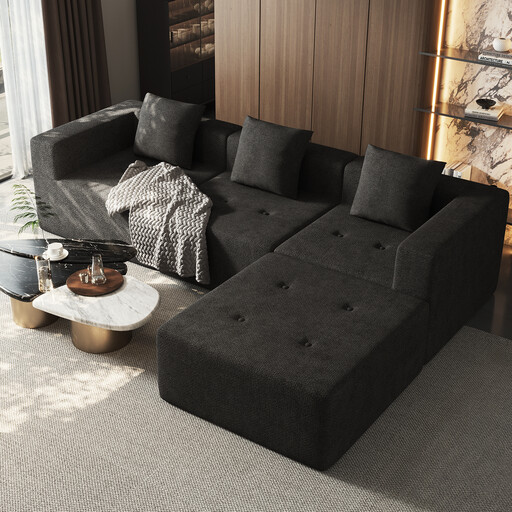
Why this product suits this profile: This model is designed for households that need a generous seating and sleeping area. Its overall dimensions are 258.5 × 160 × 63.5 cm.
Rather than simply describing it as “comfortable”, the product description highlights pocket springs, a chenille cover, an ottoman and a sleeping area measuring 183.5 × 258.5 cm.
Corner sofa with sofa-bed function, reversible or optional ottoman according to the product information, and three decorative cushions; no assembly required.
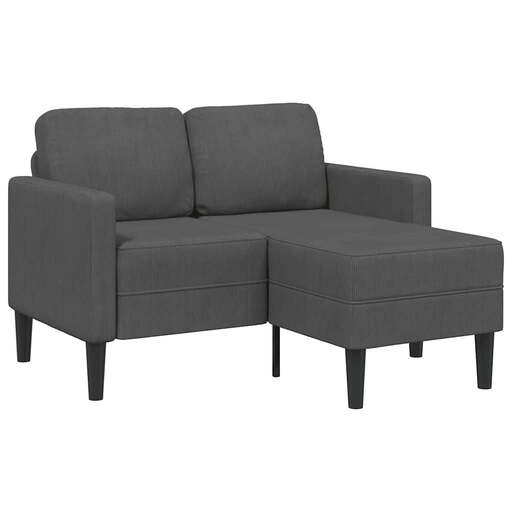
Why this product suits this profile: Measuring 125 × 118 × 85 cm, this corner sofa is designed for a smaller footprint and uses a corner as both a seating and lounging area.
The product details specify the overall dimensions, a seat height of 46 cm, a seat depth of 47 or 92 cm and a load capacity of 110 kg per seat.
L-shape, integrated ottoman, padded foam seats and a frame made from metal, solid wood and plywood.
We have put together a complete, regularly updated list of products that fully meet these strict selection criteria and the safety regulations applicable in the EU.
For a small living room, an adjustable-height coffee table or a lift-top coffee table with concealed storage can be a practical option. A console table behind the sofa can provide extra surface space for lamps, picture frames or baskets. In larger rooms, however, the proportions in relation to the seating arrangement should take priority: a 160 cm-long console table looks different behind a wide sofa than a slim 105 cm model in an entrance hall.
If you prefer rustic furniture, you can combine wood-effect finishes, black metal frames and muted colours. What matters is that the surface-care requirements, load capacity and assembly needs suit your household.
As a practical guideline, allow around 40 to 50 cm so that the table remains easy to reach while still leaving room to walk past. The ideal distance depends on the seat height, room shape and available movement space. With a lift-top coffee table, you must also check that the raised tabletop will not collide with the sofa or other furniture.
There is no reliable one-size-fits-all answer. Service life depends, among other things, on the material, load, care, assembly and frequency of use. Check screws, feet and moving mechanisms regularly. Sofa covers and upholstery should be cared for according to the relevant care instructions.
Yes, provided the storage solution does not restrict movement. A coffee table with storage, a console table with shelves or a corner sofa with an ottoman can combine several functions. Before buying, however, you should plan for open drawers, the fully extended sleeping area and access to windows or doors.