
Lieferung heute & morgen

Qualitätsgarantie

Willkommens-Angebote freischalten: KOSTENLOSE Lieferung | Bis zu 80 % RABATT | Kostenlose 30-Tage-JoyPlus-Testphase
App herunterladen
A well-chosen floor lamp can completely transform the atmosphere of a living room. It's more than just a light source—it's a design element that creates cosiness, defines reading nooks, and sets accents. But the market is confusing, and not every model delivers on its promises. Before you make a decision, it's important to know the most common pitfalls that can lead to a bad buy.
As your Joybuy Product Recommendation Officer, I'll help you navigate the maze of information. We'll focus on the facts that truly matter, so you can find a functional and durable floor lamp for your living room.
The 3 Most Common Mistakes When Buying a Floor Lamp:
To avoid these mistakes, you should focus on a few crucial technical features and material properties.
The foundation of any good floor lamp is, quite literally, its base. A solid base made of materials like metal, marble, or cement-filled plastic provides the necessary stability. Pay attention to the lamp's total weight in relation to its height and reach, especially for an arc lamp, whose centre of gravity is further from the base.
The choice of material for the lamp's body affects not only its appearance but also its durability. A black floor lamp made of powder-coated metal is often more robust and easier to clean than models with delicate paint finishes. For use on covered balconies or in conservatories, the IP rating is also relevant. IP20 is the standard for dry indoor spaces, while IP44 or higher offers protection against splashing water.
The lighting itself is the heart of the lamp. Three terms are crucial here:
Modern LED floor lamps are energy-efficient and long-lasting. Models with integrated LEDs should come from established manufacturers to ensure high light quality. With lamps that have replaceable bulbs (e.g., an E27 socket), you have full control over brightness and colour temperature. A floor lamp with a reading light often combines indirect room light with direct, adjustable task lighting, making it a particularly versatile solution.
Instead of presenting a confusing list, we have selected models that meet specific requirements and purposefully avoid the pitfalls mentioned.
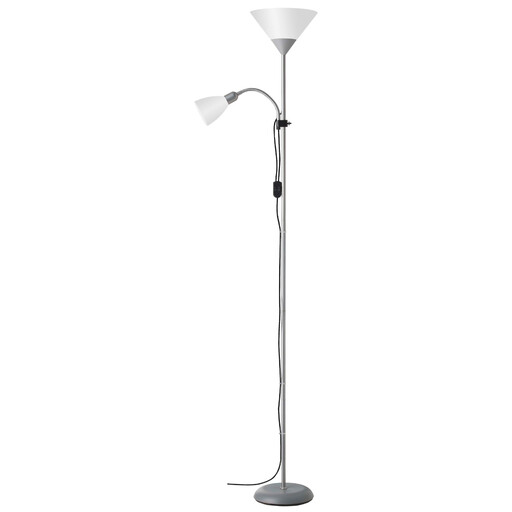
Why This Fits Their Persona: Ideal for users who need both indirect ambient lighting for the room and focused light for reading on the sofa. This model combines both functions in a classic design.
Solves the "inflexible functionality" problem with two separately switchable light sources. The uplighter provides ambiance, while the flexible reading arm directs light exactly where it's needed.
Combination of an uplighter and a reading lamp; flexible, adjustable reading arm; replaceable bulbs (E27/E14) for full control.
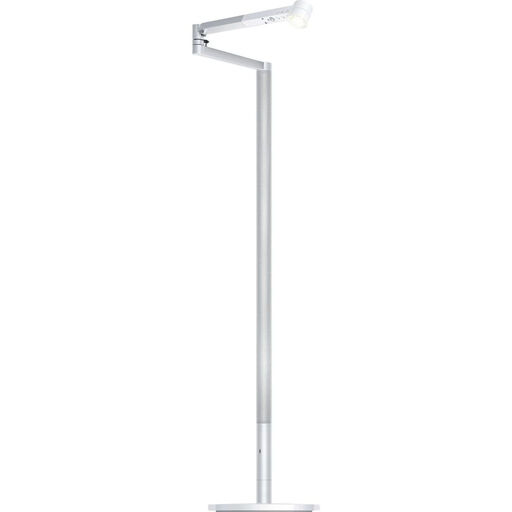
Why This Fits Their Persona: For users looking to invest in cutting-edge technology and an exceptional designer floor lamp. It intelligently adapts to daylight and the task at hand, offering four different light modes.
Counteracts the "poor light quality" trap. According to the manufacturer, its heat pipe technology ensures consistent light quality for decades and protects vision with low-glare light.
Intelligent adaptation to daylight; four lights in one (task, indirect, feature, and ambient light); app control; integrated USB-C charging port.
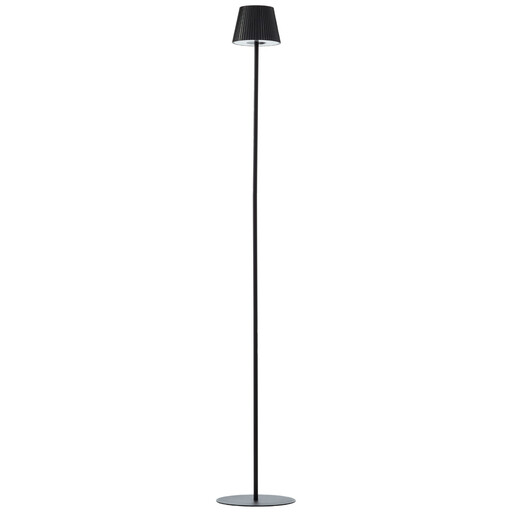
Why This Fits Their Persona: Perfect for anyone who wants maximum flexibility. Thanks to its battery operation, this lamp can be placed anywhere in the room, or even on the balcony, without worrying about power outlets. Ideal for rental apartments or frequent redecorating.
Cleverly sidesteps the "unstable construction" trap. The absence of a cable eliminates a common tripping hazard, and its minimalist, well-balanced design ensures a secure footing.
Cordless operation via battery; 3-step touch dimmer; suitable for indoor and outdoor use (IP54); modern, minimalist design.
We have compiled a complete, up-to-date list of products that fully meet these strict selection criteria and German safety regulations.
That depends on its purpose. As a primary, indirect light source (e.g., an uplighter), 1500 lumens or more is recommended. For a reading lamp that illuminates a limited area, 400–500 lumens is sufficient. A dimmable lamp offers the greatest flexibility here, as it can cover both scenarios.
Indirect light is cast onto the ceiling or a wall and then diffusely reflected into the room. This creates soft, low-shadow, and glare-free ambient lighting, typical of uplighters. Direct light shines specifically onto a surface, such as a book or a table. It is ideal for tasks that require concentration, like reading or crafting.
No, and this is an important point. Many modern designer floor lamps have integrated LED modules. This allows for very slim and delicate designs. The downside is that if the light source fails, the entire lamp often has to be discarded. Pay attention to the product description: if a socket like E27 or E14 is specified, you can replace the bulb yourself. If the description says "LED integrated" or "fixed," this is not possible.