A desiccant dehumidifier may be a good choice if your living room is occasionally cool and the model’s stated room size is suitable. In a consistently heated room, it’s also worth comparing compressor models. Key factors include power consumption, noise, tank capacity and operating conditions. A dehumidifier is no substitute for regular ventilation or investigating persistently damp walls.
Who might benefit from a dehumidifier?
Households that regularly dry laundry indoors
If you regularly dry loads of washing in your living room, check whether a laundry mode and an easy-to-handle tank would suit your routine. The German Environment Agency recommends taking particular care to ventilate regularly when drying damp laundry indoors.
People with a large or cool living room
Here, the actual floor area and, where relevant, the room volume matter just as much as the temperature. Trotec describes desiccant dehumidification as an option for lower room temperatures; Meaco and Trotec specify different room sizes for different models.
Living room users concerned about energy and noise
If you’ll be in the room while the dehumidifier is running, check the power consumption and noise levels for each setting. The Meaco DD8L Zambezi manual lists 300 or 600 W, depending on the fan setting.
What should you look for when buying?
Desiccant dehumidifier
A good fit if: Your living room is occasionally cool and the room size specified for the particular appliance is suitable for your space.
Things to weigh up: Check the power consumption and operating setting. A larger stated coverage area doesn’t guarantee a particular drying time.
Compressor dehumidifier
A good fit if: Your living room is heated consistently and you can compare specific models’ room-size recommendations and operating data.
Things to weigh up: Dehumidifying performance may decline as the room temperature falls. This alone doesn’t establish a general energy or time saving compared with any particular desiccant model.
Clothes airer and ventilation
A good fit if: You don’t want to run another electrical appliance and can manage the room’s humidity through ventilation.
Things to weigh up: The German Environment Agency describes clothes airers and washing lines as the most energy-efficient way to dry laundry, and recommends regular ventilation when drying damp laundry in the living room.
| What matters when buying |
What to look for |
Who will find this especially important? |
| Moisture from laundry |
Check the specific model’s laundry mode, tank shut-off and humidity display. Also ventilate while the laundry is drying. |
If I regularly hang laundry in the living room, I want to keep an eye on humidity and choose a suitable operating mode. Around 36 % of consumers put laundry moisture first. |
| Room size and temperature |
Compare the floor area and, where relevant, the room volume with the specifications for the exact model. Also take your usual room temperature into account. |
In a large or occasionally cool living room, I want to know whether the appliance’s specifications suit my space. Around 29 % of consumers prioritise suitability for the room. |
| Energy use |
Compare the power consumption of the setting you’ll use with the likely running time. Calculate the cost using your own electricity tariff. |
If the appliance will run for longer while drying laundry, I want to be able to estimate its potential energy use. Around 21 % of consumers pay particular attention to running costs. |
| Noise and ease of use |
Check the noise rating for the relevant operating setting, tank access and whether the appliance switches off when the tank is full. |
If I’ll continue using the living room while the appliance is running, noise and an easy-to-handle tank matter to me. Around 14 % of consumers put comfort at home first. |
Common buying mistakes
-
Taking the daily extraction rate as a drying-time estimate
A stated daily extraction rate applies under specific operating conditions. It doesn’t tell you directly how long a particular load of laundry will take to dry in your living room. For example, the De’Longhi DNS65’s stated rate of 6 l/24 h applies at 30 °C and 80 % relative humidity.
Compare the test conditions with those in your room, and take temperature, humidity and appliance settings into account.
-
Focusing only on the laundry mode
A laundry mode doesn’t automatically make an appliance suitable for a large living room. Trotec specifies up to 20 m² or 50 m³ for the TTR 57 E.
Measure your living room’s floor area and, where relevant, its volume, then compare both with the specifications for the exact model.
-
Assuming one type is always better
Desiccant dehumidification may be a suitable option at lower room temperatures, but that doesn’t mean it offers a general advantage in energy use or drying time. The Meaco DD8L Zambezi manual lists 300 or 600 W, depending on the fan setting.
For a heated living room, compare the operating data for specific models of both types instead of choosing based on the technology alone.
Key brands at a glance
Meaco
The DD8L Zambezi and DD8L Pro are desiccant models. Meaco specifies a room size of up to 46 m² for these appliances.
- The DD8L Zambezi manual lists power consumption of 300 W on the low fan setting and 600 W on the medium or high setting.
- The coverage area is specified by the manufacturer. The setting you choose also affects energy use.
Trotec
The TTR 57 E is a desiccant dehumidifier with a laundry-drying function. Trotec specifies coverage of up to 20 m² or 50 m³.
- Trotec describes desiccant dehumidification as an option for lower room temperatures.
- The stated room size is especially important for a large living room. The manufacturer’s description isn’t an independent comparative test.
De’Longhi
The Tasciugo AriaDry Light DNS65 is a dehumidifier with a laundry function.
- De’Longhi specifies 6 l/24 h at 30 °C and 80 % relative humidity, and an input power of 520 W.
- The extraction rate applies under the stated conditions and isn’t a prediction for a typical living room.
EcoAir
The DD1 Classic MK6 is a desiccant model with directed airflow and a laundry-drying function.
- This model is another example of an appliance designed for drying laundry.
- A stated coverage area of up to 60 m² doesn’t, by itself, confirm that the specification, plug, warranty and availability are suitable for Germany.
Joybuy products for drying laundry
The Joybuy products below list a laundry or drying mode. Check the specific appliance’s technology, stated room size and operating data. A laundry mode alone doesn’t confirm that it’s suitable for a large living room or that it uses desiccant technology.
 No image available
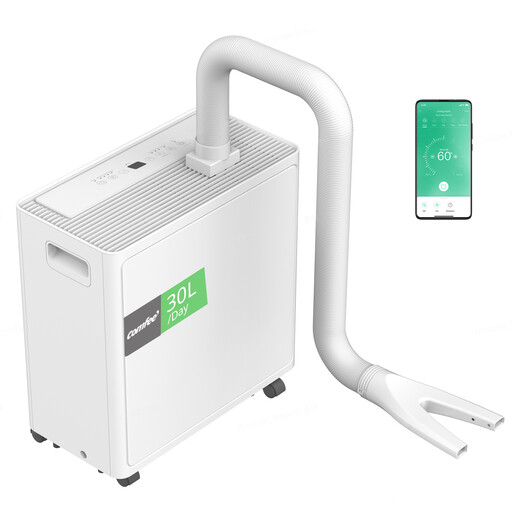
Comfee MDDA-30DEN7-SD
The stated laundry-drying mode may be useful for drying clothes on an airer. Check that the room-size recommendation suits your living room.
Stated dehumidifying capacity: 30 L/day; water tank: 3,2 L; stated coverage: up to 73 m² or 130 m³.
Laundry and shoe modes, app control and continuous drainage are listed.
Joybuy
 No image available
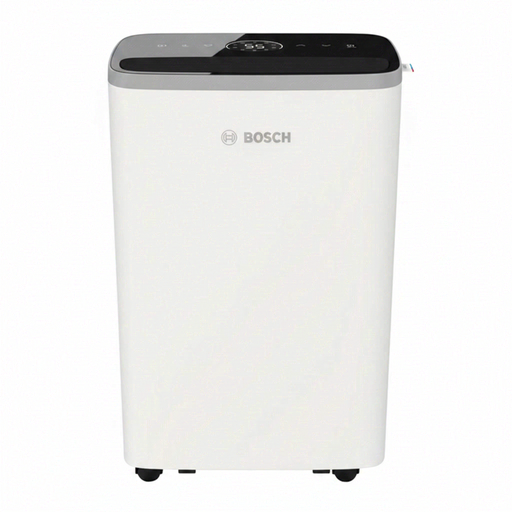
Bosch Dry 4000
The stated laundry mode is relevant for drying clothes. Also check that the room volume is suitable for the model.
Stated dehumidifying capacity: up to 16 L/day; room volume: up to 75 m³; water tank: 2,5 L.
A noise level of 40 dB, two fan settings and a laundry mode are listed. The automatic mode is stated to target a humidity range of 45–55 %.
Joybuy
 No image available
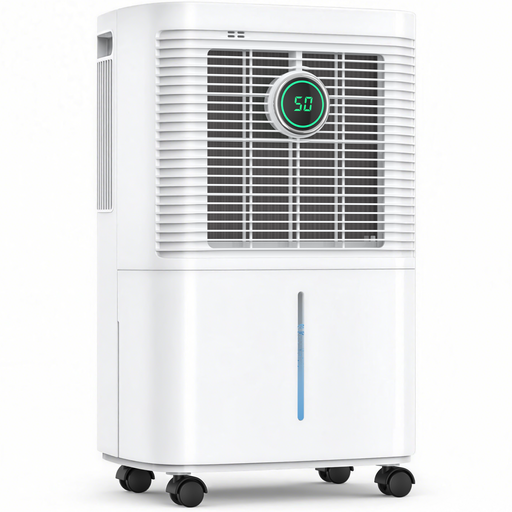
Ateroll dehumidifier with laundry mode
The described mode for drying clothes on an airer suits this laundry-drying scenario. Check the specific appliance’s room-size recommendation before choosing.
Stated dehumidifying capacity: up to 16 L/day; sleep mode: 36 dB.
Automatic humidity control and automatic defrosting are listed.
Joybuy
 No image available
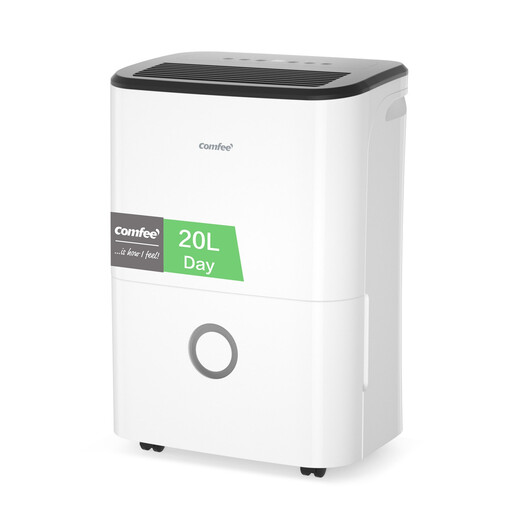
Comfee MDDF-20DEN7
The stated drying mode may be useful when drying laundry in the living room. The stated room size may limit its suitability for a large living room.
Stated dehumidifying capacity: 20 L/day; stated coverage: up to 40 m² or 100 m³; water tank: 3 L.
A noise level of 46 dB, an automatic shut-off when the tank is full and continuous drainage are listed.
Joybuy
 No image available
CONOPU CS10B
This model is described as a compressor dehumidifier with a laundry-drying mode. It’s another option to compare if you’re not set on desiccant technology.
Stated dehumidifying capacity: up to 16 L/day; stated coverage: up to 60 m²; water tank: 2,5 L.
The sleep mode is rated at 30 dB. A timer and castors are also listed.
Joybuy
Frequently asked questions
Do I still need to ventilate if laundry is drying in the living room?
Yes. The German Environment Agency recommends regular ventilation when drying damp laundry in the living room, and suggests monitoring relative humidity with a hygrometer. It gives 40 to 60 % as a guide range for reducing the risk of mould.
What should I bear in mind when setting up and maintaining the appliance?
Follow the instructions for your specific model. For example, the Meaco manual warns against damaged power cables and recommends avoiding extension leads where possible. Handle the tank and filters according to the appliance instructions too.
How can I work out the electricity cost of running a dehumidifier?
Multiply the power consumption of the setting you actually use, in kilowatts, by the running time in hours. This gives you the energy used in kWh. Multiply that figure by your electricity tariff to calculate the cost for the period you’re considering.
What marking should an electrical appliance for Germany carry?
Appliances covered by the relevant harmonised EU rules must carry the required CE marking. This is the manufacturer’s declaration, not a certificate issued by a central EU testing body. Also check the appliance itself for identification details, manufacturer information and German-language instructions.


