
Lieferung heute & morgen

Qualitätsgarantie

Willkommens-Angebote freischalten: KOSTENLOSE Lieferung | Bis zu 80 % RABATT | Kostenlose 30-Tage-JoyPlus-Testphase
App herunterladen
Choosing a new LED ceiling light for your living room might seem simple at first. However, the market is flooded with products whose marketing promises often hide more than they reveal. Many buyers only realise after installation that their new light causes headaches, makes colours in the room look dull, or that its advertised "smart" features are useless in daily life. This guide will help you identify the crucial features and avoid common purchasing traps.
Before we dive into the technical details, you should be aware of three widespread problems that often lead to disappointment and unnecessary expense.
ceiling light with remote control or app integration promises convenience. However, unstable connections, poorly programmed apps, or the need for additional, expensive hubs can quickly turn the hoped-for convenience into a source of constant frustration.To make an informed decision, focus on objective, measurable criteria. These three parameters are crucial for the functionality and longevity of your new living room lamp.
The brightness of a light is measured in lumens (lm), not watts. Watts only indicate energy consumption. For comfortable ambient lighting in a living room, a value of about 100 to 150 lumens per square metre (lm/m?) is recommended.
dimmable LED ceiling light offers the flexibility to adjust the brightness as needed—from bright task lighting to a dimmed evening mood.The Colour Rendering Index (CRI) indicates how true-to-life colours appear under an artificial light source. The maximum value of 100 corresponds to natural sunlight. For living spaces where the colours of furniture, art, and textiles are meant to stand out, a CRI value of over 80 (Ra > 80) is the minimum standard. Models with a CRI > 90 offer even more accurate colour reproduction.
If you want a dimmable light, check its compatibility. Not every dimmable LED ceiling light works with every wall switch. Modern solutions often provide more convenience:
Models in designs like black ceiling light or gold ceiling light are often available as smart versions, combining aesthetics with functionality.
Here are some recommendations tailored to different needs and interior styles.
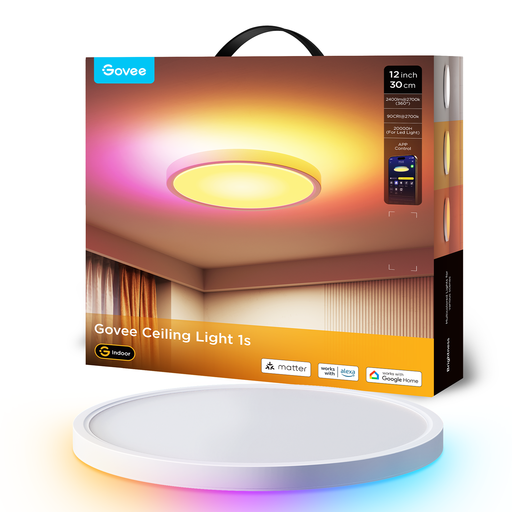
Why This Fits Their Persona: Ideal for users who want a fully connected home. App and voice control, plus synchronisation with other Govee devices, enable complex lighting scenes for gaming, movies, or parties.
Comprehensive app control (Govee Home) and compatibility with Alexa/Google Assistant bypass the trap of unreliable smart features. The colour temperature is precisely adjustable from 2200K to 6500K.
Combines functional main lighting (RGB+WW) with atmospheric RGBIC backlighting. The circadian rhythm feature simulates natural daylight.
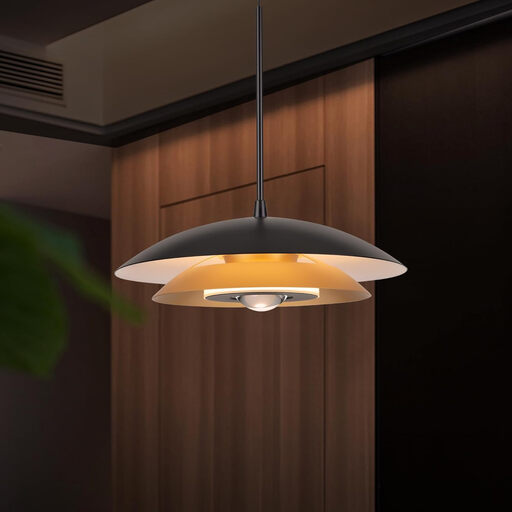
Why This Fits Their Persona: This `dining room pendant light` is a design statement. The combination of matte black metal and a gold inner shade perfectly complements modern, industrial, or minimalist interior styles, becoming a focal point in the room.
High-quality materials (powder-coated aluminium and steel) and a thoughtful design ensure durability. The double-shade design prevents direct glare, a common issue with open-bulb fixtures.
The layered metal construction creates a glare-free, warm ambient light. The fixture is compatible with most modern dimmer switches, offering full flexibility.
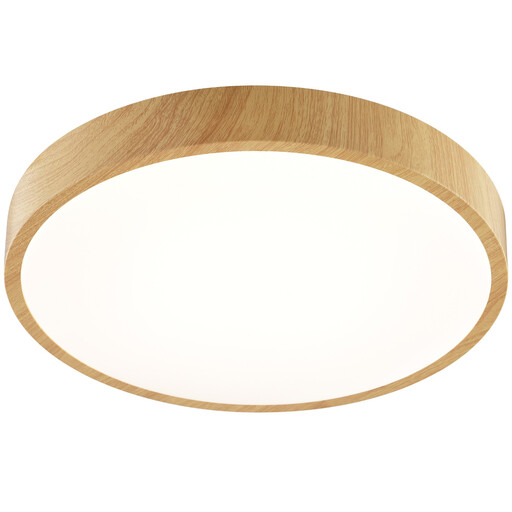
Why This Fits Their Persona: This `flat ceiling light` focuses on the essentials: reliable, bright, and energy-efficient lighting. The simple design with a `wood-look ceiling light` finish is timeless and suits many interior styles without drawing attention to itself.
As a non-dimmable and non-smart light, it eliminates potential compatibility or software issues from the outset. It reliably performs its core function, delivering a consistent, pleasant light colour (3000K).
High light output (2300 lm) with low energy consumption (24W). The warm white light colour provides inviting ambient lighting for living rooms and bedrooms.
We have compiled a complete, real-time list of products that fully satisfy these strict selection criteria and UK safety regulations.
1. How many lumens does a living room LED ceiling light need? As a rule of thumb, aim for 100 to 150 lumens per square metre. For a 25 m? living room, you should target a total brightness of 2,500 to 3,750 lumens. If you have high ceilings or dark furniture, it's better to aim for the higher end of this range or plan for additional light sources.
2. Can I use any dimmable LED ceiling light with my existing dimmer switch? No, this is a common source of error. There are different dimming technologies (e.g., leading-edge and trailing-edge dimmers). An LED light must be compatible with the existing dimmer; otherwise, it can lead to flickering, buzzing, or damage to the light. Always check the manufacturer's specifications for both the light and the dimmer, or choose a light with an integrated dimming function via remote control or an app.
3. What does the IP rating mean for ceiling lights? The IP (Ingress Protection) rating indicates how well a light is protected against the intrusion of foreign objects (first digit) and water (second digit). For a typical living room lamp, a rating like IP20 (protection against solid objects >12.5 mm, no water protection) is sufficient. In damp areas like bathrooms or on covered balconies, higher IP ratings such as IP44 are required.