
Lieferung heute & morgen

Qualitätsgarantie

Willkommens-Angebote freischalten: KOSTENLOSE Lieferung | Bis zu 80 % RABATT | Kostenlose 30-Tage-JoyPlus-Testphase
App herunterladen
A new living room shelf shouldn't just provide storage; it should also make a style statement. But the selection is vast, and marketing promises often outweigh the actual quality. Many buyers only discover after assembly that their new furniture wobbles, the compartments are impractically small, or the surface shows scratches within a few weeks.
As your Joybuy Product Recommendation Officer, I'm here to help you navigate these pitfalls. Instead of falling for marketing hype, we'll focus on the crucial features that define a quality shelf. This way, you'll find a model that truly fits your needs and your living space.
Before we turn to the solutions, let's look at the problems that lead to disappointment. If you know what they are, you can actively avoid them.
To avoid the problems mentioned above, you should check three key parameters before buying. These will give you a reliable basis for your decision.
The material is a key determinant of your shelf's stability and longevity.
Always check the specified load capacity per shelf. For books, it should be at least 10 kg. A shelf that stands freely in the room as a room divider shelf requires an especially stable overall construction.
Think carefully about the function the piece of furniture is meant to serve.
For all freestanding, taller shelves, look for an included anti-tip kit for wall mounting. This is an essential safety feature, especially in households with children.
Measure not only the footprint but also the items you want to store on the shelf. A typical binder requires a compartment depth of about 29 cm and a height of 32 cm. A large art book may also require a depth of over 30 cm. Compare these measurements with the internal dimensions of the shelf compartments to ensure your living room storage is also practical.
Here are some recommendations tailored to different needs and living situations.
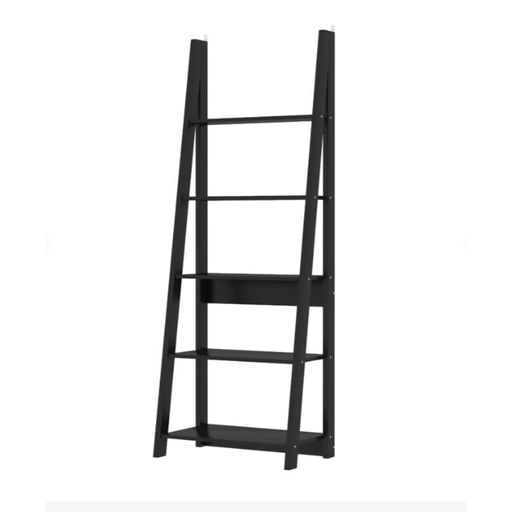
Why This Fits Their Persona: Ideal for renters in urban apartments who need vertical storage without making the room feel bulky. The ladder shelf's slim design fits perfectly in living rooms, bedrooms, or home offices, offering space for books and decor.
The lean-to-wall design provides excellent baseline stability, bypassing the typical wobble-trap of cheap, freestanding shelves. The melamine surface is also easy to clean.
Maximum use of vertical space with a minimal footprint. The open, modern design makes the room feel larger and more airy.
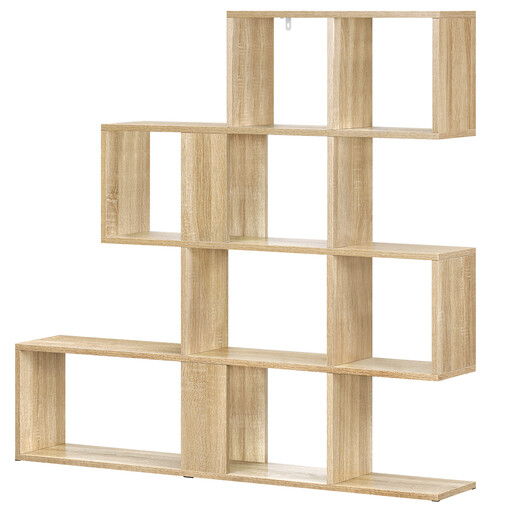
Why This Fits Their Persona: Perfect for those with an open-plan living concept who want to visually separate areas like the living and dining rooms. The stepped shelf serves as a functional room divider while providing ample space for books and decor.
The wide base and included anti-tip kit ensure the necessary stability, even when used as a room divider. The 11 compartments of various sizes bypass the dimension trap, offering flexible storage.
Dual function as storage and a room divider. The asymmetrical, open structure looks modern and allows light to flow through the space.

Why This Fits Their Persona: For anyone looking to hide a cluttered corner, partition a home office nook in the living room, or simply add a strong decorative accent. This folding screen is both furniture and a piece of art.
Since it's not a shelf, the problems of load capacity and compartment size are irrelevant. It is a purpose-built, stable, and flexible solution for room division that makes no compromises on stability.
No assembly required, ready to use out of the box. Foldable and easy to store, offering maximum flexibility in room design.
We have compiled a complete, up-to-date list of products that fully meet these strict selection criteria and German safety regulations.
A shelf used as a room divider should have a wide, stable base. The safest method is to use the included anti-tip kit to anchor the shelf to a wall, the floor, or the ceiling. If it must stand completely free, place heavy items in the lowest compartments to lower the center of gravity and position it away from main walkways.
The ideal depth depends on its intended use. For standard paperbacks, 20 cm is often sufficient. For larger coffee-table books, vinyl records, or binders, a depth of at least 30 cm is recommended. Always check the internal dimensions of the compartments before buying, not just the overall depth of the shelf.
A ladder shelf is designed to lean against a wall, which gives it good stability. It is important not to exceed the specified load capacity per shelf and to distribute the weight evenly. Place heavy books on the lower, wider shelves. Many models can also be screwed to the wall at the top for maximum safety.