
Lieferung heute & morgen

Qualitätsgarantie

Willkommens-Angebote freischalten: KOSTENLOSE Lieferung | Bis zu 80 % RABATT | Kostenlose 30-Tage-JoyPlus-Testphase
App herunterladen
Choosing a wall clock for your living room involves balancing design, materials, and technical specifications. More than just a timepiece, a wall clock serves as a central design element that can significantly shape a room's aesthetic. Therefore, your decision should be based on an analysis of functional requirements and compatibility with your existing interior. Key criteria include the type of movement, material quality, dimensions, and the legibility of the clock face.
Before purchasing a wall clock, it's wise to systematically evaluate various technical and design parameters. This analysis ensures the chosen product will meet your functional and aesthetic needs for years to come.
The movement is the technical core of any clock. Two main types dominate the wall clock market:
The material determines not only the look but also the durability and weight of the clock.
The clock's dimensions must be in proportion to the wall space and the room itself. A large wall clock with a diameter of 60 cm or more works best on an open, expansive wall and can serve as a central focal point. Smaller models, around 30 cm in diameter, are suitable for narrower wall sections, as part of a gallery wall, or as a functional kitchen clock. As a rule of thumb, the clock's diameter should be about two-thirds the width of the piece of furniture it hangs above (e.g., a sofa or a console table).
The design should complement your interior style. A modern wall clock is often characterised by minimalism, clean lines, and a lack of numerals. A vintage-style wall clock, on the other hand, might feature Roman numerals, ornate hands, and a patina finish. Legibility is a functional criterion: high contrast between the hands, dial, and markers makes it easier to read the time quickly from a distance.
Based on the criteria above, we have curated a selection of models that stand out for their specific technical and design features.
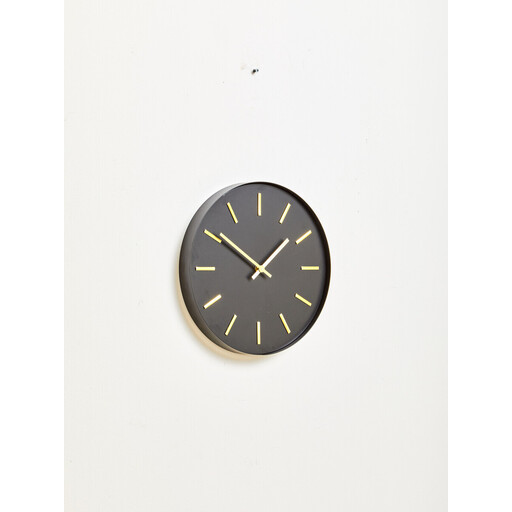
Why We Recommend This Product This model combines a clean, modern aesthetic with a robust material composition. According to the manufacturer, the clock is made of 99% metal and 1% plastic. The black dial with minimalist gold hour markers and hands creates a strong visual contrast that optimises legibility. With a 30 cm diameter, it is highly versatile.
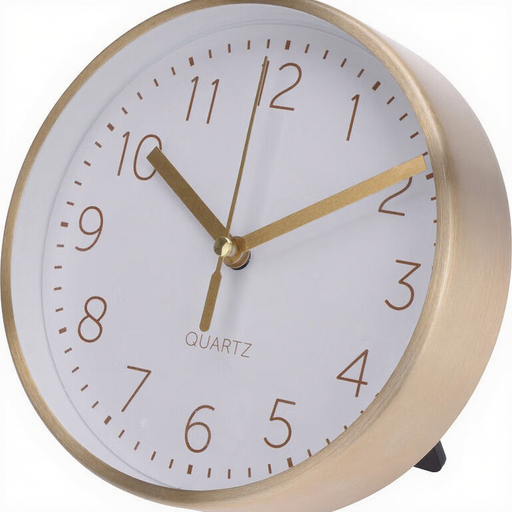
Why We Recommend This Product With a diameter of 15 cm and a depth of 4 cm, this model is exceptionally compact. The aluminium frame gives the clock stability and an appealing look despite its small size. The white dial combined with gold accents ensures good legibility and a subtle yet elegant appearance.
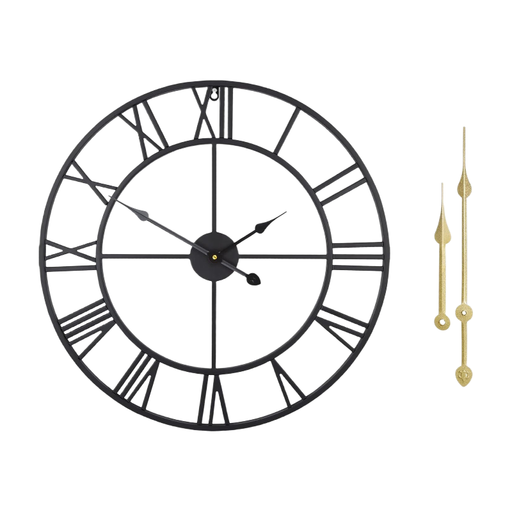
Why We Recommend This Product This 40 cm diameter model is crafted from solid iron and appeals to fans of vintage and industrial styles. According to the manufacturer, a high-quality quartz movement ensures nearly silent operation, making it the ideal non-ticking wall clock for quiet spaces. The open design with Roman numerals creates a striking, skeletonised look.
If none of these models meet your specific requirements, a broader selection of decorative items offers further possibilities. The Wall Art & Decor category includes a wide variety of styles and materials that can complement your decor.
1. What does "sweeping movement" mean in a wall clock? A sweeping movement, also known as a continuous sweep movement, moves the second hand in a smooth, fluid motion rather than in one-tick-per-second steps. This eliminates the typical ticking sound, making these clocks ideal for noise-sensitive environments like bedrooms and living rooms.
2. What size should a living room wall clock be? The optimal size depends on the wall and room size. As a general guideline, a clock placed above a sofa or console table should be about two-thirds to three-quarters the width of the furniture. On a large, empty wall, a clock with a diameter of 60 cm or more can act as a central piece of art, while smaller clocks (approx. 30-40 cm) integrate better into an existing wall arrangement.
3. How do you securely mount a heavy metal wall clock? Secure mounting is essential for heavy clocks, especially models made of solid metal. Use a wall anchor and screw appropriate for your wall type (e.g., concrete, drywall). Check the load capacity of the mounting hardware and ensure the screw is firmly anchored in the wall before hanging the clock. For very heavy models, using two hanging points can improve weight distribution.