
Lieferung heute & morgen

Qualitätsgarantie

Willkommens-Angebote freischalten: KOSTENLOSE Lieferung | Bis zu 80 % RABATT | Kostenlose 30-Tage-JoyPlus-Testphase
App herunterladen
A loaf tin is a staple in many kitchens. It’s perfect for sponge cakes, banana bread, yeasted loaves, sandwich bread and savoury bakes. Yet the huge choice online can easily lead to the wrong purchase. What really matters isn’t just the length and colour – it’s the capacity, material, care instructions and suitability for different types of dough.
A loaf tin labelled as “30 cm” isn’t automatically right for every recipe that calls for a 30 cm dough length. Often, this measurement refers to the external size. The walls, rim and shape all reduce the usable internal space. That’s why you should also look at the capacity in litres or the stated bread weight.
For example: a metal tin with a stated length of 35 cm might have a capacity of just 1.65 litres according to the product data. Another bread tin labelled 30 cm is designed for up to 1,000 g of bread. These two figures aren’t directly comparable.
A coated loaf tin can make it easier to release bread and cake. However, fats, sugar residues or sticky doughs can still put a strain on the surface. Metal utensils, scouring pads and harsh cleaning products can scratch a non-stick coating.
It’s also important to understand the difference between “easy to clean” and “dishwasher safe”. Several metal models in this selection are expressly not suitable for the dishwasher and should be washed by hand.
Not every loaf tin can go in the microwave or on a direct heat source. A baking tin for bread and cake is normally intended for the oven, not for the hob, grill or open flame. With silicone models, make sure there’s a sturdy frame so the tin doesn’t tip or warp when you put it in.
For small cakes, compact loaves or households with limited space, a tin between 24 and 26 cm may be enough. A 30 cm bread tin offers more volume and is suitable for larger loaves or family-sized portions. For sandwich bread, the shape of the inner walls is especially important: straight sides and a matching lid create that classic, even slice shape.
Don’t rely solely on the length:
For sourdough, choose a tin that is expressly labelled as sourdough-resistant. Acidic doughs can be more demanding on certain materials and coatings.
Metal and steel heat up directly and transfer that heat to the dough. This can encourage a good crust and a stable shape. Coated steel combines shape retention with easier release. However, with coated surfaces you should only use wooden, silicone or plastic utensils.
A silicone loaf tin is flexible and often easy to unmould. For larger quantities of dough, an integrated metal or steel frame is handy because it keeps the tin stable when you’re carrying it. Silicone isn’t automatically suitable for every temperature, so always check the manufacturer’s specification.
Look for specific care instructions. The products in our selection show that recommendations vary:
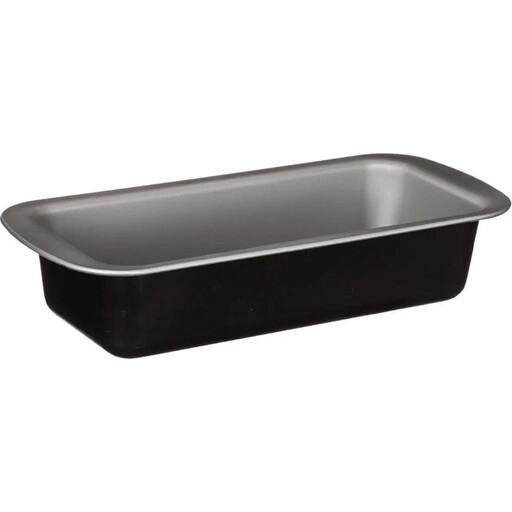
Why this product fits the profile: This compact metal tin is designed for smaller cakes, loaves and everyday baking quantities. The stated capacity is 1.3 litres.
The product data lists both the external measurement of 29 cm and the maximum volume of 1.3 litres. This makes it easier to match the tin to your own recipe.
Metal construction, oven suitability and a weight of around 230 g. The tin is not suitable for microwaves or dishwashers.

Why this product fits the profile: This loaf tin is made from coated steel with an enamelled base, is intended for bread and cake, and is described as sourdough-resistant in the product description.
The manufacturer’s specifications state clear usage limits: up to 250 °C, no dishwasher cleaning and no use on hobs. This provides clear guidelines.
Dimensions of 30 × 10.01 × 8.51 cm, enamelled base and coated steel. Hand washing with a soft sponge is recommended for care.

Why this product fits the profile: This sandwich loaf tin with lid is aimed at anyone who wants to bake evenly shaped sandwich loaves or compact cakes. The lid influences the shape during proving and baking.
The lid is expressly listed as part of the product. This means you don’t have to adapt a separately purchased cover that might not fit the tin properly.
Non-stick coating, designed for 450 g sandwich loaves and versatile oven use. Before buying, check the dimensions and temperature limits in the full product details.
Don’t fill a loaf tin right to the top. With yeasted dough, sourdough and sponge mixtures, you need enough room for rising. The exact amount depends on the recipe, the type of dough and the volume of the tin.
With a non-stick loaf tin, a light greasing is often still a good idea despite the coating. Let your bake cool for a short while after taking it out of the oven before you try to remove it. Don’t use knives or metal spatulas. With a silicone loaf tin that has a flexible rim, it’s a good idea to place it on a sturdy baking tray, especially with runny batter.
Before you buy, also check:
We’ve put together a complete, regularly updated list of products that fully meet these strict selection criteria and the safety regulations in force in the EU.
Choose a model that the manufacturer expressly describes as sourdough-resistant or acid-resistant. With coated tins, also follow the care instructions and avoid metal utensils. Not every coated cake tin is automatically approved for acidic doughs.
That depends on the amount of dough. For smaller loaves, around 1.3 to 1.6 litres may be enough. For larger baking quantities, look at tins with around 2.4 litres or a manufacturer’s specification for 1,000 to 1,500 g of bread. Compare your recipe quantity with the capacity, rather than buying based on the centimetre measurement alone.
Both materials have different properties. Silicone is flexible and can make unmoulding easier, while metal offers a firm shape and direct heat conduction. With silicone, a sturdy frame and the maximum permitted temperature are important. With metal tins, you need to consider the coating and cleaning instructions.