Developers running several local services
If your database, IDE and, potentially, containers all run at once, consider the resource demands of your entire workflow – not just the minimum requirements of a single programme.


Choose a laptop based on the database tools and services you need to run at the same time. A single development database has different requirements from several containers, an IDE and large local datasets. Then check the exact RAM and SSD configuration, along with the operating system and architecture support for your software stack. An internal SSD is no substitute for a separate backup.
If your database, IDE and, potentially, containers all run at once, consider the resource demands of your entire workflow – not just the minimum requirements of a single programme.
Allow for project files and images as well as databases. Plan for a separate backup too, so that your only copy isn’t stored on the same laptop.
First, check which operating systems and processor architectures are supported by your specific database, management tools and containers.
A good fit if: you need a tool such as SSMS 22, which Microsoft lists for supported versions of Windows.
Things to consider: Also check that the RAM and storage are sufficient for all your services running at once, and review the requirements Docker Desktop specifies for your Windows and WSL setup.
A good fit if: your database, clients and required container images work with macOS and the relevant architecture. Docker Docs describes Docker Desktop for Macs with an Apple chip; this doesn’t confirm that every individual image is compatible.
Things to consider: Check how much memory your specific setup needs and whether your workflow relies on a Windows-only tool.
A good fit if: you expect to need more RAM or storage later, and the specific model allows for upgrades.
Things to consider: Before buying, check which slots are actually available and how much work an upgrade involves. Upgrading is no substitute for a backup.
| Buying consideration | What to look for | Who should pay particular attention |
|---|---|---|
| RAM | Check the RAM in the exact configuration and whether it can be upgraded. The minimum requirements of individual programmes don’t necessarily reflect the total needs of several services running at once. | When my database, IDE and containers are all running at once, I consider the whole workflow. Around 29% of consumers put running services in parallel first. |
| Local storage and backups | Estimate the space needed for data, project files and images, and plan to keep backups in a separate location. The Federal Office for Information Security recommends backing up data so it can be restored if it is lost or damaged. | When I keep larger datasets locally, I need room to work and a separate way to restore them. Around 23% of consumers prioritise storage for data and backups. |
| Software compatibility | Check the operating system version and processor architecture against every tool and container image you need. Microsoft lists SSMS 22 for supported versions of Windows. | When my team or project specifies a particular stack, it needs to run on the laptop. Around 18% of consumers put compatibility with their tools first. |
| Workspace and ports | Compare the screen and ports on the specific model with your monitor or dock. Check whether the available connections let you connect directly. | When I work mainly at a desk, the screen and connections to my setup are essential. Around 18% of consumers prioritise their home-working setup. |
| Total cost and service | Compare the configuration you need, any software licences and optional service plans separately. Docker Docs sets out different licensing terms depending on how it is used. | Once I know which features I need, I don’t want to pay for equipment or extras I won’t use. Around 12% of consumers put total cost and service first. |
Your database, operating system, development environment and containers may all use resources at the same time. So a single minimum requirement doesn’t tell you whether your entire working environment is covered.
List the services you regularly run in parallel and check the RAM in the exact laptop model you’re considering.
If your laptop is damaged or lost, your working copy and local data could be affected at the same time.
Plan to keep a backup in a separate location and check that you can actually restore your data from it.
Remember to factor in separate storage and the regular time needed to make backups.
Support for an operating system or certain containers doesn’t automatically mean that all the tools and images you need will work. Microsoft lists SSMS 22 for supported versions of Windows.
Before choosing a device, check the requirements for every essential programme, database version and container image you need.
Verbraucherzentrale distinguishes between statutory consumer rights and voluntary guarantees; additional service plans have their own terms.
Compare the cover and exclusions of any extra plan separately from your statutory rights.
The ThinkPad E16 Gen 3 is a documented 16-inch Windows configuration for a mainly desk-based setup.
The EliteBook 8 G1a is a business laptop range. The 14-inch model considered here is a more compact configuration with plenty of RAM.
A MacBook Pro with M5 could suit a macOS workflow, provided the database tools and images you need are compatible.
The Laptop 13 with AMD Ryzen AI 300 is a potential option if an adaptable device platform matters to you.
The following Windows laptops have been selected for local databases when working from home. Compare their RAM, SSD and ports with the requirements of your software stack running in parallel.
 No image available
The 32 GB configuration is a useful point of comparison for several services running at once. Whether it’s enough for your workflow depends on the programmes and data you use.
 No image available
The 32 GB RAM and 1 TB configuration can be compared with a workflow involving several services running in parallel and local datasets. Check that this model suits the programmes you use.
 No image available
These specifications give you concrete points of comparison for working with several services and an external home-office setup. Check that the storage is sufficient for your local data.
 No image available
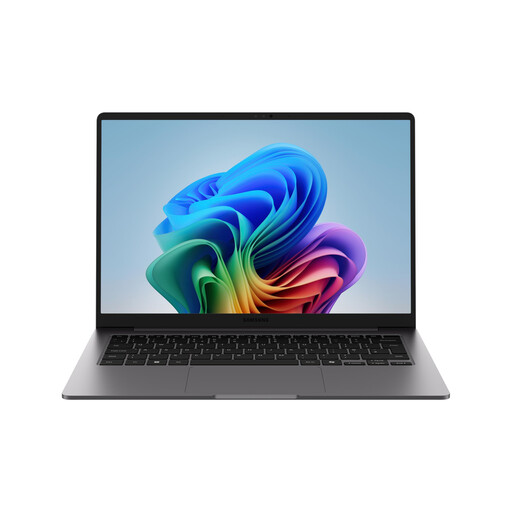
This 14-inch model is a more compact option for desk-based work. Check that the screen size and storage suit your workflow.
No. 32 GB isn’t a universal minimum requirement for every local database. List the services you’ll be running at the same time and check their requirements. 32 GB can be a useful benchmark for more extensive development environments with several services.
Check the Docker Desktop requirements for your version of Windows and chosen backend mode. For WSL 2 mode, Docker Docs lists requirements including a suitable version of WSL and WSL 2 being enabled. Also check that the images you need are compatible with your setup.
No. The Federal Office for Information Security recommends keeping backup copies so you can restore data, for example, after a fault. Plan to keep backups in a separate location and test that you can restore your data.
That depends on how you use it and the licensing terms. Docker Docs lists personal use and qualifying small businesses among the cases where it’s free. Check the terms that apply to your particular work or personal use.
According to Verbraucherzentrale, consumers buying remotely generally have a 14-day right to cancel; the deadline and any exceptions depend on the contract. Statutory rights for faulty goods are separate from a voluntary guarantee. Whether a purchase counts as a consumer purchase or, for example, a business purchase depends on the specific contract.