PC music collectors with wired headphones
If you choose your local tracks on your computer, a USB DAC with a headphone amplifier can provide the right connection for listening at your desk.


If your music files are stored on your computer, a USB DAC with a headphone amplifier suits this playback setup; you’ll still choose tracks on your computer. To play music without a computer running, you’ll need a player with its own file playback, whereas a dedicated analogue amplifier requires a suitable analogue source. By a bright window, easy-to-reach controls matter, but manufacturer claims about display contrast or brightness alone don’t prove that the screen will be easy to read in direct sunlight.
If you choose your local tracks on your computer, a USB DAC with a headphone amplifier can provide the right connection for listening at your desk.
If you want to select stored tracks directly on the device, look for a player with its own file playback rather than a dedicated DAC or amplifier.
If you choose music in bright daylight, accessible buttons or dials are important; check that the display is easy to read where you plan to use it.
A good fit if: your computer manages your local files and you listen using wired headphones. FiiO lists USB, optical and coaxial inputs for the K11; iFi describes the ZEN DAC 3 as a USB DAC.
Bear in mind: you’ll still need an external source to choose tracks. Also check the cables, operating system and your headphones’ connections.
A good fit if: you want to choose files without a computer running. FiiO describes the M23 as a player with local decoding and microSD expansion.
Bear in mind: the M23’s adjustable display brightness doesn’t prove that it will be easy to read by a bright window; check how it works where you plan to set it up.
A good fit if: your collection is already output as an analogue signal by a player or DAC; the iFi ZEN CAN 3 is one such amplifier option.
Bear in mind: an analogue amplifier neither manages files nor converts digital audio to analogue; check the other devices and connections in your signal chain.
| Buying priority | What to check | Who it matters most to |
|---|---|---|
| Playing files directly | Check whether a player manages local files itself or whether a DAC needs an external source. | If I want to choose tracks without a PC running, I need a device that plays files itself. Standalone file playback is the top priority for around 36 % of consumers. |
| Headphone connection and amplification | Check that the connector, wiring and amplification are suitable for your existing headphones. | With my existing headphones, I first want to check that the connection and amplification are a good match. This is the top priority for around 29 % of consumers. |
| Using the device in daylight | Check that controls and buttons are easy to reach and that the display is readable where you plan to use it. | By a bright window, I want controls that are easy to reach and a display I can read where I plan to use it. Ease of use in daylight is the most important consideration for around 21 % of consumers. |
| Other features in the signal chain | Compare only the inputs, outputs and sound settings you need. | If I use several sources or specific settings, I want to choose the features I need for them. Additional features are the main consideration for around 14 % of consumers. |
When used over USB, as described by FiiO, the K11 receives its audio signal from a connected computer. A player such as the M23 can play local files itself.
First decide where your music files are stored and which device you want to use to choose tracks.
A claimed display contrast or brightness setting doesn’t show how easy the screen will be to read in your particular spot by the window.
Check readability in the lighting conditions where you plan to use it, and consider accessible buttons or dials as an alternative.
Connections and amplification settings vary. On the ZEN DAC 3, the fixed rear output isn’t affected by the volume control; iFi warns against switching PowerMatch at high volume.
Check the output mode before connecting your equipment, and start at a low volume.
In this category, FiiO offers both a desktop DAC with a headphone amplifier and a standalone music player.
The ZEN DAC 3 combines a USB DAC and headphone amplification; the ZEN CAN 3 is a separate analogue amplifier.
The ADI-2 DAC FS may suit listeners who use several digital sources and want detailed settings.
The Sound Blaster G8 is an option for PC and mobile devices if you have uses beyond listening to music.
The Joybuy products below range from USB DACs and analogue headphone amplifiers to portable players for stored music.
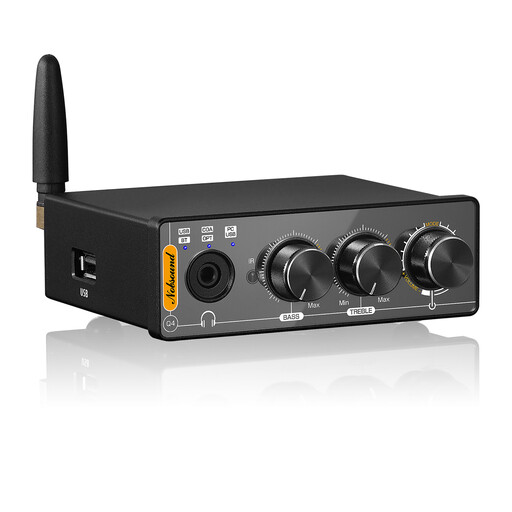 No image available
Worth considering if you’re looking for a PC-based audio setup with a DAC and headphone amplifier.
The product name lists an optical input, Treble Depth Control and a remote control. A suitable external DC power supply is required.
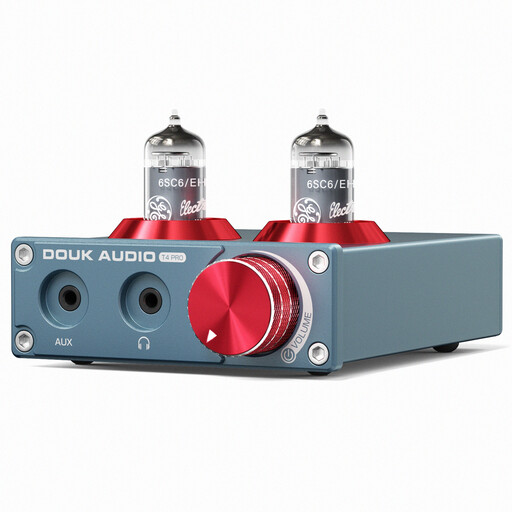 No image available
This analogue headphone amplifier is only suitable for a playback setup that already has an appropriate analogue source.
To play local files, you’ll need an external analogue source connected to the AUX or phono input.
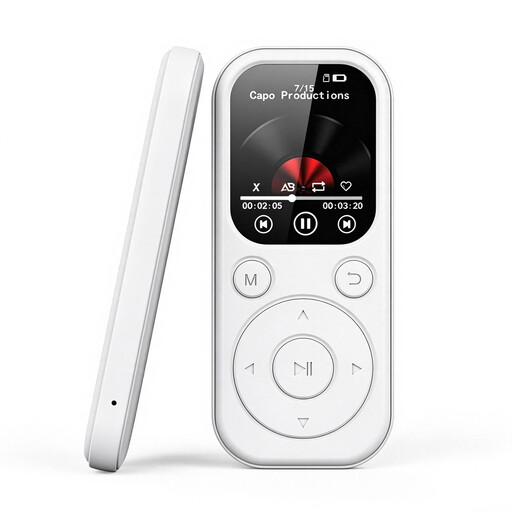 No image available
A player option if you want to choose stored music without a computer running.
The product name lists 32 GB of storage, a 2.01 inch colour display and expansion up to 128 GB.
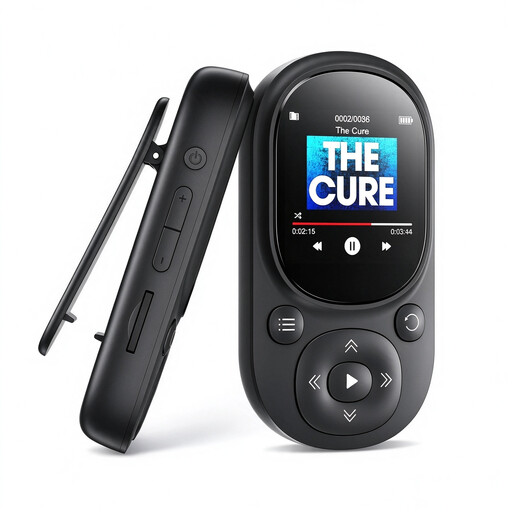 No image available
Another player option if you want to choose stored files directly on the device rather than on your computer.
The product name lists 64 GB of storage, a 1.44 inch colour display and a microSD card slot for cards up to 128 GB.
For the FiiO K11, the manufacturer describes playback through a connected computer: select the K11 as the audio output in your system and playback software. If you want to choose files without a computer, a standalone player such as the FiiO M23 is the right type of device.
Start at a low volume. The iFi audio manual warns against switching PowerMatch on the ZEN DAC 3 at high volume. The World Health Organization notes that volume and listening duration both matter for your hearing.
Check whether your signal chain also needs a source, a suitable cable or a power supply. For an eligible online consumer purchase in Germany, you generally have a 14-day right to cancel; Verbraucherzentrale explains that when the cancellation period starts depends on the circumstances. Your statutory rights regarding faulty goods are separate from a voluntary manufacturer’s guarantee.
No. According to the European Union, the manufacturer uses the CE marking to declare that the product complies with the EU rules that apply to it, where those rules require the marking. CE is not a sound quality rating and says nothing about whether a display is readable in sunlight.