
Lieferung heute & morgen

Qualitätsgarantie
App herunterladen
Kategorien
A lockable filing cabinet is an essential component for the secure and organised storage of documents, files, and valuables. Whether for a corporate office, law firm, medical practice, or home office, protecting sensitive information from unauthorised access is paramount. The right choice of model depends on specific requirements for material, security, capacity, and mobility. This guide analyses the key technical criteria and presents a selection of models for various use cases.
The decision to purchase a lockable office cabinet should be based on an analysis of objective criteria. The following parameters are crucial for functionality and long-term durability.
Most high-quality filing cabinets are made of steel. A sheet steel construction offers high stability and resistance to mechanical impact. A critical quality indicator is the surface finish. A powder coating effectively protects the steel cabinet from corrosion, scratches, and moisture. This is particularly relevant in environments like workshops or basements. Cold-rolled steel is often used for its dimensional stability and smooth surface, which allows for a uniform coating.
The core feature is the cabinet's lock. Common systems include:
The maximum load capacity of the shelves and the top panel is a critical factor. The specified load capacity (in kg) should accommodate the intended contents. Heavy binders or tools require a higher capacity than light office supplies. Adjustable shelves offer the flexibility to adapt the storage space to different folder sizes (e.g., A4) or items. A solid construction, often featuring a welded or robustly screwed frame, prevents the cabinet body from warping under load. For taller cabinets, an anti-tip device for wall mounting is an important safety feature.
A stationary metal storage cabinet is ideal for archives or fixed workstations. A mobile office pedestal, on the other hand, offers flexibility. Look for 360° swivel castors for easy manoeuvrability and locking brakes to position the unit securely. An additional support castor on the bottom drawer can prevent tipping when it is fully extended. The external dimensions must fit the available space, while the internal dimensions define the effective use of storage.
Based on the technical criteria mentioned, we have compiled a selection of models that meet different requirements for capacity, mobility, and security.
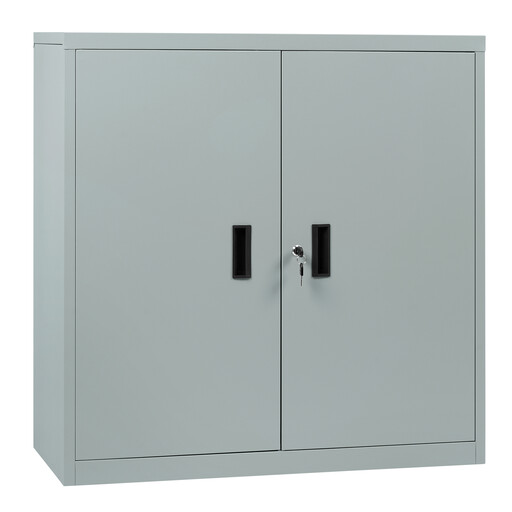
Why we recommend this product: This model combines a high total load capacity of 110 kg with a secure rod locking mechanism. The body, made from cold-rolled steel with a powder coating, is designed for durability. Its high flexibility, thanks to a shelf that is adjustable in 35 increments, makes it a versatile solution for both the office and a workshop cabinet.
Key Features:
Best Suited For: Businesses and individuals who need a stationary, robust, and high-capacity storage solution for binders, heavy tools, or equipment.
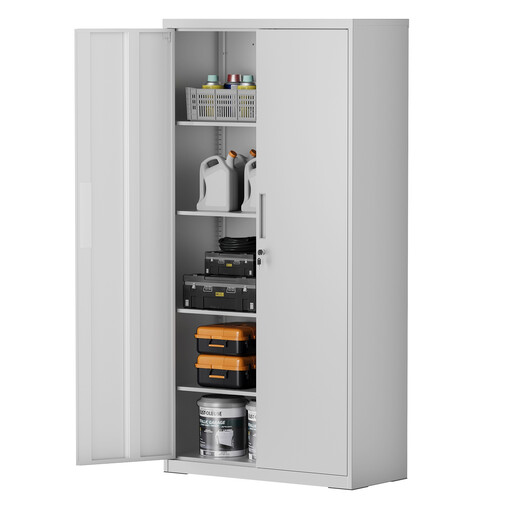
Why we recommend this product: At 180 cm tall with five tiers, this steel cabinet maximises vertical storage on a small footprint. The height-adjustable shelves allow for storing items of various sizes. Its powder-coated steel construction ensures stability and a low-maintenance surface.
Key Features:
Best Suited For: Archives, storage rooms, and offices with a high volume of files that require a space-saving yet high-capacity solution.
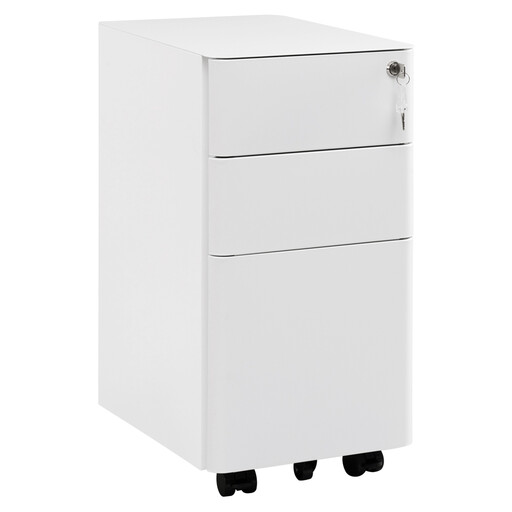
Why we recommend this product: This mobile pedestal is a mobile and compact solution for the workspace. It arrives pre-assembled (only the castors need to be attached) and offers thoughtful details like an anti-tip castor and a bottom drawer for hanging files. The central lock secures all three drawers at once.
Key Features:
Best Suited For: Users in home offices or agile work environments who need secure, mobile, and organised storage right at their desk.
The models presented cover specific use cases. If your requirements for size, colour, or features differ, a broader selection of office furniture may offer the right solution. For a more comprehensive overview of various configurations, from compact cabinets to large-volume storage systems, explore our Metal Cabinet category.
1. How is a tall filing cabinet secured to prevent it from tipping over? Tall and narrow cabinets, especially when heavily loaded, should always be anchored to a sturdy wall. Most manufacturers include an anti-tip kit for this purpose, consisting of brackets or straps and the appropriate mounting hardware. The cabinet should be placed on a level surface and then fixed to the wall according to the assembly instructions.
2. What is the difference between a filing cabinet and a workshop cabinet? Functionally, the lines are often blurred, as both are typically made of steel and are lockable. A filing cabinet is usually optimised to hold A4-sized binders and has shelves dimensioned accordingly. A workshop cabinet often focuses on a higher load capacity for its shelves to store heavy tools or machine parts, and may feature more robust surfaces or additional pegboards for hanging tools.
3. With a mobile pedestal that has a central lock, are all drawers always secured? Yes, that is the function of a central locking system. Locking the single lock activates an internal mechanism that blocks all drawers simultaneously. This ensures that the entire contents of the pedestal are secured with a single turn of the key.