
Lieferung heute & morgen

Qualitätsgarantie

Willkommens-Angebote freischalten: KOSTENLOSE Lieferung | Bis zu 80 % RABATT | Kostenlose 30-Tage-JoyPlus-Testphase
App herunterladen
LocknLock food storage containers are among the most frequently searched solutions for leftovers, prepared meals, and space-saving food storage. However, the brand name alone is not the deciding factor. Capacity, closure system, material, and permitted uses vary considerably from one model to another.
Anyone who focuses only on terms such as “airtight,” “leakproof,” or “microwave-safe” may overlook important limitations. Three common purchasing mistakes in particular can lead to unnecessary expense.
With many LocknLock models, the container itself is microwave-safe, but the lid must be removed completely or opened. Otherwise, pressure may build up. According to the product specifications, Classic models are also limited to temperatures of up to 120°C.
Foods that are particularly high in fat or sugar, as well as tomato-based dishes, can become extremely hot during heating and may cause discolouration or place additional stress on the material. A plastic food storage container is therefore not automatically a substitute for an oven dish.
A container that is too large for a small portion takes up unnecessary space and may shift during transport. A container that is too small leaves no room for expansion when freezing and increases the risk of the contents being forced out when the lid is closed.
For individual snacks, 450 to 700 ml is often sufficient. Meal-prep portions typically range from 800 ml to 1.1 litres, while family-sized portions or larger leftovers generally require between 1.8 and 3.5 litres.
BPA-free food storage containers can be a sensible choice of material. However, the purchase decision should also take into account specifications for the freezer, microwave, dishwasher, and temperature limits. The lid should also be checked regularly for cracks, deformation, and a properly seated silicone seal.
LocknLock Classic models are specified as featuring a four-sided locking system with a silicone seal. This design is practical for liquid foods such as soups, sauces, and dressings, provided that all four locking sides are fully secured.
Other LocknLock food storage containers use a twist or screw-top closure. Before buying, consider whether the container will mainly be stored in the refrigerator or regularly carried in a bag. For transport, leakproof food storage containers with a continuous seal and secure closure are particularly important.
Most of the plastic food containers featured here are made from polypropylene (PP). Some models use Tritan for the container and silicone for the seal. Transparent walls make it easier to monitor the contents, while stackable storage containers help keep the refrigerator and pantry organised.
Important: According to the product specifications, the LocknLock plastic containers in this selection are not suitable for use in an oven, on a hob, or with direct heat sources. The lid must be removed before heating food in the microwave. Freezer containers should also not be filled to the brim. Frozen contents should be allowed to thaw before opening to avoid placing unnecessary strain on the seal and closure.
Dishwasher-safe food storage containers save time in everyday use. For Classic models, cleaning in the upper dishwasher rack is recommended. After washing, the container, lid, and sealing ring should be allowed to dry completely before being closed and stored in a cupboard.
Stackable or nestable containers are especially practical in smaller kitchens. A LocknLock food storage container set can therefore be more cost-effective and space-efficient than buying several individual containers—provided that the included sizes match your actual needs.
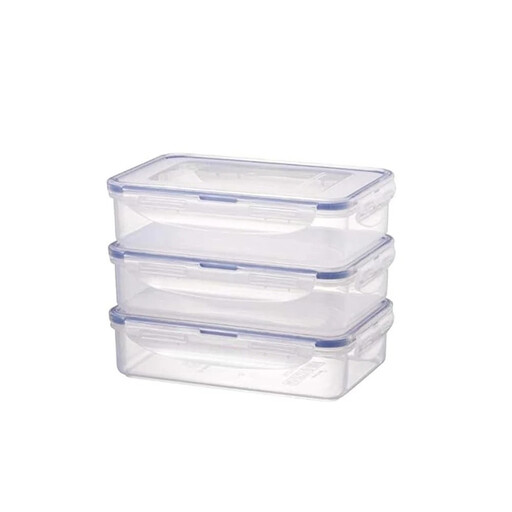
Why it suits this profile: Three identical containers are ideal for leftovers, snacks, and prepared portions in a small to medium-sized household.
The individual capacities are clearly stated. However, microwave suitability should be checked before buying, as the product specifications include certain limitations.
Three 800 ml containers, transparent design, and stackable construction.
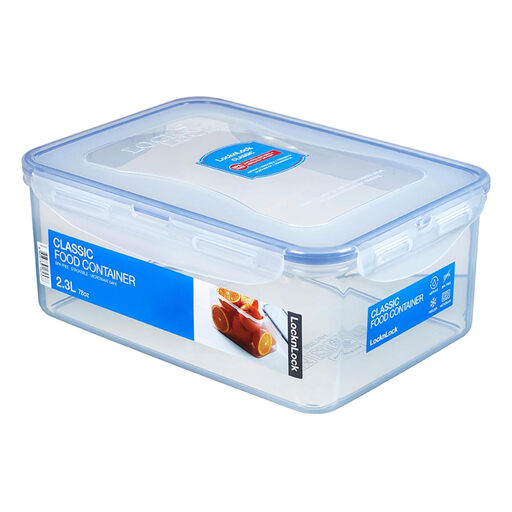
Why it suits this profile: The shallow shape is well suited to larger leftovers, cheese, cold cuts, and prepared ingredients in the refrigerator.
The four-sided locking system and silicone seal are specified as design features. Before transporting the container, make sure that all sides are fully closed.
2.3-litre capacity, stackable design, BPA-free PP, and specifications indicating suitability for the freezer, dishwasher, and microwave without the lid.
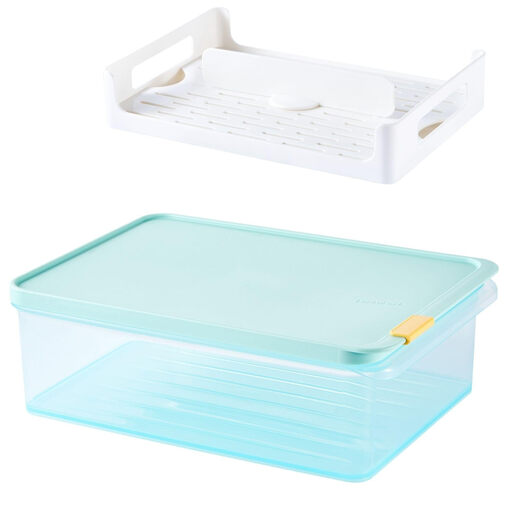
Why it suits this profile: The large format is designed for family-sized portions, larger meals, and meal prep for several days.
The integrated divider keeps different foods separate. The lid must be removed for microwave use; the container is not intended for oven use.
3.5-litre capacity, divider included, stackable design, and specifications indicating suitability for the freezer, dishwasher, and microwave without the lid.
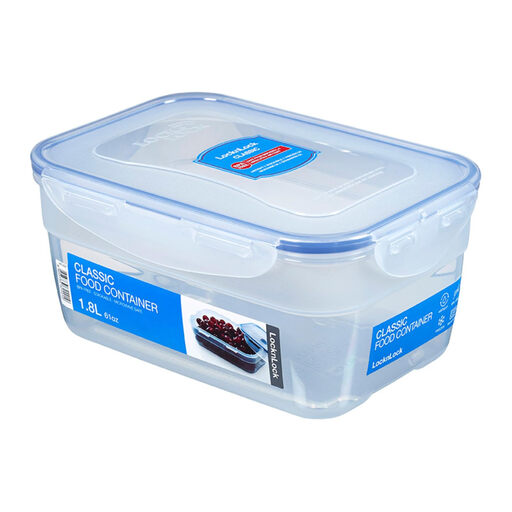
Why it suits this profile: Three identical containers make it easier to portion and store prepared meals consistently.
The uniform format prevents an uneven stack. When freezing, leave sufficient room for the contents to expand.
Three 1.8-litre containers, four-sided locking system, silicone seal, and specifications indicating suitability for the freezer, dishwasher, and microwave without the lid.
We have put together a complete, up-to-date selection of products that can be compared by capacity, closure system, stackability, and intended use.
According to the product specifications, several models are suitable for reheating in the microwave. The lid must be removed or opened completely. Depending on the model, a temperature limit of up to 120°C may also apply.
For side dishes and smaller portions, 450 to 700 ml is practical. For a complete lunch, 800 ml to 1.1 litres is often suitable. If you want to store family-sized portions or several components together, consider capacities from 1.8 to 3.5 litres. A divider is useful when different foods need to remain separate.
There is no single service-life estimate that applies to every container. Longevity depends on use, cleaning, temperature changes, and the condition of the seal. Regular visual inspections and following the manufacturer’s instructions can help protect the closure and material during everyday use.