
Lieferung heute & morgen

Qualitätsgarantie

Willkommens-Angebote freischalten: KOSTENLOSE Lieferung | Bis zu 80 % RABATT | Kostenlose 30-Tage-JoyPlus-Testphase
App herunterladen
LocknLock food storage containers are available in a wide range of sizes, shapes and materials. For households in Germany, airtight food containers, leak-resistant storage boxes and space-saving stackable containers are particularly appealing. However, not every container is suited to every use.
Anyone who focuses solely on capacity or a promise such as “leak-proof” can easily overlook important details: Does the feature also apply to liquid foods? Can the lid be used in the microwave? Is the container material suitable for the freezer? The following buying guide from the Joybuy Product Recommendation Officer explains what to look for when choosing.
For many food storage containers, “microwave-safe” does not mean that the fully sealed container can be heated. With the LocknLock models listed here, the lid must be removed before heating. Otherwise, pressure may build up inside the container.
The term “dishwasher-safe” should also be read carefully. It generally applies to both the container and the lid, but does not specify the recommended position in the dishwasher or indicate how prolonged exposure may affect the seals.
A 3.5-litre container is well suited to larger prepared meals or family-sized portions. For individual snacks, side dishes or use at the office, however, it may take up more space than necessary. The key considerations are the internal layout, external dimensions and the amount of space available in the refrigerator.
An airtight food container protects its contents from exchanging air with the surrounding environment. Leak resistance also depends on the lid, seal, closure mechanism and correct handling. Before buying, check whether the product is explicitly described as “leak-resistant”, “leak-proof” or leak-proof, and how the closure works.
Polypropylene (PP) is lightweight, shatter-resistant and practical for meal-prep containers and lunch boxes. According to the product specifications, several of the LocknLock storage containers mentioned here are made from BPA-free, food-grade PP plastic. This is particularly relevant for professionals, school pupils and students who transport their containers regularly.
A glass food storage container is heavier, but provides a clear view of the contents and is well suited to dry foods such as bread or cereal. Glass can break if dropped. Sudden transitions between very cold and very hot temperatures should also be avoided to minimise thermal shock.
Twist-lock or multi-point closures distribute pressure across several points. The LocknLock 3.5-litre container is specified as featuring a twist-lock closure with an airtight and, according to the product description, leak-proof seal. According to its description, the 420 ml Modular Plus container has four side locking tabs.
Before filling, make sure the rim of the lid and the seal are clean and free from food residue. Even small particles can compromise the seal. Containers with cracks, deformation or damaged seals should no longer be used.
The following guidelines can help with choosing the right size:
Volume is only part of the equation; dimensions matter too. Tall, round containers do not fit into every refrigerator compartment. Rectangular, stackable storage boxes often make more efficient use of shelf space. Transparent models are practical for the pantry because the contents can be identified without opening the container.
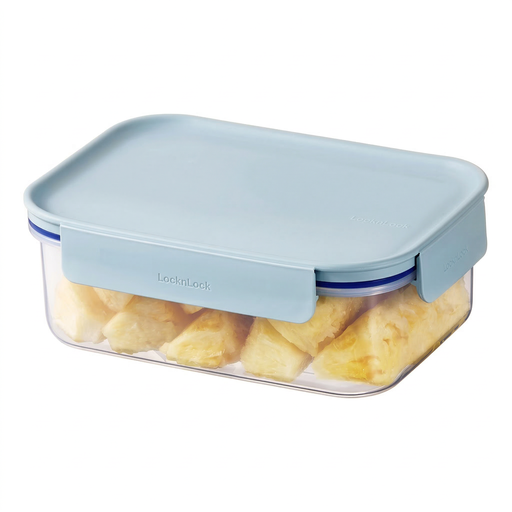
Why it fits the bill: The compact rectangular container is ideal for small portions, snacks and packed lunches at the office or university.
The clearly defined 420 ml capacity prevents you from buying an oversized storage container for small quantities.
BPA-free PP plastic, four locking tabs, a stackable design, plus freezer, microwave without the lid and dishwasher suitability according to the product specifications.
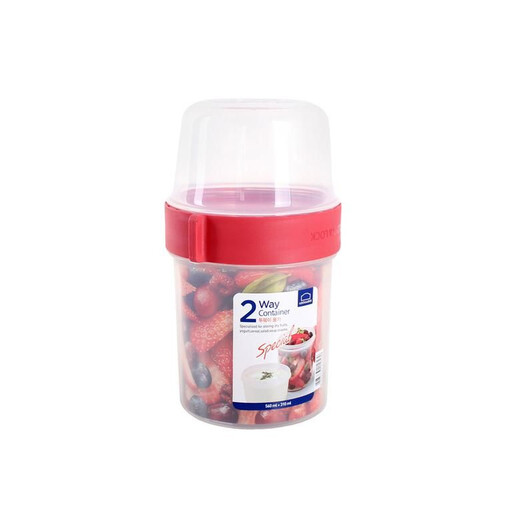
Why it fits the bill: Two separate compartments keep yoghurt and muesli, fruit and nuts, or vegetables and dip apart.
The divider helps prevent delicate or crunchy foods from mixing during transport.
BPA-free plastic, a 560 ml lower compartment, a 310 ml upper compartment, plus a dishwasher-safe and microwave-safe design without the lid, according to the product description.
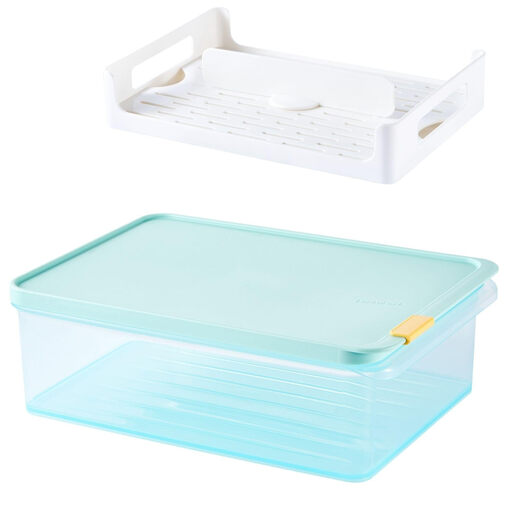
Why it fits the bill: The generous capacity is designed for family-sized portions, prepared meals and storing larger quantities.
The integrated divider keeps different foods separate, reducing the need for multiple large containers.
3.5-litre capacity, PP plastic, divider, stackable design, and an airtight, leak-proof twist-lock closure according to the product specifications.
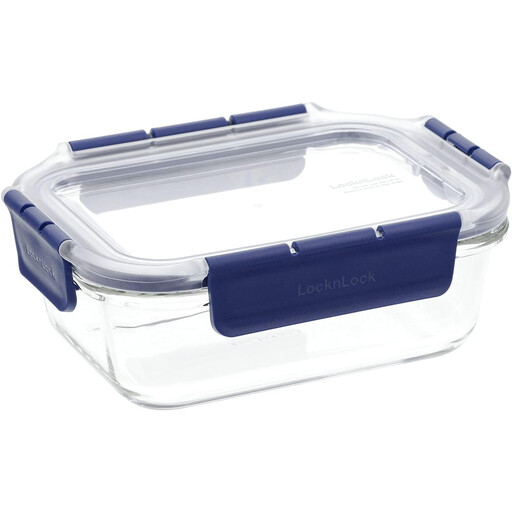
Why it fits the bill: The glass container is suitable for dry provisions, larger portions and keeping contents clearly visible in the refrigerator or pantry.
The guidance on thermal shock and breakage risk makes the limitations of glass compared with lightweight PP plastic clear.
Heat-resistant glass body, 2-litre capacity, silicone seal, airtight twist-lock lid, plus freezer, microwave without the lid and dishwasher suitability according to the product specifications.
The full selection includes containers with different twist-lock closures, sizes and features for the kitchen, pantry and on the go.
According to the product specifications, several of the models mentioned are suitable for microwave use, but without the lid. The lid should be removed completely to prevent pressure from building up inside the container. Hobs, open flames and direct heat sources are not suitable.
For individual meals, capacities between 560 and 1,070 ml are often the most practical choice. For family-sized portions or several prepared components, a 2- to 3.5-litre container may be more suitable. An integrated divider can replace additional containers when foods need to remain separate.
There is no universal service life. It depends on cleaning, temperature changes, frequency of use and the condition of the lid and seal. As soon as cracks, deformation or a weakening seal become apparent, the container should be replaced.