
Lieferung heute & morgen

Qualitätsgarantie

Willkommens-Angebote freischalten: KOSTENLOSE Lieferung | Bis zu 80 % RABATT | Kostenlose 30-Tage-JoyPlus-Testphase
App herunterladen
An airtight LocknLock food storage container can keep food safely stored in the fridge, freezer, cupboard or on the go. But the brand name alone isn’t enough to make the right choice. The seal, capacity, material and intended use all need to suit your everyday needs.
Airtight food containers are a common source of disappointing purchases. One container may seal tightly but not fit in your fridge. Another may be listed as microwave-safe, but only when used without its lid. Larger containers can also be impractical if they’re heavy when full or difficult to clean.
A tight seal helps prevent liquids from leaking and can keep smells in. But it doesn’t automatically mean a container is suitable for heating, freezing or carrying fizzy drinks.
According to the product information, many LocknLock models:
A 550 ml food storage container is suitable for snacks, side dishes or small portions. It may be too small for a full lunch. A 1-litre container gives you more room for leftovers and meal prep, but takes up more space too.
The stated capacity isn’t necessarily the ideal fill level. Leave some space at the top when storing liquid foods to prevent them spilling when you close the lid.
Stackable food storage containers only save space if their footprint and height suit your fridge or cupboard. Clear sides make it easier to see what’s inside, but they don’t make up for a poor fit. Before you buy, compare the external dimensions with the space available.
A four-sided safety seal with a silicone gasket can help provide an even closure. The LocknLock HPL311, HPL817T and HPL880 containers are described as having this type of seal, with a double-chamber silicone gasket. An leakproof food storage container is particularly useful for soups, sauces and dressings.
A quick check after filling can be helpful: close the lid fully, carefully tilt the container and check the seal for any visible gaps. If the lid is warped or the seal is damaged, don’t use the container for liquids.
The named LocknLock models are listed as being made from polypropylene (PP), for both the container and lid. Several products are described as BPA-free storage containers. Before buying, make sure the following information is also clearly available:
Check a plastic food storage container for cracks, serious warping or damaged seals before each use.
It’s easy to choose a size based on how you plan to use it:
If you’re looking for a large 4.8-litre food storage container, also consider its weight, grip and height in your fridge. For delicate foods, an integrated draining insert can be useful as it keeps the food separate from any liquid.
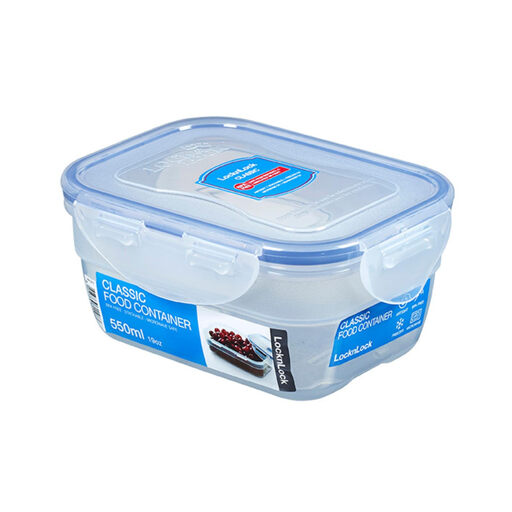
Why it suits this profile: Its compact size is ideal for snacks, small portions, school, work, picnics or camping. According to the product information, it measures 14.5 × 11.0 × 6.7 cm.
The clearly stated capacity helps you avoid buying a container that’s too large for small portions. According to the product information, it’s airtight, watertight and stackable.
BPA-free PP, silicone seal, and suitable for the freezer and dishwasher according to the product information; microwave-safe without the lid only.
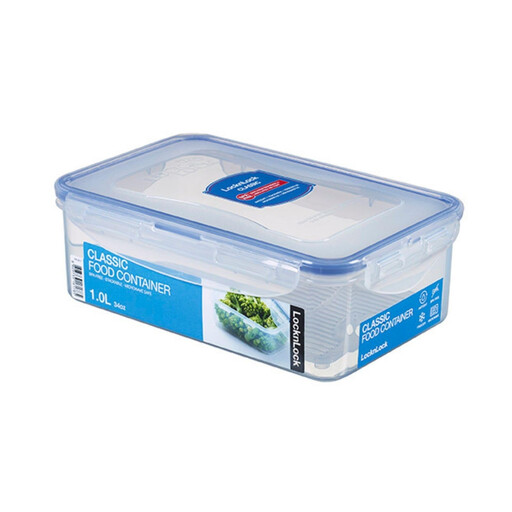
Why it suits this profile: Its rectangular shape offers a mid-sized option for leftovers, work lunches and neatly organised fridge shelves.
The clear container makes it easy to check what’s inside. According to the product description, its four-sided seal and double-chamber silicone gasket are designed to keep air and water out.
BPA-free PP, stackable design, and suitable for the freezer and dishwasher according to the product information.
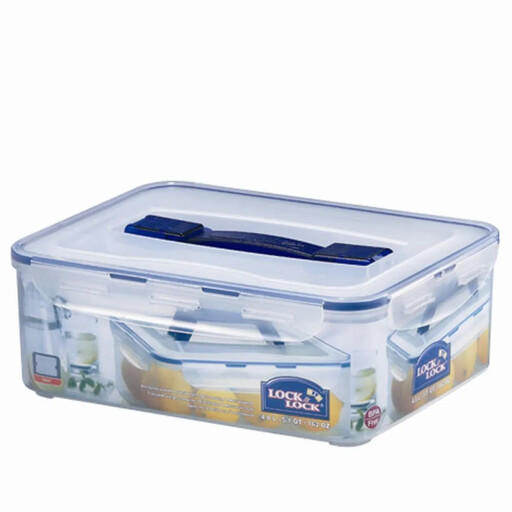
Why it suits this profile: Its generous capacity is ideal for families, people stocking up their cupboards and anyone storing larger quantities of fruit, vegetables or prepared food.
Its dimensions of 29.4 × 23.0 × 10.5 cm make it easy to check how much space you’ll need before buying. Don’t overfill it, and make sure the lid is fully locked before carrying it.
4.8-litre capacity, clear design, stackable shape, and suitable for the freezer and dishwasher according to the product information.
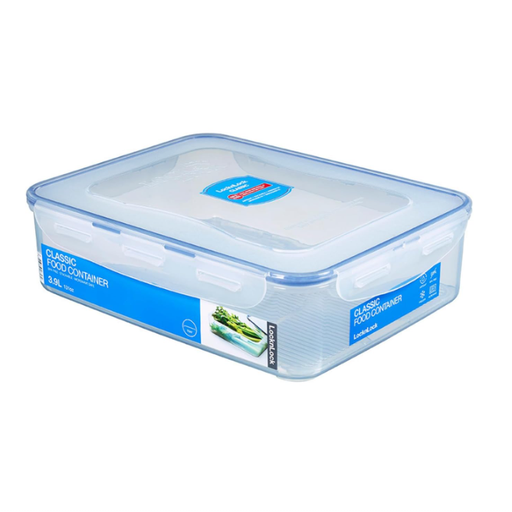
Why it suits this profile: The integrated draining insert is useful for fruit, vegetables and other foods that need to be kept separate from liquid.
The draining insert helps prevent food from sitting directly in liquid. The product description states that the seal and four-sided closure are airtight and watertight.
3.9-litre capacity, BPA-free PP, removable silicone seal, and suitable for the freezer and dishwasher according to the product information.
We’ve put together a complete, regularly updated list of products that meet these strict selection criteria and fully comply with the safety regulations in force in the EU.
To help a dishwasher-safe food storage container last as long as possible, wash the lid in the top rack if the product information allows it. Remove the silicone seal regularly, rinse it and let it dry completely.
For a microwave-safe food storage container, always follow the guidance for the specific model. The lids on the LocknLock containers mentioned here must be removed or opened before heating. Hot contents can cause burns, so oven gloves are a sensible choice when taking them out.
Don’t fill a freezer-safe food storage container right to the top. Let frozen food thaw before opening the container to avoid putting unnecessary strain on the seal.
The product information for the models mentioned states that they have airtight and watertight seals. The lid and seal must be fully closed and undamaged. When carrying the container, it’s best to keep it upright in a bag.
For individual meals, look for sizes from around 750 ml to 1.5 litres. A 550 ml container is better suited to smaller portions or side dishes. Family portions and larger quantities need models of around 3.9 litres or more.
There’s no one-size-fits-all answer. Its lifespan depends on the material, how it’s cleaned, temperature changes and how the seal is handled. Replace damaged containers or seals, as it may no longer be possible to rely on them to prevent leaks.