
Lieferung heute & morgen

Qualitätsgarantie

Willkommens-Angebote freischalten: KOSTENLOSE Lieferung | Bis zu 80 % RABATT | Kostenlose 30-Tage-JoyPlus-Testphase
App herunterladen
LocknLock food storage containers are often promoted with terms such as “airtight”, “leakproof” or “microwave-safe”. However, these descriptions are only useful if they match the way you intend to use the container. A large storage container for flour serves a different purpose from a shallow box for leftovers, a lunch box or a freezer container.
That is why households, families, working people, school pupils and students should take a closer look at the technical details. The key factors are not just capacity and price, but also the closure, material, temperature range, cleaning requirements and storage space.
An airtight food storage container can retain odours and moisture more effectively. However, that does not automatically mean it is suitable for every type of food or every temperature. Dry provisions such as rice, flour or muesli require a different shape from liquid dishes or frozen meals.
The closure should also be fully secured. If the seals are damaged or the lids are warped, leak resistance may be reduced.
With many plastic containers, the container itself may be used in the microwave, but the lid must not be heated while closed. According to the product information for several LocknLock models, microwave use is permitted without the lid and, in some cases, at temperatures of up to 120 °C. The lid must be removed or opened to allow pressure to escape.
If this instruction is overlooked, the container may become deformed or hot splashes may escape when it is opened.
A LocknLock food storage container set may offer good value, but it requires enough space. Before buying, compare the internal dimensions of your fridge, freezer and kitchen cupboards with the product dimensions. Stackable storage boxes only save space if the lids and containers can be securely stacked on top of one another.
For small kitchens, nestable, shallow or modular designs are often more practical than lots of containers in different shapes.
For liquids, soups, sauces and cut fruit, leakproof food storage containers with an all-round silicone seal and secure closure are a sensible choice. According to the product description, LocknLock models in the Classic range use a four-sided locking system and a silicone double-chamber seal.
For dry foods such as sugar, pasta or pet food, an easy-to-use flip-top lid is also practical. A transparent container makes it easy to check the contents without opening the lid.
For food storage containers, the manufacturer should specify a material intended for contact with food. According to the product information, several of the models listed here are made from BPA-free polypropylene (PP) and feature a silicone seal.
“BPA-free” describes a property of the material, but it does not indicate that a container is suitable for every temperature or application. The usage instructions for the specific model remain decisive.
If you prepare meals in advance, you will often need freezer-safe food storage containers and microwave-safe containers. Look for specific details such as up to 120 °C for microwave use or down to -20 °C for freezer use. When freezing food, leave some space for the contents to expand.
Dishwasher-safe food storage containers make cleaning easier. Some models are intended for the top rack of the dishwasher. Lids, seals and removable inserts should be cleaned separately and dried thoroughly before being closed again.
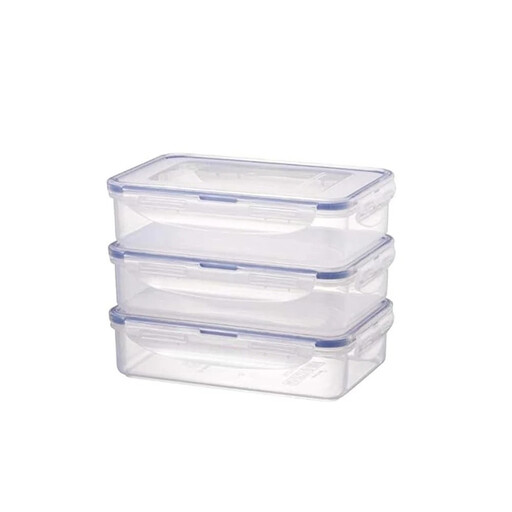
Why this product suits this profile: Three containers of the same size make it easy to get started with food storage, whether for leftovers, snacks or prepared ingredients.
The uniform format reduces the risk of buying a set with unsuitable individual sizes. The transparent containers make it easy to check the contents.
Three containers, each holding 800 ml, with a stackable design and airtight lids according to the product description.
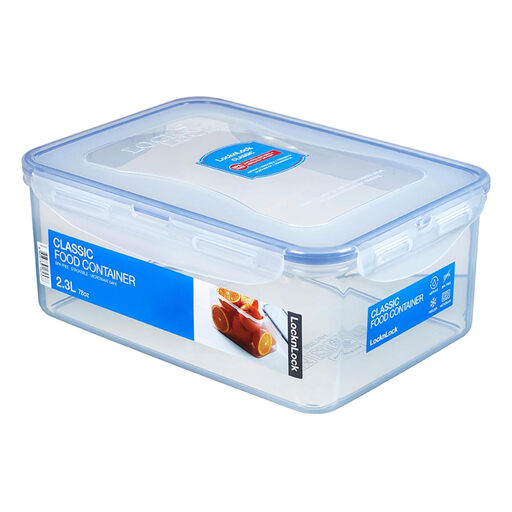
Why this product suits this profile: The shallow rectangular shape is suitable for family portions, leftovers, cheese, cold meats and prepared ingredients.
The four-sided locking system and silicone seal are clearly described. For microwave use, the lid is removed, making the instructions unambiguous.
2,3 l capacity, BPA-free PP and a stackable design; according to the product information, it is suitable for the freezer, dishwasher and microwave without the lid.
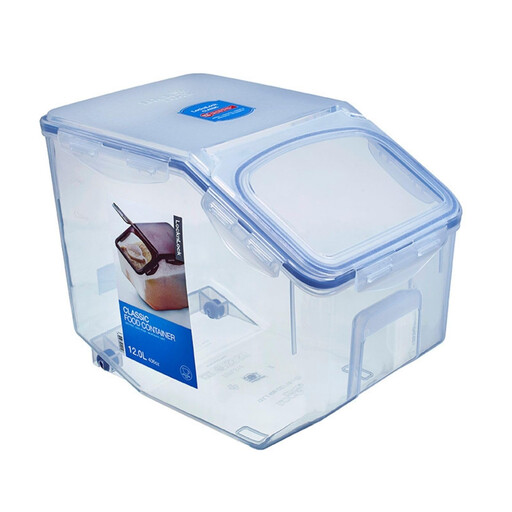
Why this product suits this profile: Its large capacity is designed for storing flour, rice, pasta, muesli or pet food in the pantry.
The transparent body, flip-top lid and included measuring cup support clear, portion-controlled dispensing.
12 l capacity, stackable construction, BPA-free plastic and a measuring cup according to the product description. Microwave use is only permitted without the lid.
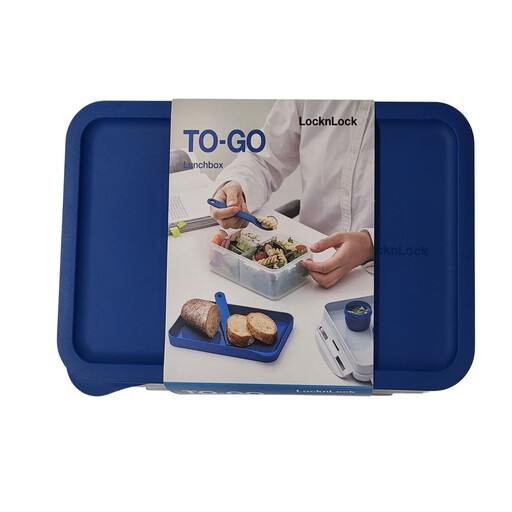
Why this product suits this profile: Three removable compartments keep the main dish, sides and sauce separate at work, school or on outings.
The separate inserts prevent different foods from mixing directly. When heating the box in the microwave, the lid must not remain closed.
1 l total capacity, three compartments, plus cutlery and a sauce container included according to the product information.
We have put together a complete, regularly updated list of products that fully meet these strict selection criteria and the safety regulations applicable in the EU.
According to the product description, many models are offered with airtight and watertight closures. Actual leak resistance depends on the seal being correctly positioned, the lid being fully closed and the container remaining undamaged. Before transporting liquid food, it is advisable to carry out a quick closure test.
With several models, the container is microwave-safe, but the lid must be removed or opened. The permitted maximum temperature may vary from one model to another. Details such as up to 120 °C should be checked against the relevant product description before use.
For side dishes, snacks and individual portions, containers of around 800 ml to 1,1 l are often convenient. For larger meals or several portions, 1,5 l to 2,3 l may be suitable. Dry provisions, on the other hand, often require considerably more capacity, such as 5 l or 12 l. The decisive factors are portion size and available storage space, not the set size alone.