
Lieferung heute & morgen

Qualitätsgarantie

Willkommens-Angebote freischalten: KOSTENLOSE Lieferung | Bis zu 80 % RABATT | Kostenlose 30-Tage-JoyPlus-Testphase
App herunterladen
Whether you’re prepping meals, packing a school lunch, taking food to work or storing last night’s leftovers, LocknLock food storage containers come in a range of sizes, shapes and designs. Capacity isn’t the only thing to consider, though. The closures, material, ease of cleaning and suitability for the microwave or freezer all affect how well a container works day to day.
An airtight food storage container can keep liquids securely inside. But pressure builds up when food is heated, so the products described here must not be microwaved with the lid closed. Always follow the manufacturer’s instructions: several models are suitable for microwave use without the lid and can withstand temperatures of up to 120 °C.
Overlooking this restriction could lead to the container warping, the lid coming loose or hot food splashing out when you open it.
A 1.35-litre box can be handy for salads or complete meals. For spices, cold meats, sides or small snacks, however, it takes up more space than necessary. In a full fridge, stackable food storage containers in a range of capacities are usually more practical.
For individual portions, LocknLock models are available in sizes such as 180 ml, 360 ml, 550 ml and 600 ml. Choosing the right size reduces wasted space and makes it easier to see what you have.
A lunch box with compartments or a snack box for on the go keeps yoghurt, muesli, fruit and toppings separate. This helps stop crunchy ingredients from going soft too soon. For liquid leftovers or larger meal-prep portions, classic rectangular containers with a seal around the lid are often the more obvious choice.
Look for a clearly described closure mechanism. Depending on the design, the rectangular LocknLock models in this selection use a four-sided safety locking system and a silicone seal. With a leakproof food storage container, the lid and seal should sit flat and close without catching.
Before carrying it, take a moment to check the seal: is it sitting correctly in its groove? Are all the locking clips fully fastened? Cracks, significant warping or damaged edges can affect how well the container seals.
The LocknLock containers mentioned here are made mainly from polypropylene (PP); some have silicone seals. Several models are described in the product details as BPA-free storage containers. BPA-free refers to the material and isn’t a promise of a longer lifespan or any particular health benefit.
Clear plastic food storage containers make it easier to check what’s inside without opening the lid. It’s also worth considering whether the container may absorb odours or become stained with everyday use. For strongly coloured foods such as tomato sauce, follow the instructions for use and avoid excessive heating in the microwave.
A microwave- and dishwasher-safe food storage container is versatile, as long as you follow the restrictions:
It’s also worth checking that a freezer container will fit in the space you have. Flat, rectangular shapes are often easier to arrange side by side and stack than tall, round containers.
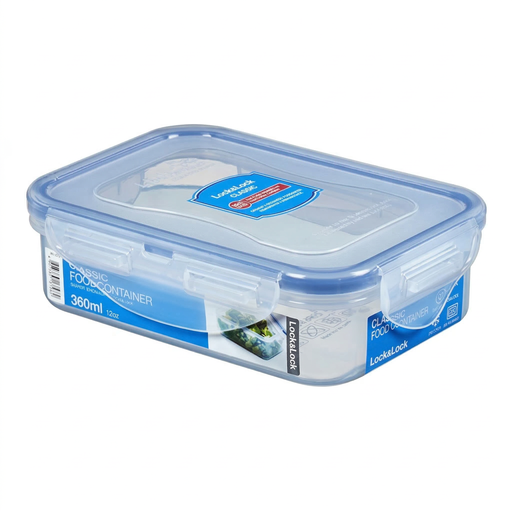
Why this product suits you: Its compact size is ideal for sides, snacks, smaller meal-prep portions or leftovers. The rectangular shape makes practical use of space in the fridge and cupboard.
Its capacity helps stop small portions shifting around in an oversized box. The product details specify a silicone seal and suitability for the freezer, microwave without the lid, and dishwasher.
360 ml capacity, clear PP box and rectangular dimensions of 15.1 × 10.8 × 4.5 cm.
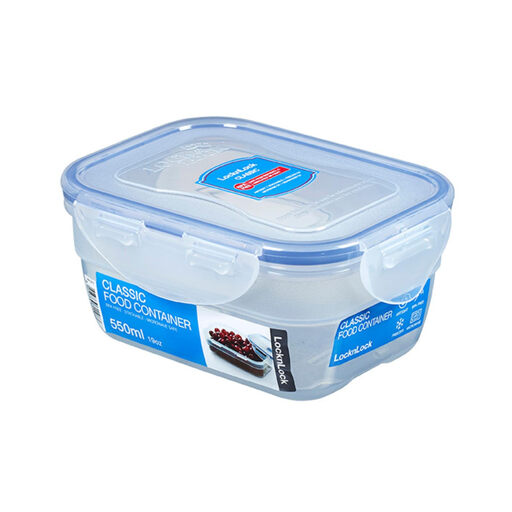
Why this product suits you: This model combines a medium capacity with four-sided locking, a double silicone seal and a stackable shape. It’s designed for liquids, snacks and everyday portions.
The closure type is clearly specified, rather than relying on a vague promise of freshness. For microwave use, the instructions are explicit: remove the lid and do not exceed 120 °C.
550 ml capacity, BPA-free polypropylene, stackable design, and suitability for the freezer and top rack of the dishwasher.
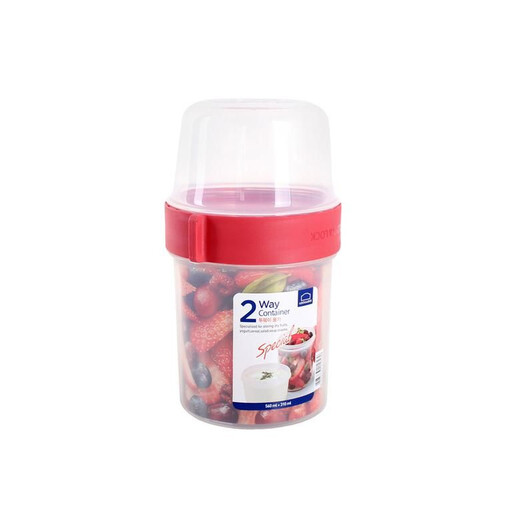
Why this product suits you: Two containers, including a separate top compartment, are ideal for yoghurt and muesli, fruit and nuts, or snacks and dips. With two containers in the set, it’s a good fit for households that regularly prepare meals for work, school or days out.
The compartment design keeps ingredients separate instead of cramming everything into one large section. According to the product details, the individual components are dishwasher-safe and suitable for microwave use without the lid.
560 ml bottom container, 310 ml top container, BPA-free plastic and a stackable design.
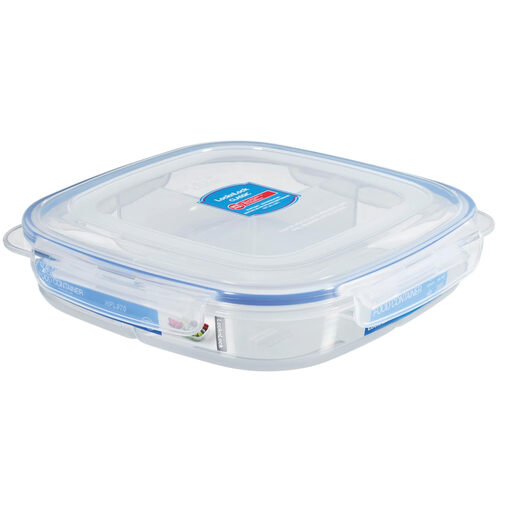
Why this product suits you: The square shape has room for larger portions, salads, snacks or several parts of a meal. That makes it a practical choice for families, long days at work and days out together.
Its generous capacity is clearly stated, helping you avoid buying the wrong size based on misleading dimensions. It also works as a single container for storage, freezing and transport.
1.35-litre capacity, BPA-free plastic, airtight closure, and suitability for the freezer and dishwasher.
We’ve put together a complete, regularly updated list of products that meet these strict selection criteria and fully comply with the safety regulations in force in the EU.
How long a food storage container lasts depends largely on how you use it. Clean the container, lid and seal after use, and let all the parts dry completely. Harsh or abrasive cleaning products can damage the surfaces. Check the seal regularly for cracks, discolouration and warping.
When using the microwave, only heat foods high in fat, sugar or acid in accordance with the manufacturer’s instructions. Stop using a damaged container, even if the lid still seems to close properly.
Depending on the product, the models described have a silicone seal and a four-sided locking system, or a sealed screw-top design. For a container to be leakproof, the lid, seal and closures must be undamaged and properly secured.
Yes, several models are listed as microwave-safe in the product details. The lid must be removed completely or opened as instructed. Follow the maximum temperature for the specific model and read the product instructions. These containers are not designed for use in the oven, on the hob or over direct heat.
For sides and small portions, 360 or 550 ml may be enough. For complete meals or larger salads, 600 ml to 1.35 litres is a more suitable range. If you prepare a variety of dishes, you can combine rectangular containers in different sizes to make better use of storage space and match portions to your needs.