
Lieferung heute & morgen

Qualitätsgarantie
App herunterladen
Kategorien
Proper food storage is a fundamental aspect of modern household management. It not only serves to extend shelf life and preserve nutrients but also to systematically organise the kitchen, refrigerator, and pantry. A LocknLock food storage container is engineered with specific technical features designed to meet these demands. This article analyses the criteria relevant to selecting such containers and presents a curated selection of models.
The functionality of a kitchen storage container is determined by a combination of its material, locking mechanism, and design. An informed decision is based on evaluating these objective parameters.
The material most commonly used for LocknLock containers is polypropylene (PP). This thermoplastic polymer is known for its durability and chemical resistance. A crucial feature is its certification as a BPA-free food container. Bisphenol A (BPA) is an industrial chemical whose use in food contact materials is regulated in the EU. Using BPA-free plastic ensures that no unwanted substances migrate into the stored food. Therefore, always look for the "BPA-free" label.
The core feature of the Lock & Lock brand is its patented four-sided locking system. This system uses four movable flaps that snap onto the lid's rim, creating a hermetic seal in conjunction with a silicone gasket. Making such a storage container airtight serves two primary functions:
Efficient use of space is a key criterion for an organised household. A stackable food container set enables vertical storage without compromising stability. LocknLock's modular designs are engineered so that containers of different sizes fit together. This optimises space within a refrigerator organiser system, in drawers, or in the pantry.
A container's versatility is demonstrated by its suitability for various temperature ranges. Many models are designed for use in the microwave (for reheating), freezer (for freezing), and dishwasher (for cleaning). However, it is essential to check the specific manufacturer's instructions for each model, as not all containers are microwave-safe. This feature makes the containers functional meal prep containers.
Based on the technical criteria mentioned above, we have selected two models from the LocknLock range for a detailed review.
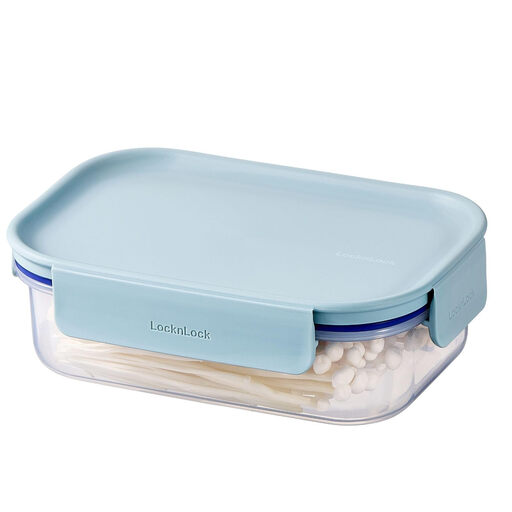
Why we recommend this product
This rectangular 910ml model is a universal solution for daily use. Its dimensions (19.3L x 14.1W x 6.7H cm) are sized for storing leftovers, prepared meals, or cut vegetables. According to the manufacturer, the material is suitable for use in the microwave, freezer, and dishwasher, offering maximum flexibility in the kitchen.
Advantages:
Who it's for: This model is ideal for individuals and couples who regularly prepare meals (meal prep), store leftovers, or need a reliable container for office lunches.
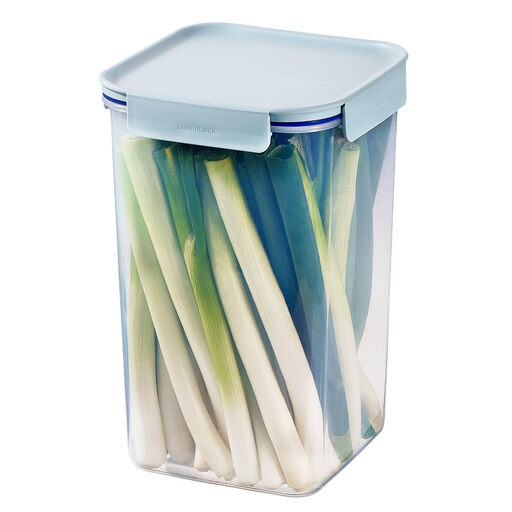
Why we recommend this product
With a capacity of 4.0 litres, this square container is designed for storing large quantities. It is perfectly suited as an airtight storage container for dry foods such as flour, sugar, cereal, or pet food. The twist-lock closure also ensures a hermetic seal, protecting the contents from moisture and pests. According to its specifications, this model is not intended for microwave use.
Advantages:
Who it's for: This model is aimed at families and individuals who store large quantities of dry goods and want to systematically organise their pantry.
While specialised food containers are essential for preserving freshness, a comprehensive organisational system can also include other elements. For storing non-perishable items or for aesthetic organisation on open shelving, products from our Storage Basket with Lid category could also be a useful addition.
1. Are LocknLock food storage containers truly airtight? Yes, the signature four-sided locking system with a hollow-profile silicone gasket is engineered to create a hermetic seal. This minimises the contents' contact with atmospheric oxygen and prevents liquids from leaking, provided the lid is closed correctly.
2. What material are Lock & Lock containers made of, and are they safe? Most LocknLock containers are made of polypropylene (PP), a robust and durable plastic. Crucially, products intended for food contact are declared BPA-free. This complies with current EU regulations for food safety and ensures that no substances harmful to health are released into the food.
3. What is the best way to clean a LocknLock storage container? Many models are dishwasher-safe, which simplifies cleaning. For this, check the manufacturer's specific information on the bottom of the product or its packaging. For manual cleaning, use mild detergents and soft sponges to avoid scratching the surface. The silicone gasket can be removed from the lid for thorough cleaning and washed separately.