
Lieferung heute & morgen

Qualitätsgarantie

Willkommens-Angebote freischalten: KOSTENLOSE Lieferung | Bis zu 80 % RABATT | Kostenlose 30-Tage-JoyPlus-Testphase
App herunterladen
Depending on the model, LocknLock glass food storage containers are suitable for storing, freezing, heating and transporting food. However, the differences are not limited to colour and capacity. The closure, lid material, temperature limits and dimensions all determine whether a container is genuinely practical for everyday use in the UK.
1. “Ovenproof” does not mean that the lid can be heated too.
For the LocknLock models mentioned here, the plastic or Tritan lid must be removed before use in the oven. Depending on the product, microwave use is also intended either without the lid or with the steam vent open. Overlooking this restriction can damage the lid or create a safety hazard.
2. An airtight container is not automatically suitable for carrying liquids.
For soups, sauces and dressings, a properly seated silicone sealing ring and a securely closing fastening are essential. A simple snap-on lid may be sufficient for dry food, while a leakproof food storage container with four-sided locking provides greater security during transport.
3. Large containers do not fit every fridge or lunch box layout.
A capacity of two litres is useful for family portions, but it naturally takes up more space. For office lunches and individual meals, 500 to 900 ml containers are often easier to store. Before buying, consider the internal height, footprint and any existing shelves or compartments.
Borosilicate glass is used in several LocknLock ranges. According to the relevant product information, certain containers are suitable for use in the oven at up to 400 °C without the lid. This temperature rating does not apply universally to every glass container and does not replace the instructions for use.
Protection against thermal shock is also important: a frozen container should not be placed directly into a fully preheated oven. Likewise, a hot glass container should not be placed in cold water or on a cold surface. This restriction is particularly relevant for glass containers for oven and microwave use.
A four-sided fastening with a removable silicone sealing ring can provide an airtight glass container and leakproof transport. The seal should be removed and cleaned regularly, as food residue can collect underneath it.
Models with a steam vent are practical for heating food in the microwave. The vent must be opened in accordance with the product instructions. Steam can build up when the lid is completely closed. For use in the oven, the lid must be removed completely.
For individual side dishes or snacks, capacities of 380 to 500 ml are worth considering. Capacities of 630 to 900 ml suit many office portions and glass meal-prep boxes. For family meals or larger quantities, 1.0 to 2.0 litres are more practical.
Square and rectangular shapes can generally be arranged more efficiently in the fridge and cupboard. However, claims such as “stackable” should still be checked against the specific lid design. Dishwasher-safe glass containers are practical for everyday use, although depending on the model, lids and seals should be placed in the upper rack or cleaned separately.
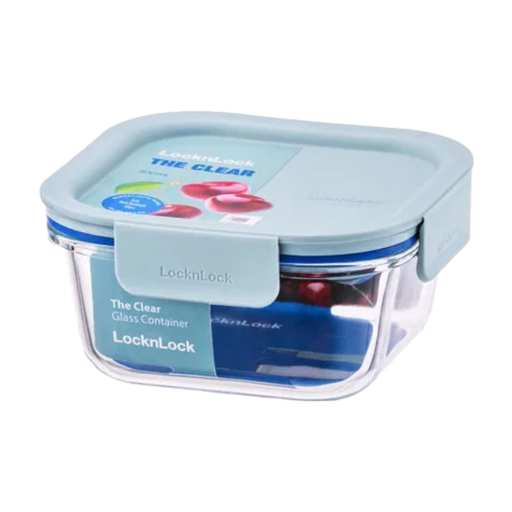
Why this product suits this profile: The square shape and 500 ml capacity are ideal for side dishes, small portions and getting started with meal prep.
The product information clearly states that it can be used in the oven and microwave without the lid, and warns against sudden changes in temperature.
500 ml capacity, square shape, silicone seal, and suitability for the fridge, freezer and dishwasher.
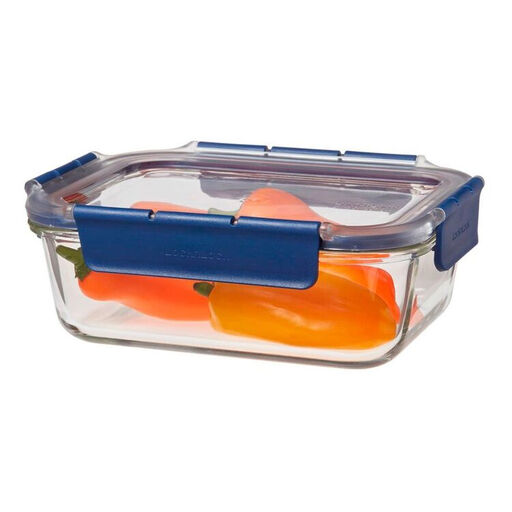
Why this product suits this profile: A one-litre capacity, borosilicate glass and a Tritan lid make this a good choice for households looking for a versatile individual container.
The four-sided locking mechanism with removable silicone seal addresses the risk of an unreliable closure when transporting liquid food.
Up to 400 °C without the lid, down to -20 °C in the freezer, stackable lid and dishwasher-compatible components.
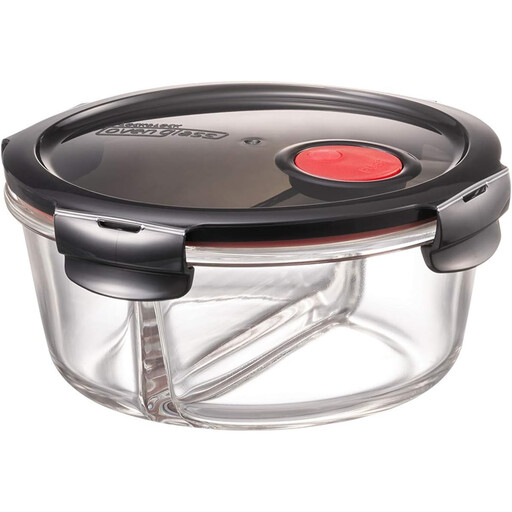
Why this product suits this profile: The integrated divider is ideal for anyone who wants to transport a main course and side dish in one box.
The steam vent is intended for heating and must be opened during use. For oven use, the lid must be removed completely.
900 ml capacity, divider, steam vent, and suitability for the oven, microwave, freezer and dishwasher.
We have put together a complete, regularly updated list of products that fully meet these strict selection criteria and the safety regulations applicable in the EU.
Several models are suitable for oven use at temperatures of up to 400 °C. This rating applies to the glass container without the lid. Check the specific product description and safety instructions before each use.
According to the product information, several models are suitable for temperatures down to -20 °C. The container should not be filled completely before freezing. Avoid moving it directly from very cold to very hot conditions to reduce the risk of thermal shock.
There is no single fixed lifespan that applies to every container. It depends on how the container is used and cleaned, as well as how it is handled during temperature changes. If you notice cracks, chips or damaged seals, stop using the container and check whether replacement parts are available.