
Lieferung heute & morgen

Qualitätsgarantie

Willkommens-Angebote freischalten: KOSTENLOSE Lieferung | Bis zu 80 % RABATT | Kostenlose 30-Tage-JoyPlus-Testphase
App herunterladen
A good game should suit the child’s age, patience and the particular situation in which it will be played. When choosing logic and brain games for children, incorrect age recommendations are not the only cause of disappointing purchases. Small parts, impractical packaging or a difficulty level that is too high can also mean that a game is left unused after only a short time.
“From 6 years” does not automatically mean that every child of that age will get on well with the game. Some children prefer short challenges, while others need a longer story or enjoy playing together. You should also check:
A high number of challenges can seem appealing. However, what matters is whether the tasks offer different ways to reach a solution and whether the game can be played repeatedly. With some escape room games, cards or other materials are folded, written on or altered. This means that the game may deliberately be designed for a single play-through.
With children’s puzzle games, the number of pieces should also match the player’s experience. A 15-piece frame puzzle is easier for young beginners to manage than a large puzzle with lots of similar-looking pieces.
A game for taking out and about does not just need to be small. A secure closure, tidy storage for the pieces and a playing area that works on a small table are all important. Loose small parts are more easily lost when travelling. A compact solo game may therefore be more practical than a large family board game when playing on a train, in a holiday cottage or in a waiting room.
Pay attention to the official age recommendation and the manufacturer’s warnings. Many brain-teasing games for children contain small game parts and are therefore not suitable for children under 3 years of age. With younger children, an adult should supervise the first round.
For children aged 3 and over, frame puzzles with a small number of sturdy pieces are often suitable. From age 6, compact educational games for ages 6 and over, simple strategy games and first deduction challenges may be appropriate. From age 8, multi-stage spatial challenges can offer a greater level of difficulty. Children’s strategy games and more complex escape-room games are often aimed at older children, teenagers or adults.
A solo game suits children who like to work things out at their own pace. Multiplayer games, on the other hand, encourage conversation, questions and joint decisions – without automatically making any claims about educational benefits.
Check the actual number of players:
Cardboard, plastic and fabric playing surfaces differ in how they should be stored and cleaned. Plastic games should be cleaned with a dry or slightly damp cloth, provided the product information allows this. Paper and cardboard materials must not get wet. With large children’s puzzles, thick pieces and a suitable frame make sorting easier.
You should also check the dimensions. A game measuring approximately 10 to 15 centimetres in length is usually easier to store in a bag than a large-format game board. For adults and teenagers, however, a children’s puzzle with 1,000 or 2,000 pieces can provide a deliberately longer-lasting activity.
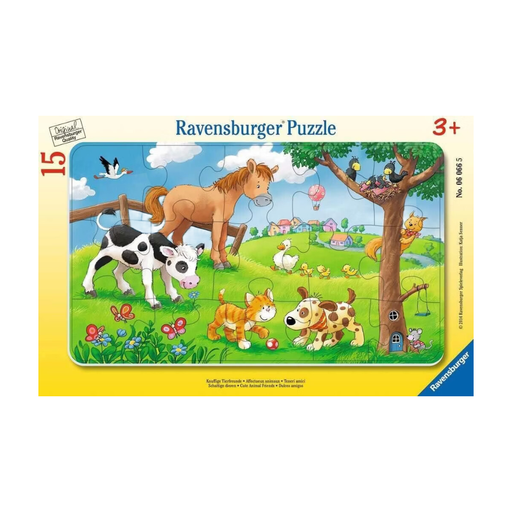
Why this product suits this profile: This frame puzzle is designed for children aged 3 and over and, with 15 pieces, offers an easy-to-manage introduction to children’s puzzles.
The low number of pieces reduces the risk of choosing a puzzle that is too complex for a beginner. The outline in the frame provides clear visual guidance.
15 sturdy pieces, an integrated frame and a format measuring approximately 25 × 14,5 cm.
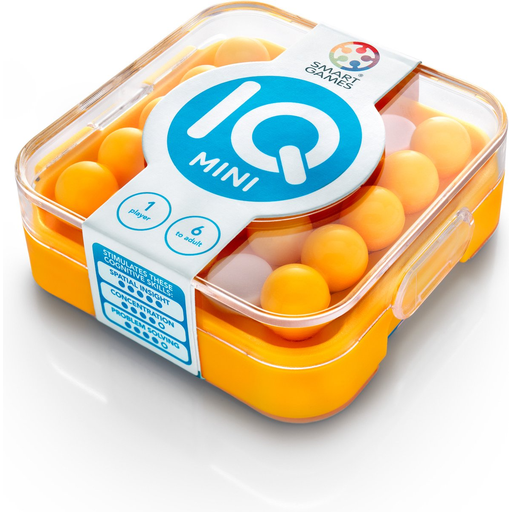
Why this product suits this profile: This compact game for ages 6 and over is ideal for quick solo rounds at home or on the go.
The pocket-sized format takes up very little space. The game is supplied in a random colour, so a specific colour variant cannot be guaranteed.
Create your own challenges, compact construction, plus additional clues and solutions via QR code.
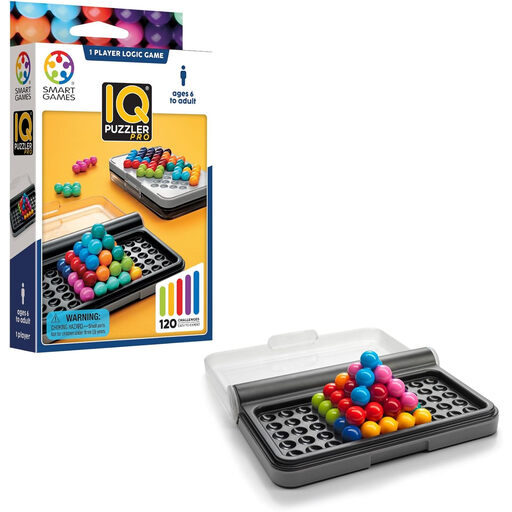
Why this product suits this profile: For children aged 6 and over who want to combine different spatial challenges in one compact game.
The three game modes – including 2D and 3D challenges – provide variety instead of offering just one type of task.
120 challenges, solo play and a compact format for use at home or while travelling.
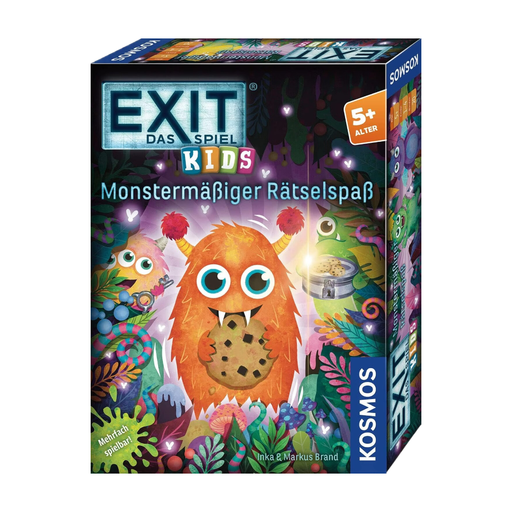
Why this product suits this profile: This cooperative escape-room game for 1–4 players aged 5 and over is ideal for family afternoons and playdates.
According to the product description, the rules and puzzles are designed for younger children. Adult supervision is recommended for children aged 5 to 7.
1–4 players, no batteries required and an optional Kosmos app with timer and hints.
We have put together a complete, regularly updated list of products that fully meet these strict selection criteria and the safety regulations applicable in the EU.
For children aged 6 and over, compact solo games with clear challenges, simple deduction games and age-appropriate educational games may be suitable. Check whether the challenges increase in difficulty gradually and whether hints or solutions are included. For travelling, games that do not require batteries and have secure storage for the pieces are practical.
That depends on the individual product. Child-friendly versions may be played repeatedly, according to the product description. With some EXIT games, cards or other materials are altered, for example by folding, writing on or cutting them. These editions are often intended for a single play-through. Always check the information on reusability before buying.
How long they remain usable depends on the materials, storage and game mechanics. Sturdy plastic pieces can be used for a long time when stored in dry conditions. Cardboard puzzles should be stored flat and dry. Put all small parts back in the original packaging after each round and check before buying whether replacement parts or solutions are available.