Fans of thick-cut artisan bread
If you toast thick-cut bread, check the actual internal dimensions of the slot rather than relying on the term ‘long-slot’ alone. TÜV SÜD lists larger or elongated slices of bread as suitable for long-slot toasters.


First, measure your usual slices of bread and compare their length, thickness and depth with the usable dimensions of the toaster you’re considering. A long slot isn’t automatically wide enough for thick bread. A long-slot toaster may be enough for one long slice; if you’re toasting for several people, also consider the number of slots, how many slices will actually fit and how much space the appliance takes up.
If you toast thick-cut bread, check the actual internal dimensions of the slot rather than relying on the term ‘long-slot’ alone. TÜV SÜD lists larger or elongated slices of bread as suitable for long-slot toasters.
If several people are eating at the same time, it’s important to know how many of your slices will actually fit in one cycle. Severin lists the AT 9341 as having two long slots and capacity for up to four slices of bread.
If worktop space is limited, compare the appliance dimensions and cable route with the space available, and look for an easy-to-access crumb tray. TÜV SÜD recommends considering features and cleaning when choosing a toaster.
First compare the slot dimensions with your bread, then check how many slices will fit per cycle and whether you have room for the toaster. Browning settings and extra features come next.
| What matters | What to check before buying | Who is this important to? |
|---|---|---|
| Fit for thick and elongated slices | Measure the thickness and length of your slices and compare them with the usable slot dimensions of the specific model. | If I toast thick-cut bread, I want to be able to put it in without it catching; ‘long-slot’ doesn’t tell me anything about the width. Around 42% of consumers prioritise a fit for thick and elongated slices. |
| Portions per cycle | Check the number of slots, the stated capacity and the appliance dimensions; compare the capacity with the slices of bread you use. | When sharing an afternoon break, I want to know how many of my slices will actually fit in at once. For around 25% of consumers, the number of portions that fit per cycle is the most important consideration. |
| Browning and reheating | Look for browning settings and a stop button; defrost or reheat functions are only relevant if you need them. | If I like different types of bread or levels of toastiness, I want to be able to adjust the browning. Around 17% of consumers prioritise adjustable browning and reheating. |
| Cleaning and placement | Check for a crumb tray, the appliance dimensions and whether the cable will reach the intended spot. | With limited worktop space, I want to position the toaster where it fits and remove crumbs easily. For around 16% of consumers, cleaning and placement are the main considerations. |
The design mainly makes room for elongated bread. For thick slices, the usable width of the slot is a separate fit consideration.
Measure your usual slices at their thickest and longest points, then compare the measurements with the internal dimensions of the specific model.
A claim such as ‘up to four slices’ doesn’t mean that four individually thick-cut slices of bread will fit at the same time.
Check how many of your usual slices will actually fit in the slots at once.
More watts or extra programmes won’t solve a problem with slot fit. Wattage should also be considered alongside the number and size of the slots.
Compare fit and the number of portions you need first, then choose the browning controls and features you’ll actually use.
A long body can take up a lot of worktop space, even if the toaster has only a few slots. The crumb tray, cable route and intended location all affect day-to-day use.
Check the appliance dimensions and how easy it is to access the crumb tray before choosing a model.
According to Severin, the AT 9341 is a two-slot long-slot toaster that holds up to four slices of bread, making it worth considering for shared breaks.
According to WMF, the KÜCHENminis long-slot toaster is designed for two XXL slices of toast or one extra-long slice of bread, making it suited to smaller portions.
Philips describes the Viva Collection HD2692/90 as having a long, extra-wide toasting chamber. It may be worth considering if the thickness of your bread matters as well as its length.
According to Braun, the PurShine HT 1610 has a 25 cm-long slot and may suit elongated slices of bread.
Arendo describes the Frukost Touch as a double long-slot toaster for up to four slices, with a touchscreen and a countdown display.
The Joybuy products below include toasters with wide slots, as well as long-slot models for thicker slices or multiple portions.
 No image available
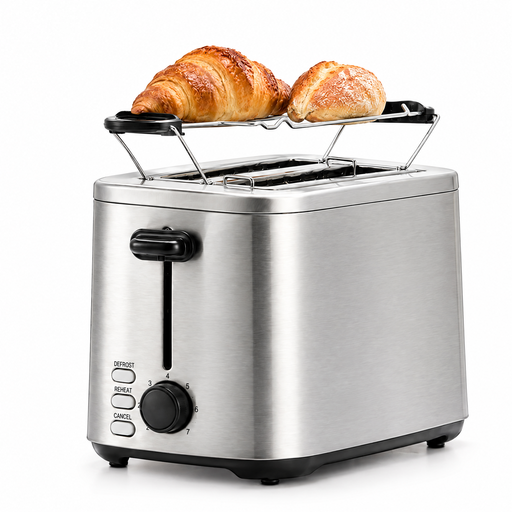
The product description lists wide slots for different thicknesses of toast; before buying, check whether your bread will fit the actual slot dimensions.
Specifications include 800 W, seven browning settings and a removable crumb tray.
 No image available
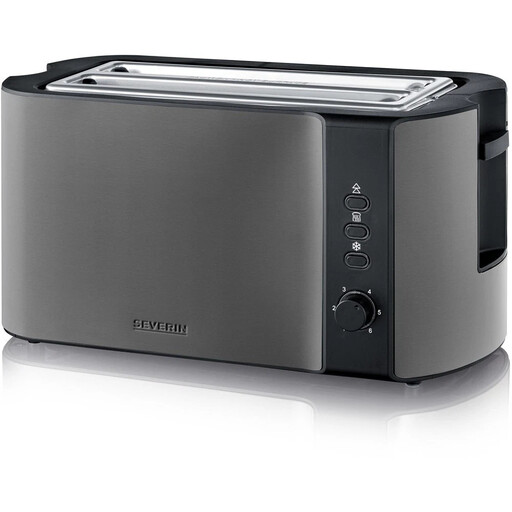
With two long slots and a stated capacity of up to four slices of bread, this model is designed for several portions per cycle; thick slices still need to fit in the slots.
Features include automatic bread centring, defrost and reheat functions, a bun warmer and a removable crumb tray.
 No image available
The description lists 36 mm-wide slots for thicker types of bread; compare the width and other usable slot dimensions with your slices.
Specifications include six browning settings, cancel, reheat and defrost functions, and a removable crumb tray.
 No image available
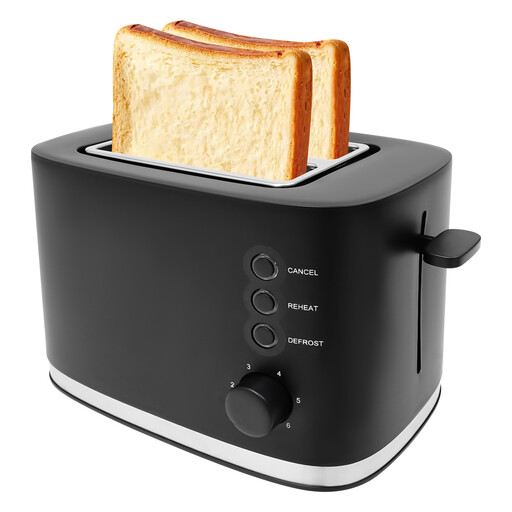
The product description lists 3.6 cm-wide slots and a maximum thickness of under 1.42 inches for items being toasted. Check whether this limit suits your bread.
Specifications include six browning settings, defrost and reheat modes, and a removable crumb tray.
 No image available
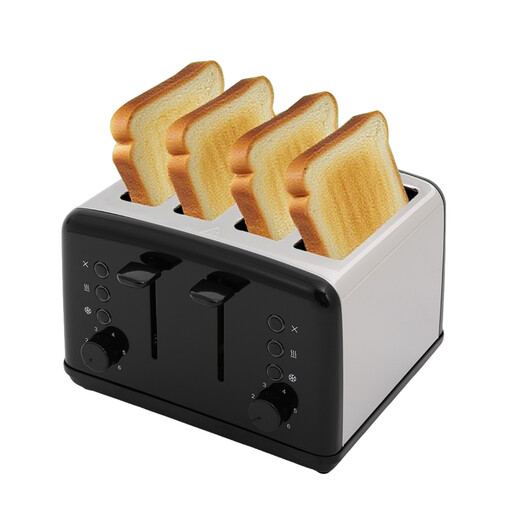
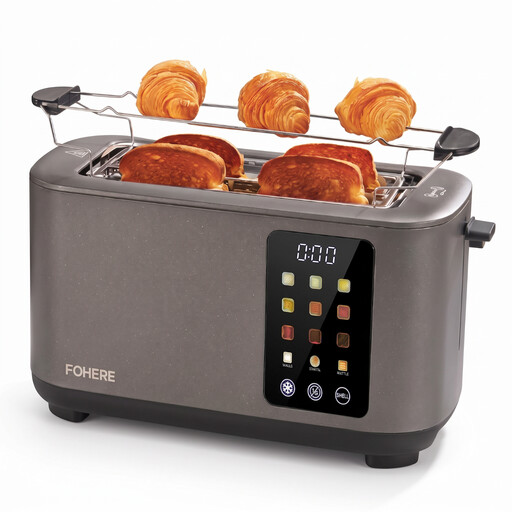
This model is described as a long-slot toaster for four slices and may suit several portions; check the slot dimensions for your thick-cut bread.
Specifications include 1400 W, nine browning settings, defrost, reheat and stop functions, and a bun warmer.
Not necessarily. Length and thickness are separate fit considerations: measure your usual slice and check the usable internal dimensions of the specific slot. Automatic centring helps position the bread, but it doesn’t make the slot any wider.
TÜV SÜD recommends using dry, unfilled slices of bread in toaster slots. For bread with spreads or fillings, follow the instructions provided by the appliance manufacturer; buns should go on a rack designed for that purpose.
Remove crumbs regularly, following the appliance instructions, and look for an easy-to-access crumb tray. The Safe Home campaign warns that bread crumbs left in the toaster can increase the risk of fire.
Statutory consumer rights generally apply against the seller; a manufacturer’s guarantee is separate and subject to its own terms. If a product is faulty, the first remedy may be repair or replacement. The Verbraucherzentrale explains the difference between statutory consumer rights and a guarantee.
No. If CE marking is required for the toaster, the manufacturer uses it to declare that the product meets the relevant EU requirements; it is not an independent test mark. The European Union also distinguishes CE marking from voluntary certification marks such as the GS mark.