Frozen bread for a quick break
If you want to toast individual slices straight from the freezer, check that the specific model has a defrost function. TÜV SÜD lists it as a useful feature, and Braun includes one on the HT1610BK.


For frozen slices of bread, a long-slot toaster with a clearly stated defrost function is a suitable choice. Even so, check the length and width of the slots against the slices you usually eat. One long slot may be enough for a single portion, while two long slots could suit several portions per cycle, but they take up more worktop space. Reheating is not the same as defrosting.
If you want to toast individual slices straight from the freezer, check that the specific model has a defrost function. TÜV SÜD lists it as a useful feature, and Braun includes one on the HT1610BK.
Measure your usual slices and compare them with the slot dimensions. TÜV SÜD identifies fit as a buying consideration; Braun’s 25 cm figure for the HT1610BK refers to the slot’s length, not the thickness of bread it can accommodate.
If you regularly make toast for several people, check the number of long slots and the stated capacity for your type of bread. Severin and WMF give separate capacity details for standard toast slices and long slices of bread.
For an afternoon break with frozen bread, the key considerations are the right function, slice size and number of portions you need.
| Buying consideration | What to check | Who is it important to? |
|---|---|---|
| Toasting frozen bread | Check that the exact model variant explicitly lists a defrost function. TÜV SÜD identifies defrosting as a relevant feature. | If I want to toast a slice straight from the freezer, I need the right function on the appliance; around 36% of consumers put this first. |
| Slice fit | Measure your slices and compare them with the slot length and width. Braun lists a 25 cm slot length for the HT1610BK; this alone doesn’t tell you what thickness of bread will fit. | For long or thick slices, I want to know in advance whether they will actually fit in the slot; around 29% of consumers prioritise this. |
| Several portions | Compare one or two long slots and the capacity for your type of bread. Severin and WMF give model-specific details for different slice sizes. | If I want to prepare several portions in one cycle, the number of slots and the slice size matter more than a general slice count; around 21% of consumers prioritise capacity. |
| Cleaning and ease of use | Check the crumb tray, stop button and worktop space required by the specific appliance. Unplug it and let it cool before cleaning, as recommended by ETM TESTMAGAZIN. | If I use the toaster regularly, I want to be able to remove crumbs easily and clean it safely; around 14% of consumers see care and ease of use as their main concern. |
Slot length, slot width and bread thickness are different measurements. A stated capacity for several slices of toast doesn’t prove that the same number of larger slices of bread will fit.
Measure your usual bread and compare it with the dimensions and capacity listed for the specific model variant.
The functions are designed for different starting points: defrosting is for bread straight from the freezer, while reheating is for bread that has already been toasted.
Check whether a defrost function is explicitly listed for the exact model variant.
Extra capacity may be unnecessary for a single portion during a break. Wattage alone doesn’t tell you whether your slices will fit in the slots.
Choose based first on your bread size and the number of portions you actually need, then on the space it takes up and how easy it is to use.
The PurShine HT1610BK is an option for individual long slices.
With two long slots and a defrost setting, the AT 2509 is aimed at households looking to prepare several portions.
The Bueno Pro double long-slot toaster is an option for several slices or two long slices of bread.
The Viva Collection HD2692/90 is a long-slot option with a defrost mode.
This selection at Joybuy includes toasters for one or several slices. If you want to toast frozen bread, check whether a defrost function is listed for the specific variant.
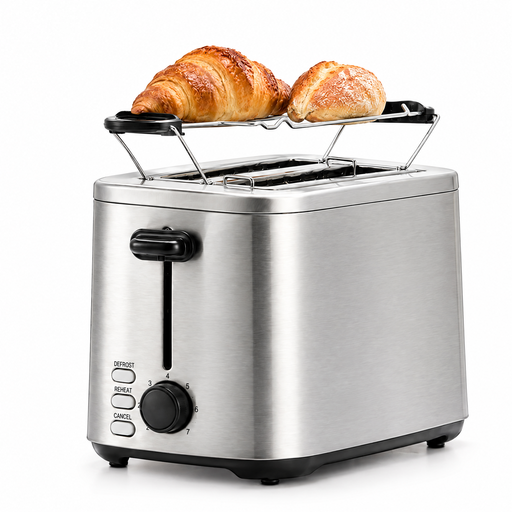 No image available
The wide slots may suit thicker types of bread; even so, check the actual dimensions against your slices.
800 W, seven browning settings, rack and removable crumb tray; uncoated stainless steel body.
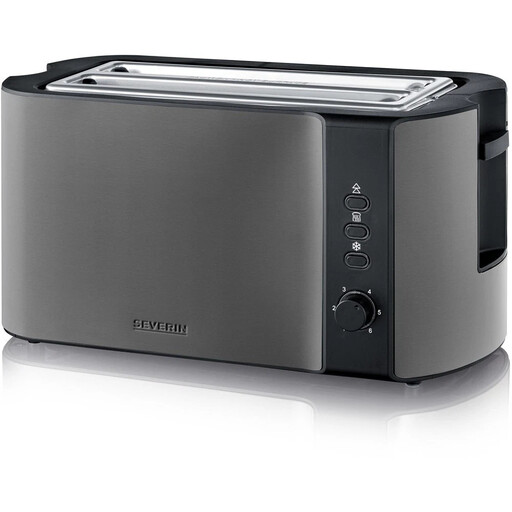 No image available
An option if you want to toast frozen bread or prepare several slices in one cycle; check that the slots are the right size for your bread.
1.400 W, defrost function, bun warmer and large toasting slots; dark Inox black finish.
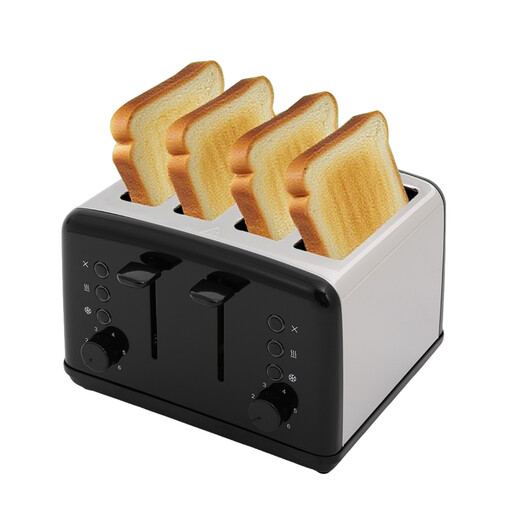 No image available
May suit several slices and frozen bread; check whether the slots are the right size for your slices.
1.460–1.750 W, six browning settings, defrost, reheat and cancel functions, plus a removable crumb tray.
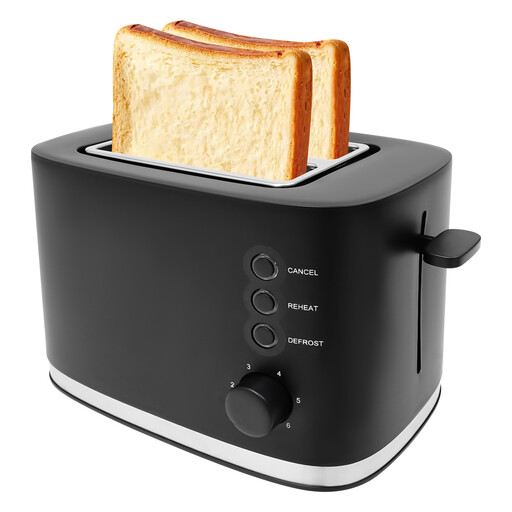 No image available
This model may suit two slices and frozen bread; check that the slots are the right size for your slices.
730–870 W, six browning settings, defrost and reheat modes, removable crumb tray and automatic shut-off.
 No image available
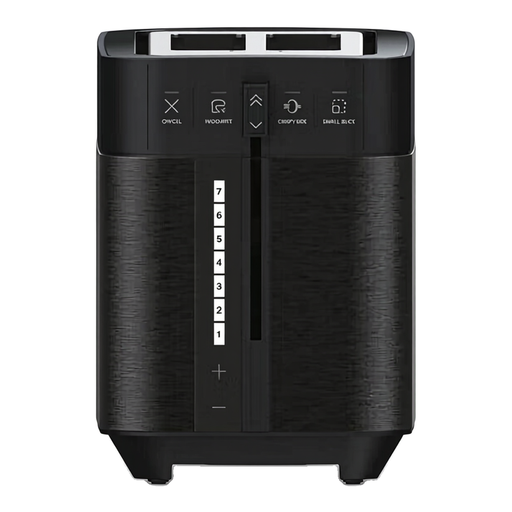
An option for two slices if you’re looking for a choice of browning settings and deep slots.
1.150 W, seven browning settings, high-lift lever, dust cover and vertical storage.
No, the functions aren’t interchangeable: defrost is intended for bread straight from the freezer, while reheat is for bread that has already been toasted. Follow the instructions for your specific appliance and keep an eye on the browning at first.
Unplug the toaster before cleaning, let it cool completely and empty the crumb tray according to the appliance instructions. Don’t put metal objects into the toasting slots; ETM TESTMAGAZIN recommends unplugging the toaster and letting it cool before cleaning.
No. If a product is faulty, your statutory rights are against the seller; a manufacturer’s guarantee is an additional voluntary offer subject to its own terms. For a typical new purchase, the relevant claims for defects generally become time-barred two years after delivery, as set out in § 438 BGB.
For electrical appliances covered by the rules, the manufacturer uses the CE marking to declare that the product meets the relevant EU requirements; it isn’t a general independent quality mark. The European Union explains that the marking is based on the manufacturer’s declaration.