Weavers focused on detail
You want to show how the thread is guided and how you work, all from a fixed position. The framing and focus need to suit the distance between the camera and the loom.


For a fixed demonstration setup, a mirrorless camera with a carefully chosen lens is a good option if you want to show threads and hand movements clearly. A camcorder lets you switch between different views without changing lenses, while a gimbal camera is better suited to moving shots. The key factors are your actual shooting distance, focus and testing with your lighting; no single frame rate guarantees flicker-free footage. Canon Academy recommends 25 fps at 1/50 second as a starting point, but you should still test the specific lights you’ll be using.
You want to show how the thread is guided and how you work, all from a fixed position. The framing and focus need to suit the distance between the camera and the loom.
You’re filming a continuous series of steps, so it’s worth planning for sound, the intended recording time and power as well as the picture.
You often change position during a demonstration. In that case, ease of use and stabilisation matter, but they won’t automatically give you the right close-up view.
A good fit if: you want to capture a fixed wide shot and specific thread details with a carefully chosen lens.
Things to consider: Your choice will depend on the lens, working distance and, potentially, a microphone. A large sensor or 4K alone doesn’t guarantee close focusing or flicker-free footage.
A good fit if: you want to zoom between the loom and your working area during a demonstration without changing lenses.
Things to consider: Panasonic lists a 24x optical zoom for the HC-VX3; the stated 25 mm wide-angle setting is only available in certain video modes.
A good fit if: you often move around the loom and value moving shots more than interchangeable lenses.
Things to consider: The DJI Osmo Pocket 3 has a fixed 20 mm equivalent focal length and a stated focus range starting at 0.2 m. Check that the framing captures small thread details from your shooting distance.
For 25 fps, Canon Academy recommends 1/50 second as a starting point. Sony Deutschland advises adjusting the shutter speed and checking the monitor for flicker, so test a clip using the lights you’ll actually be filming with.
| What you need | What to check before buying | Who is it important to? |
|---|---|---|
| Flicker and exposure | Check that you can adjust the shutter speed and frame rate; review a test clip with your own lighting. | If I’m filming under artificial light, I want to avoid bands and changes in brightness in the finished video. This is a priority for around 36% of consumers. |
| Threads and hand movements in shot | Check the shooting distance, desired framing and focus with the specific lens or fixed optics. | If I want to show individual threads and hand movements, the close-up needs to be clear from the distance I have available. Around 29% of consumers put thread detail first. |
| Long recordings and sound | Check the power supply, storage media and recording limits for your planned duration. If you’ll be speaking, also consider the microphone input and audio monitoring. | If my demonstration is long and I’m explaining what I’m doing, I want to record the picture and my voice without unexpected interruptions. Around 21% of consumers prioritise long recordings with clear sound. |
| Moving shots | Consider whether you need to film handheld; assess stabilisation and optics separately to see if they’re suitable for your desired framing. | If I change position while filming, a steady moving shot matters more to me than a fixed wide view. Around 14% of consumers put freedom of movement first. |
DJI lists 4K/120 fps on the Osmo Pocket 3 as a slow-motion mode; other frame rates are available for standard 4K video.
Compare the standard video mode you actually plan to use, rather than focusing only on the highest advertised frame rate.
The ability to change lenses doesn’t, by itself, determine the framing or the available shooting distance.
Before buying, work out your distance and the wide and close-up views you want, then check the specific lens and camera combination.
You may need an additional suitable lens to get the close-up you want.
On the Panasonic HC-VX3, the stated 25 mm wide-angle setting is only available in certain 4K and Full HD modes.
Check the framing in the exact video mode you plan to use for your demonstration.
A voluntary guarantee is subject to the guarantor’s terms and conditions. For statutory rights relating to faulty goods, the retailer is generally your point of contact.
Keep your proof of purchase and distinguish between the guarantee terms and your statutory rights when making a claim.
The EOS R50 V is a video-focused mirrorless camera. You’ll need to choose a lens that suits your loom and shooting distance.
The ZV-E10 II is a mirrorless camera with interchangeable E-mount lenses. The kit shown on the German product page includes a 16–50 mm lens.
The HC-VX3 is a camcorder with built-in zoom, ideal if you want to capture different views without changing lenses.
The Z 30 is an interchangeable-lens camera for fixed setups or longer demonstrations.
The Osmo Pocket 3 is a compact gimbal camera for moving shots.
This selection includes four models described as PC webcams for fixed setups, plus a compact gimbal camera for moving shots.
 No image available
For a fixed close-up view, check whether the autofocus and automatic light correction suit your loom and lighting. Test a clip for flicker before your demonstration.
The product description lists a Sony IMX363 sensor, PDAF autofocus, a 75° field of view, and USB-A and USB-C.
 No image available
For a fixed recording with spoken commentary, test the autofocus and exposure correction with your setup, and check whether the built-in microphone provides enough sound quality for your needs.
The listed video modes are 1080p/30 FPS or 720p/60 FPS; a built-in stereo microphone is included.
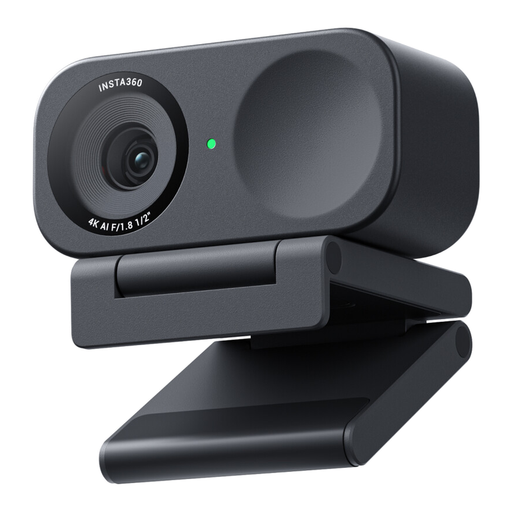 No image available
If you’re planning an overhead view of your work area, check whether DeskView mode and the available framing suit your position at the loom.
The product specifications list a 1/2-inch sensor, PDAF autofocus and HDR; test the picture with your lighting.
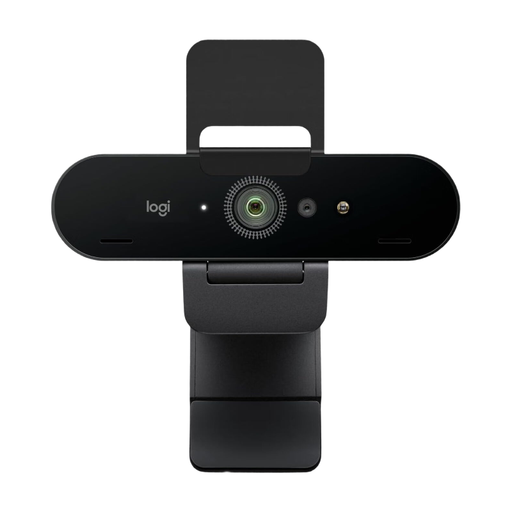 No image available
If you want to change the framing during a fixed recording, check whether the field-of-view presets and digital zoom work at your shooting distance.
The listed features include 4K at up to 30 frames per second, autofocus, 5x digital zoom and three field-of-view presets.
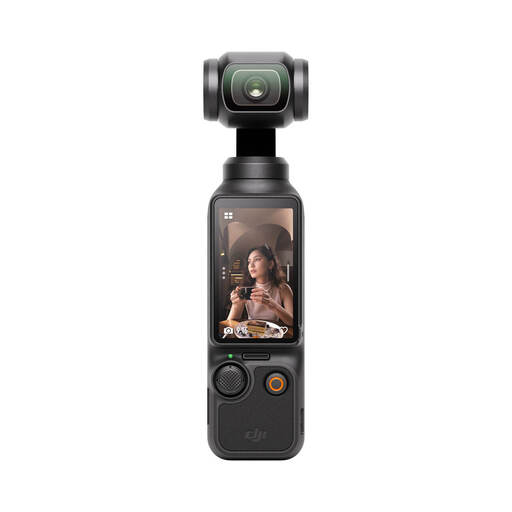 No image available
Stabilisation is useful for moving shots as you film around the loom. For small thread details, check the fixed angle of view and focus distance beforehand.
DJI lists a fixed 20 mm equivalent focal length, a focus range starting at 0.2 m and mechanical three-axis stabilisation. 4K/120 fps is a slow-motion mode.
Start by testing 25 fps and 1/50 second, if your camera offers these settings. Check a test clip for bands or changes in brightness and, if needed, try different shutter speeds or a suitable feature on the exact model. Canon Academy recommends these settings as a starting point; they don’t guarantee flicker-free footage with every LED light.
Manual white balance lets you adjust colour reproduction more precisely for different lighting conditions. Take a test shot with the lights you’ll be using during the demonstration.
Plan for power, storage media and a sound check for the duration you need. A manufacturer’s stated potential continuous recording time doesn’t guarantee the same recording time with every battery charge and setting.
For statutory rights relating to faulty goods, the retailer is generally responsible. The Verbraucherzentrale explains that for sales contracts entered into from 31 July 2026, the warranty period can be extended once by twelve months if you choose repair when a fault occurs. This is separate from a voluntary manufacturer’s guarantee.
Under § 22 KunstUrhG, images of people may generally only be shared or shown publicly with the consent of the person depicted. § 23 KunstUrhG sets out exceptions, which must be assessed in each individual case; filming a loom demonstration doesn’t automatically give you permission to publish it.