
Lieferung heute & morgen

Qualitätsgarantie
App herunterladen
Choosing the right cutting tool is fundamental for precise and plant-friendly tree pruning. A lopper, also known as a tree shear, is a key tool for any garden owner. The efficiency and the results of your work depend heavily on the design, material, and ergonomics of the chosen tool. Depending on branch thickness, wood type, and working height, different models are suitable, from manual bypass loppers to motorised cordless pruning saws.
This article analyses the technical criteria relevant to selecting a lopper and presents a selection of models with different functional profiles.
The decision for a specific model should be based on an analysis of your specific requirements. The following technical parameters should be considered.
The cutting mechanism defines how the cut is made and directly impacts the cut quality and the health of the plant.
The quality of the blade determines its sharpness, durability, and cutting precision.
For fatigue-free work, especially with thicker branches, leverage and handle ergonomics are crucial.
Based on the technical criteria mentioned above, we present three products with different application profiles.
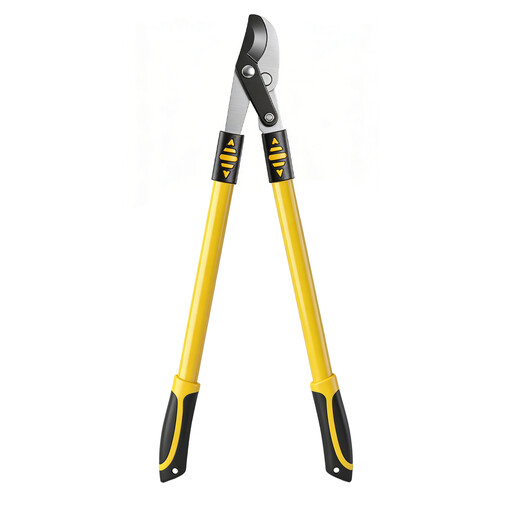
Why we recommend this product: This model is a classic tree pruning tool designed for robustness and mechanical efficiency. The SK5 steel blade ensures high sharpness and durability, while the 26-inch (approx. 66 cm) length provides good leverage for branches up to 1.5 inches (approx. 3.8 cm) in diameter. The shock-absorbing handles help reduce strain.
Advantages:
Who it's for: Garden owners looking for a reliable and powerful manual lopper for regular pruning of medium-thick branches, who value durability and ease of use.
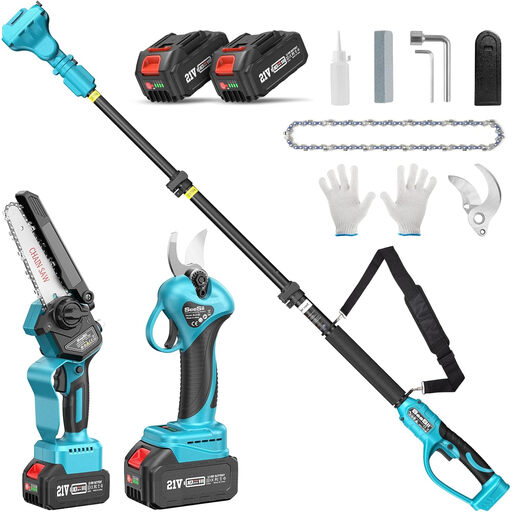
Why we recommend this product: This set provides an all-in-one solution for various gardening tasks. It combines a mini chainsaw and electric pruning shears with a telescopic pole, functioning as a pole saw. The brushless motor and the two included 4000 mAh batteries enable powerful, long-lasting work at height without a ladder.
Advantages:
Who it's for: Home and garden owners with numerous tall trees or diverse pruning needs who prefer a cordless, all-in-one solution for work from the ground to the treetop.
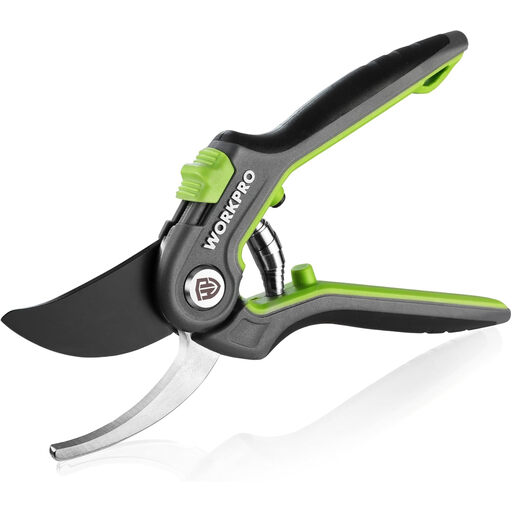
Why we recommend this product: These secateurs are designed for precision in smaller pruning jobs. With their SK5 steel blade and bypass cutting mechanism, they enable clean cuts on fresh branches, roses, or perennials up to 19 mm in diameter. The ergonomic handle with a spring mechanism reduces hand fatigue.
Advantages:
Who it's for: Hobby gardeners who need a handy and precise tool for fine-tuning and shaping shrubs, roses (as vine shears), and other ornamental plants.
The products featured cover specific use cases. If your needs differ or you are looking for other alternatives, you can find a wider selection of manual and electric cutting tools in our main category.
️ Discover more Garden Shears here
1. What is the difference between bypass and anvil loppers? A bypass lopper works like scissors, with two blades gliding past each other. It produces a clean cut and is ideal for living wood. An anvil lopper has one blade that closes onto a solid base (the anvil). It is more powerful and suitable for dry or dead wood, but it can crush living stems.
2. How do I properly maintain a lopper? After each use, the blades should be cleaned of plant sap and debris. A rust-resistant coating makes this easier. Store the lopper in a dry place. Occasionally applying a drop of oil to the joint and blades will keep it operating smoothly and protect against corrosion.
3. Which lopper is suitable for thick branches? For thick branches, a lopper with long handles for high leverage, like the GARTOL model, or a model with a geared mechanism is recommended. For very thick branches or for a less strenuous alternative, a motorised solution like a cordless pruning saw or a pole saw is a great option. Always pay attention to the maximum cutting capacity specified by the manufacturer.