
Same-day & Next-day Delivery

Quality Guaranteed

Unlock Your Welcome Offers: FREE Delivery | Up to 80% OFF | Free 30-day JoyPlus trial
Download the APP
In Germany, lotus root powder is popular as a Chinese hot drink, instant dessert or ingredient in Asian snacks. Depending on the recipe, adding hot water creates a translucent, thick mixture. However, there are several different options on the market: plain lotus root powder, lotus root starch with sugar, blends with osmanthus or nuts, and ready-made lotus root soups.
If you only look at pack size or product images, it’s easy to miss important differences. Three common buying mistakes are worth watching out for:
If you’re looking for a simple Chinese lotus root powder, compare the ingredients in descending order. For example, TianTang West Lake Lotus Root Powder Original Flavor lists lotus root starch and white sugar. Other recipes also include lotus seeds, red dates, osmanthus, longan, nuts or sesame.
Allergen information is particularly important:
A product with no declared allergens isn’t automatically suitable for everyone’s dietary needs. The information on the retail packaging is what matters.
The usual method starts with a small amount of cold or lukewarm water. First, stir the powder into a smooth paste. Then add boiling water. This helps to reduce lumps and create the characteristic gel-like consistency.
Some products call for water at a minimum of 95 °C and around 150 to 200 ml. Others are mixed portion by portion with around 180 ml of boiling water. For a thicker lotus root soup, use less water; for a thinner consistency, add more.
Important: a product labelled “Cooking required” isn’t suitable for eating straight from the pack. For powder in single portions, check whether it only needs hot water or must be heated thoroughly.
Lotus root starch and ready-made blends often contain sugar or glucose. The nutritional information can help you compare products. Depending on the recipe, the powder options mentioned contain around 363 to 394 kcal per 100 g and are made up mainly of carbohydrates. Sweet blends with osmanthus, dates or nuts may contain more sugar.
For storage:
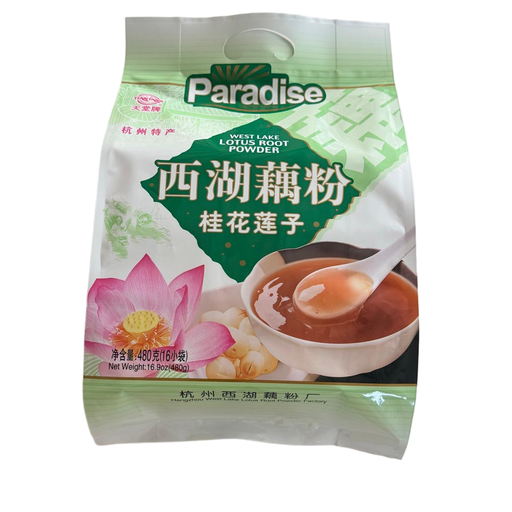
Why it suits this profile: The 480 g pack is a good choice if you’re new to lotus root powder and want to make several portions at home. The ingredients list includes lotus root powder, lotus seeds, osmanthus and sugar.
The product information lists the ingredients, nutritional values, serving size and storage advice. This makes it easier to assess the recipe before you buy.
480 g pack; prepared with hot water; no allergens listed in the product information provided.
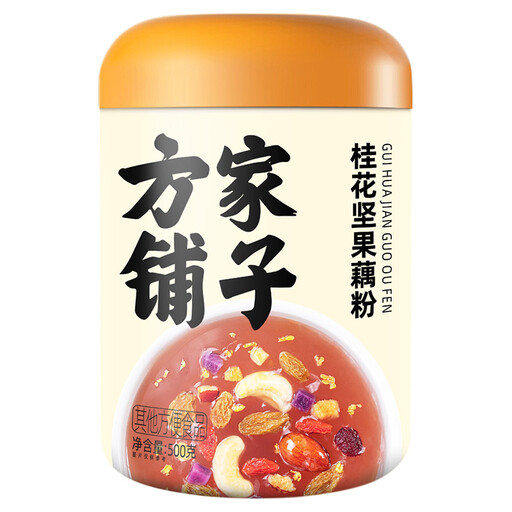
Why it suits this profile: This blend combines lotus root powder with osmanthus and 8% nuts. It’s aimed at shoppers looking for a flavoured lotus root drink with added texture.
The product explicitly lists walnuts, almonds, peanuts and osmanthus. This makes it easier to check for allergens before ordering.
500 g jar; contains 8% nuts and 1% osmanthus according to the product information; clear instructions for mixing and adding hot water.
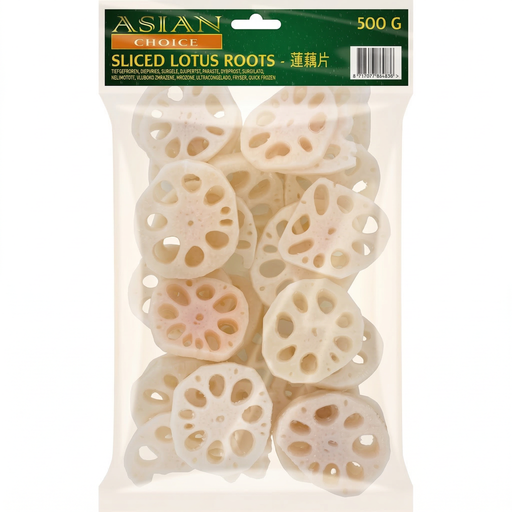
Why it suits this profile: These frozen lotus root slices are intended for stir-fries, hotpot, soups and salads. They’re a good fit for households that want to use lotus root regularly in Asian cooking.
The pack contains lotus root only. It also specifies storage at −18 °C and says the slices can be used straight from frozen.
500 g pack; no allergens listed; suitable for stir-fries, soups and hotpot.
We’ve put together a complete, regularly updated list of products that meet these strict selection criteria and fully comply with the safety regulations in force in the EU.
First, mix the powder with a little cold or lukewarm water to make a smooth paste. Then slowly add boiling water, or follow the instructions on the pack, stirring continuously. Depending on the product, you’ll usually need between 150 and 200 ml of water per portion.
The best-before date is printed on the packaging. Unopened powder should be stored in a cool, dry place away from light. Once opened, it’s important to seal the pack tightly, as moisture can affect the consistency and make the powder harder to measure.
Many products contain sugar, glucose or granulated sugar, so they taste sweet. If you’re looking for a less flavoured option, compare the ingredients list and sugar content per 100 g. Frozen lotus root slices are usually a better choice than sweet lotus root powder for savoury dishes.